
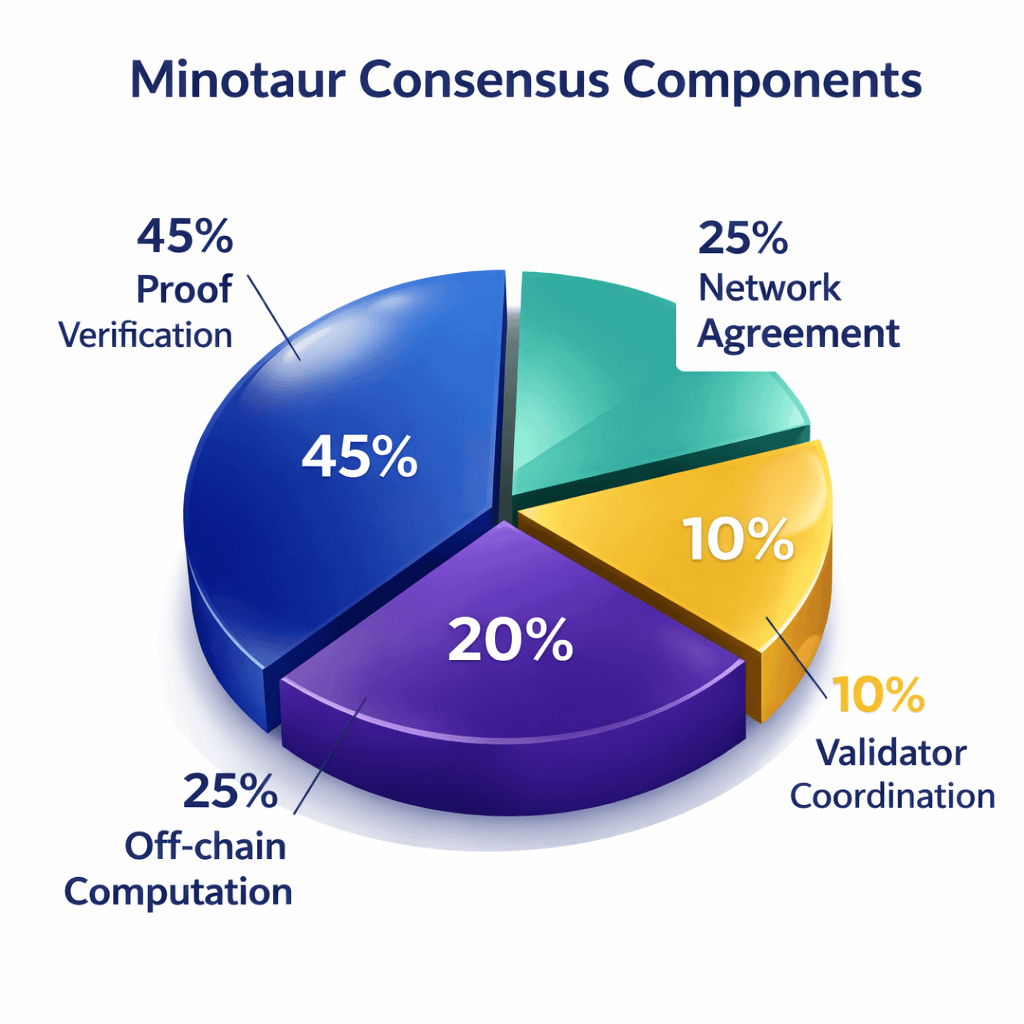
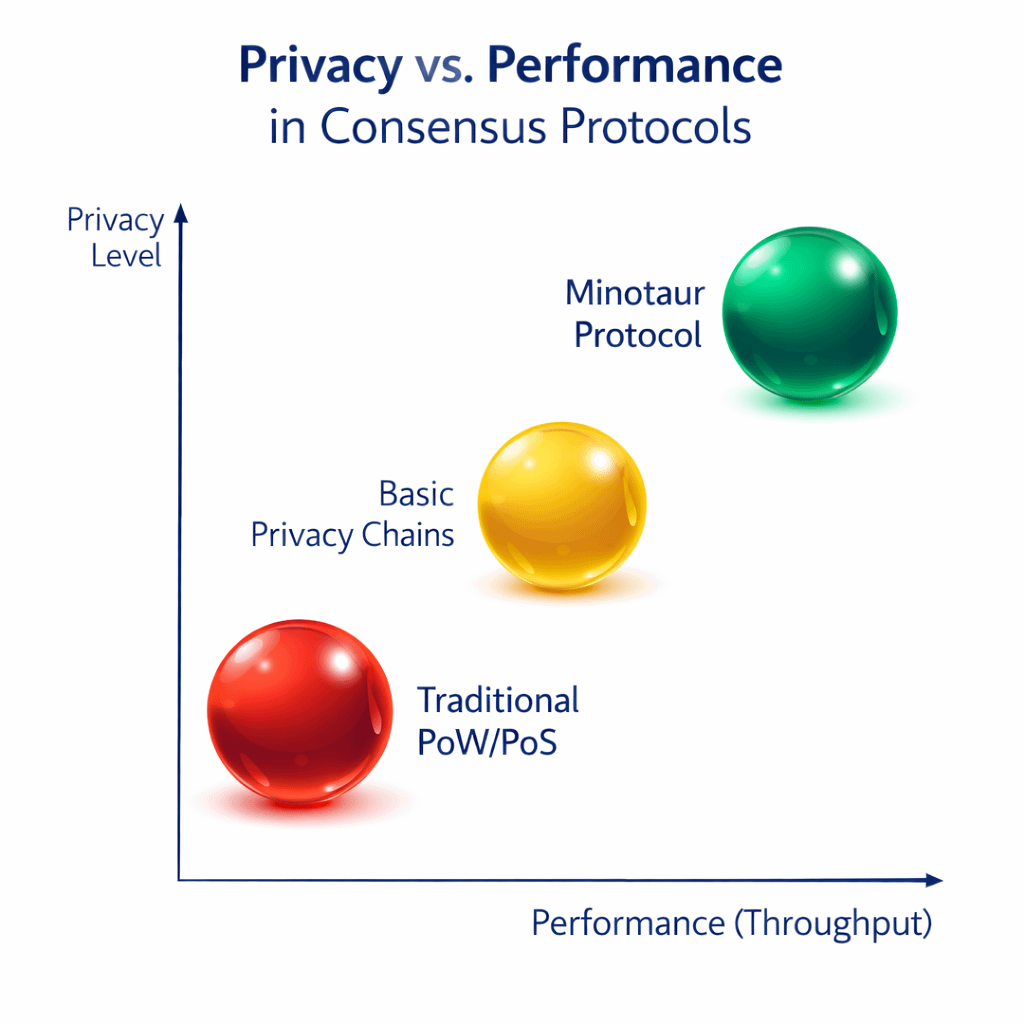
I have been thinking about how consensus mechanisms evolve as blockchain systems become more specialized. Early networks focused on a single goal. Agree on the state of transactions in a transparent environment. Proof of work and proof of stake were designed around that idea. But when privacy enters the equation the problem changes. Verifying hidden data is very different from verifying visible transactions. That is what made me curious about the Minotaur consensus protocol inside Midnight Network. The name itself feels symbolic. Minotaur suggests a system navigating complexity. That feels appropriate because privacy preserving blockchains introduce layers that traditional consensus models were never designed to handle. In a transparent system validators can simply inspect transaction data. In a privacy focused system they must rely on proofs rather than raw information. This is where Minotaur appears to take a different approach. Instead of requiring validators to process all underlying data the protocol focuses on verifying cryptographic proofs. Transactions or computations generate zero knowledge proofs off chain or within specialized environments. These proofs are then submitted to the network where validators confirm their validity.
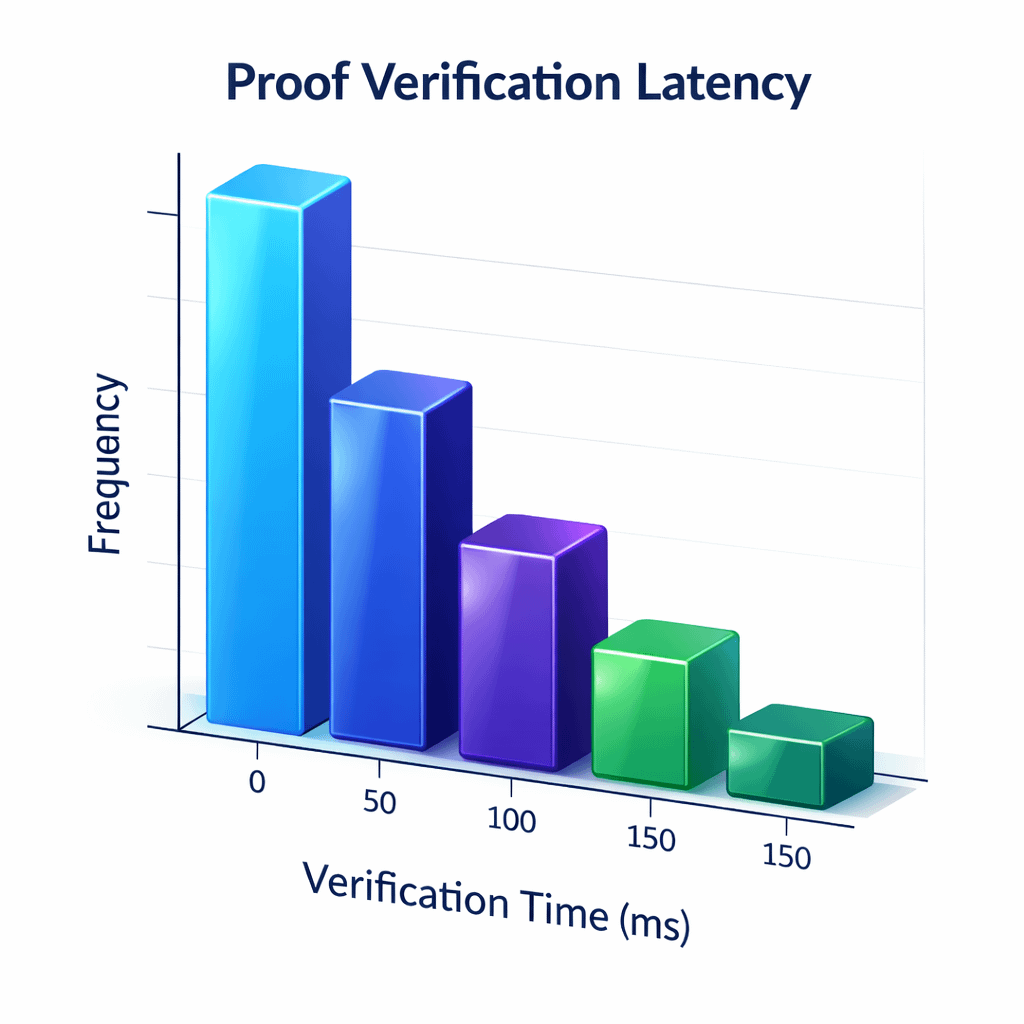
The network reaches consensus based on proof verification rather than full data visibility. At first this sounds like a natural extension of existing ideas. But the more I think about it the more I realize that it shifts the role of validators. They are no longer inspecting transactions in detail. They are verifying that the proofs correctly represent those transactions. This creates a separation between execution and verification that did not exist in earlier blockchain models. From a performance perspective this design has advantages. Proof verification is typically faster than executing complex computations. If the network only needs to check compact proofs it can maintain efficiency even when handling privacy preserving operations. This becomes important as decentralized applications grow more complex and require both confidentiality and scalability. Still I remain cautious about how this works in practice. Consensus is not just about speed. It is about security and reliability. When validators rely on proofs they must trust that the proof generation process is correct. If there are weaknesses in how proofs are constructed or if parameters are compromised the system could face risks that are not immediately visible. There is also the question of decentralization. If proof generation becomes concentrated among a small group of actors then the network could develop hidden dependencies. Even if consensus itself remains distributed the process of creating proofs could introduce subtle forms of centralization. Maintaining a healthy distribution of participants across both proof generation and verification layers becomes critical.
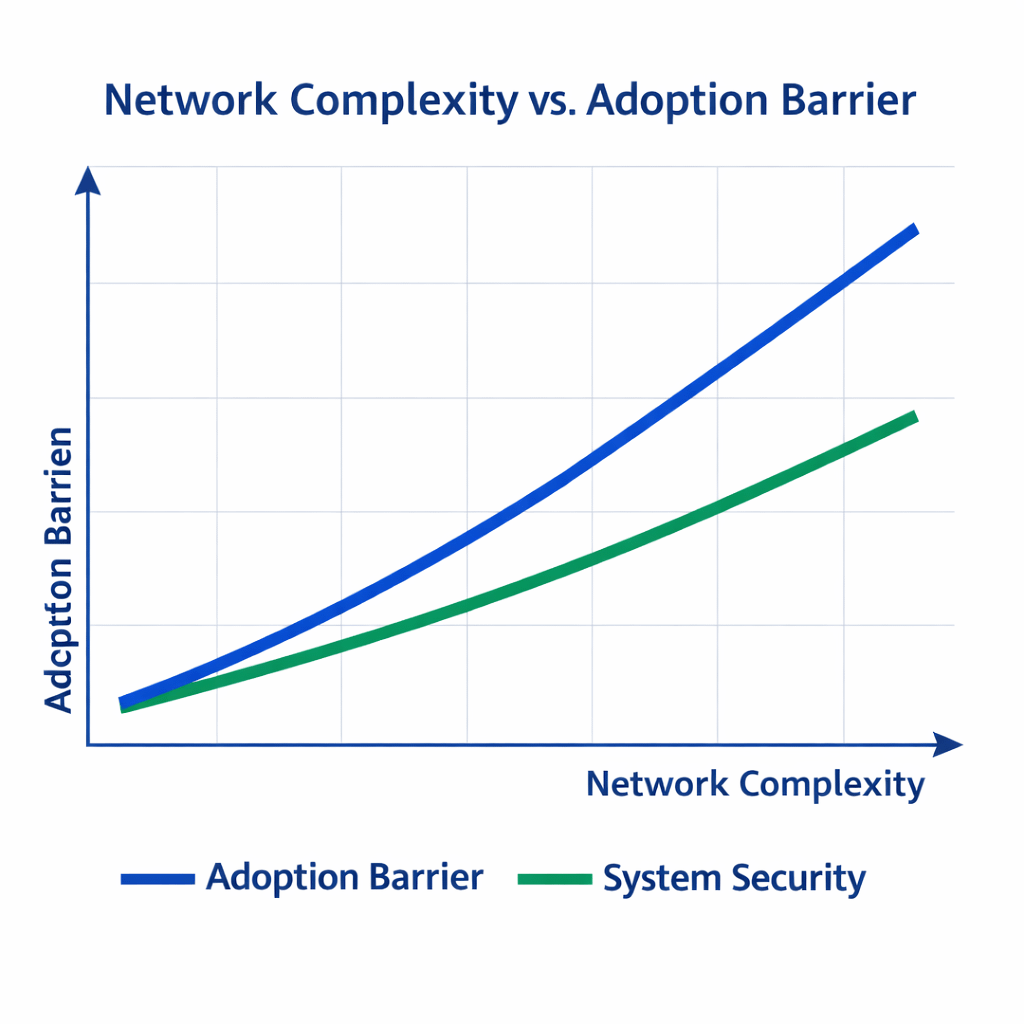
Another factor I consider is network complexity. Traditional consensus models are already difficult to explain to new users. Adding privacy layers and proof based verification makes the system even harder to understand. For developers and participants this complexity can become a barrier. If the system is too difficult to reason about it may slow adoption even if the underlying technology is strong. As I look at Midnight’s broader architecture Minotaur seems to act as a bridge between privacy and consensus. It allows the network to maintain agreement on system state without exposing sensitive data. Instead of forcing transparency it relies on mathematical guarantees that certain conditions have been met. This reflects a shift in how trust is established. Trust moves away from observation and toward verification through proofs. That shift is significant. It suggests that future blockchain systems may not depend on everyone seeing everything. Instead they may depend on everyone being able to verify what matters. Minotaur appears to embody that idea at the consensus level.Whether it succeeds is still uncertain. Consensus protocols often look elegant in design but must prove themselves under real world conditions. Network stress adversarial behavior and long term usage reveal weaknesses that are not always visible at the conceptual stage.
For now I see Minotaur as an attempt to adapt consensus to a new type of blockchain environment. One where privacy is not an optional feature but a core requirement. If the protocol can maintain security decentralization and performance while supporting proof based verification it could represent an important step forward. If not it will still highlight how difficult it is to balance privacy and consensus in decentralized systems. Either way the experiment itself reflects a broader evolution in blockchain design. The move from transparent validation toward verifiable confidentiality is no longer theoretical. It is beginning to shape the way networks are built.