
I’ve been staring at my portfolio screen for the better part of a decade now. Watched bull runs, survived the winters. But lately, the conversation that keeps me up isn’t about price targets or liquidity pools. It’s about something far more fundamental:
The growing absurdity of how we secure our own wealth.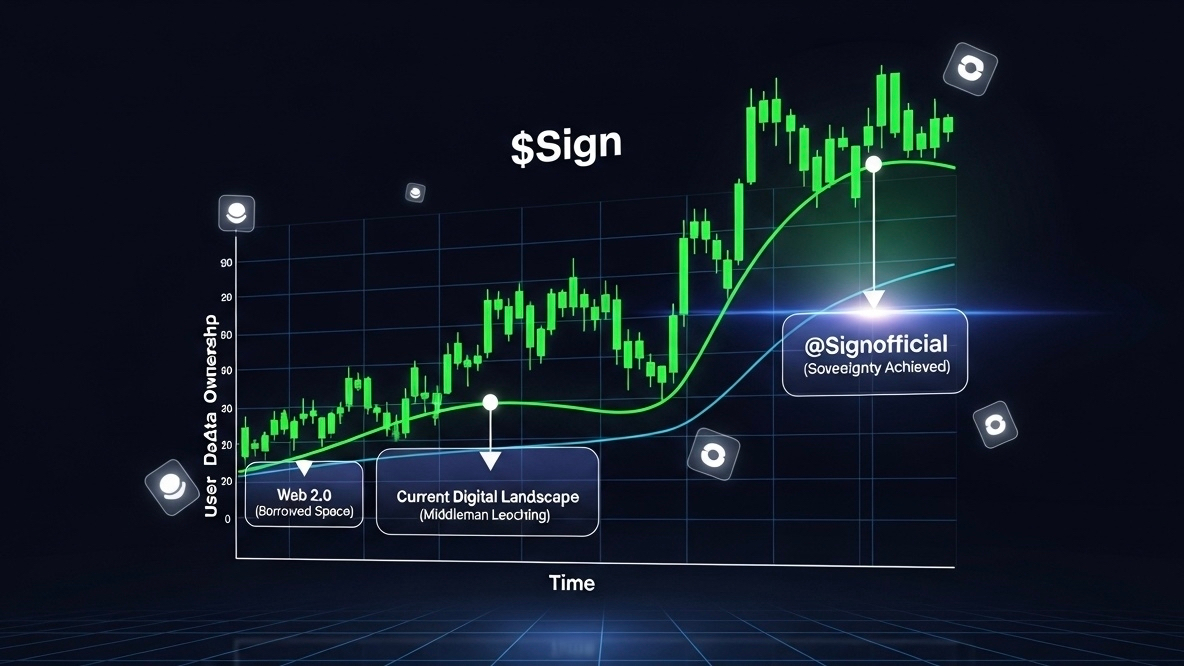
We walk around with six figures worth of assets protected by a string of twelve words written on a sticky note or saved in a cloud drive we don’t fully control. It’s a cognitive dissonance that the industry has normalized, but it’s starting to crack.
When I first moved my holdings off exchanges, I felt that rush of sovereignty. Not your keys, not your coins. It was a mantra that defined an ethos. But sovereignty came with a price: paranoia. Every time I signed a transaction, I held my breath.
Was that a malicious contract?
Did I just approve infinite spending?
The user experience of self-custody has always felt like walking a tightrope without a net.
This is why I’ve been digging into infrastructure that doesn’t just talk about decentralization but actually tries to solve the friction of entry without sacrificing the security that makes this technology worthwhile. It’s rare to find a project that treats the user not as an advanced developer, but as a human being who just wants to own their data without becoming a cybersecurity expert overnight.
That’s where the conversation around Sign starts to get interesting.
I came across Sign a few months ago, initially skeptical. Another infrastructure play?
We have plenty. But the deeper I went into their whitepaper and the actual mechanics of the Sign Digital Sovereign Infra, the more I realized they are addressing the specific failure points I’ve been complaining about to my friends for years.
The core issue is key management. We’ve been using the same hierarchical deterministic (HD) wallet structure since Bitcoin’s early days. It’s robust, sure. But it’s rigid. Lose that seed phrase, and your financial life is over. There’s no recovery. There’s no “forgot password” button. In a world where we are moving toward mass adoption, that model is a barrier, not a feature.
Sign is approaching this from a different angle. Instead of forcing users to choose between centralized custody (easy but risky) and self-custody (secure but terrifying), they are building a framework where programmable privacy and distributed key generation become the standard.
I remember trying to explain to my father—who is not technically inclined—why he couldn’t just reset his wallet password like he does with his online banking. He looked at me like I was describing a flawed system. And he was right. For all the innovation in DeFi, the account abstraction layer has been lagging. We’ve been so focused on what we can build on top of the ledger that we forgot to upgrade the ledger’s front door.
The SignDigitalSovereignInfra isn’t just a catchy tagline. It represents a shift in philosophy. It asks the question: How do we give people true ownership without making them the single point of failure?
One of the aspects I appreciate is the refusal to compromise on verifiability. In many “easy” wallet solutions, you sacrifice the ability to verify the state of your assets because a centralized relayer manages the transaction. Sign flips that by utilizing zero-knowledge proofs and distributed networks to ensure that while the user experience is smooth, the underlying security remains trustless.
I’ve tested enough protocols to spot when a team is just repackaging old tech with new tokenomics. This doesn’t feel like that. When I look at the architecture they are deploying, it feels like a response to the last five years of hacks, phishing scams, and drained wallets. We’ve seen billions lost not because the blockchain was broken, but because the interface between the human and the blockchain was flawed.
We need infrastructure that recognizes that humans make mistakes. We click on bad links. We lose our phones. We forget to revoke permissions. A sovereign infrastructure, in my view, isn’t one that punishes the user for these mistakes by locking them out forever. It’s one that builds safeguards around the user while keeping the control firmly in their hands.
The Sign tokenomics also reflect a utility that I find necessary rather than speculative. It’s not about creating artificial scarcity to pump a number. It’s about fueling the operations of a network that facilitates secure signatures, data attestations, and identity verification. If we are moving toward a future where on-chain identity is as important as on-chain assets, the ability to sign securely and programmatically becomes the bedrock of the entire economy.
I’ve grown tired of projects that promise to “revolutionize” everything. Revolution is loud and chaotic. What we need is evolution—quiet, robust, secure.
When I look at the state of the market right now, the noise is deafening. Everyone is chasing the next narrative. But I keep circling back to the basics. If the infrastructure to securely manage identity and assets isn’t solid, then everything built on top is just a house of cards.
Sign is building that foundational layer. It’s unglamorous work compared to meme coins or high-leverage trading, but it’s necessary. It’s the difference between a Wild West where only the paranoid survive and a structured digital nation where sovereignty is accessible to everyone.
I’m not here to tell you to go out and make a move based on hype. I’ve been burned by hype enough times to know that patience beats impulse. But I am paying close attention to the teams that are solving the real pain points. The ones who look at a problem like “how do we secure a wallet without relying on a centralized server or a piece of paper?” and decide to spend years engineering a solution.
For me, @SignOfficial falls into that category. The concept of $SIGN and the broader #SignDigitalSovereignInfra feels like the maturing of an industry that is finally realizing that decentralization doesn’t have to mean isolation. It can mean empowerment wrapped in layers of sophisticated, user-centric security.
We spend so much time looking for the next asset to accumulate. Maybe it’s time we started paying more attention to the infrastructure that keeps those assets safe in the first place. Because in this space, security isn’t a feature—it’s the only thing that actually matters when the market turns quiet and you’re left holding your own keys.
I’ll keep watching how this develops. For now, it’s refreshing to see a project that understands that the signature—that cryptographic proof of ownership—should be sacred, accessible, and resilient. That’s the kind of infrastructure I’m willing to bet on, not because of the ticker, but because of the utility.