
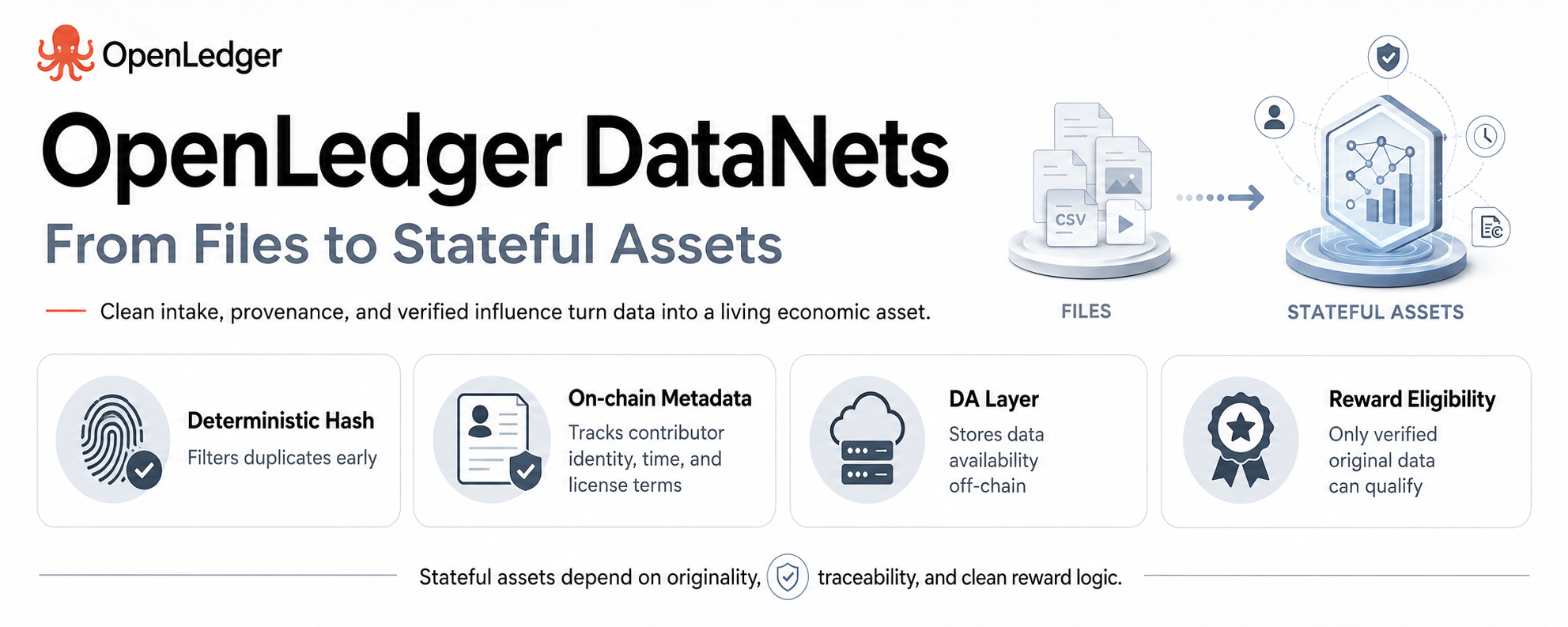
I’ve learned one thing from watching markets too long like weak systems don’t fail at the headline layer. They fail at the intake pipe. Same with data economies.
Everyone likes talking about large datasets, community contribution, open participation, and all the shiny words Everyone use when they’re trying to make messy coordination sound clean. But the real test is boring. Almost insulting, really. What happens when ten thousand people try to submit the same thing with a slightly different wrapper? But DataNets become interesting to me.
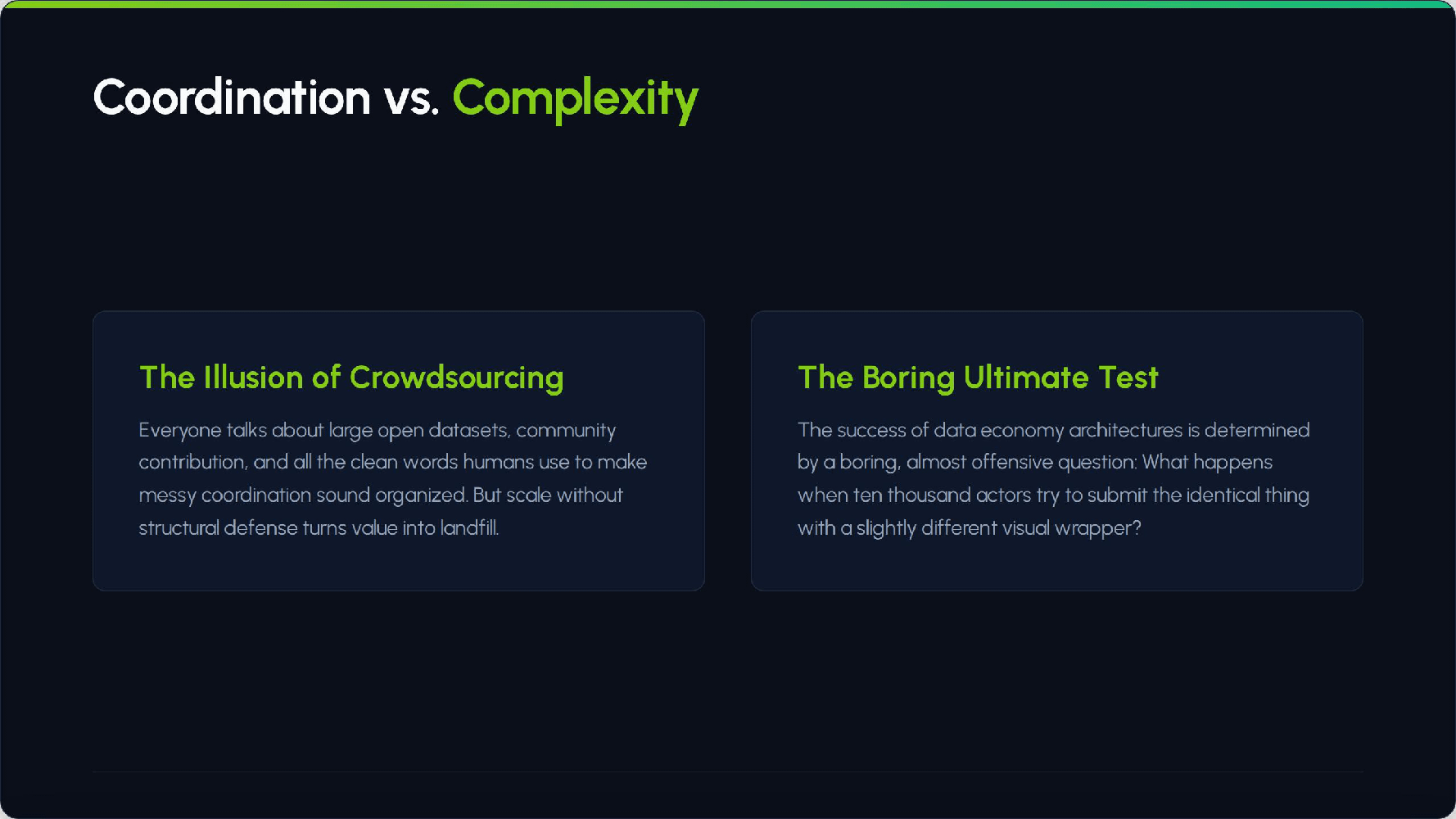
Not because datasets go onchain sounds fancy. It doesn’t. It sounds like another conference slide trying to escape real work. The actual point is that DataNets treat data less like a dead file and more like a living economic object. A contributed item comes with metadata: who added it, when it arrived, what license terms attach to it, and how it connects to the broader dataset. That changes the shape of the whole thing.
In old data markets, a dataset is often a package. Someone builds it, sells access, maybe updates it later, maybe doesn’t. Very neat. Very fragile. Very easy to rot quietly in the corner while everyone pretends the spreadsheet still reflects reality. DataNets move closer to a running machine. Each contribution becomes part of a shared state.
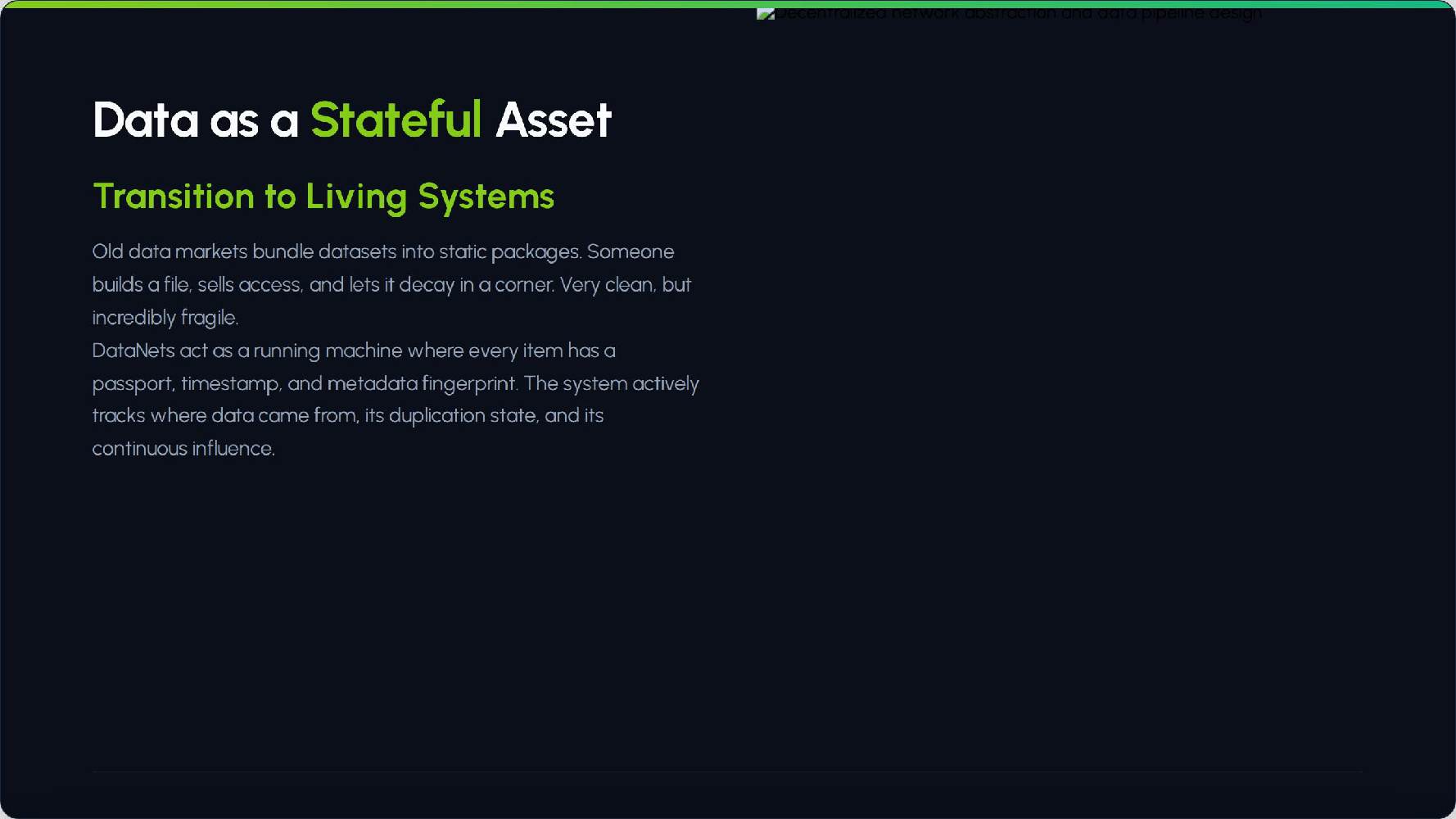
That means the system doesn’t just care that data exists. It cares where it came from, whether it’s already inside the network, whether it’s useful, and whether it keeps producing measurable influence over time. Like a warehouse where every box has a passport, a timestamp, and a fingerprint. Annoying? Sure. Necessary? Also sure.
I keep coming back to is the deterministic hash. That little fingerprint is doing heavy security work before the data even reaches off-chain storage. If the same contribution shows up again, the hash exposes it. Duplicate rejected. No cute farming trick. No copy-paste carnival. No “I found the internet and called it contribution,” which is sadly about 80% of productivity on bad days.
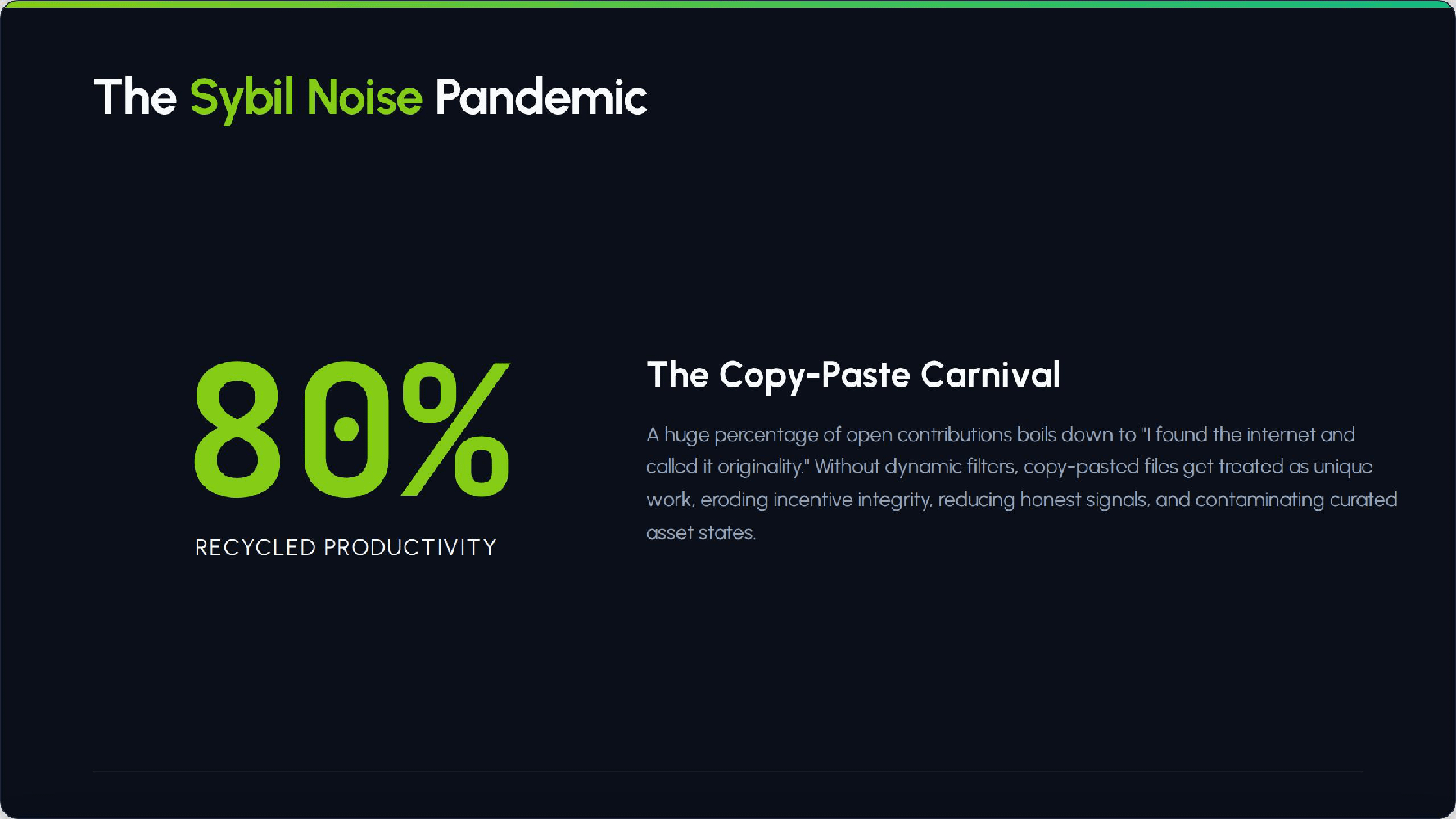
This matters because reward pools break when junk enters quietly. If duplicate data gets counted as valid work, then the whole incentive map gets dirty. Real contributors lose signal weight. Curators lose trust. The DataNet becomes a landfill with accounting software taped to the gate. And once that happens, good luck convincing serious builders that the dataset has clean economic value.
So the registration phase becomes the first battlefield. Not storage. Not marketplace design. Not the pretty dashboard. Registration. That’s where the system decides whether a new submission deserves to exist inside the asset state at all.
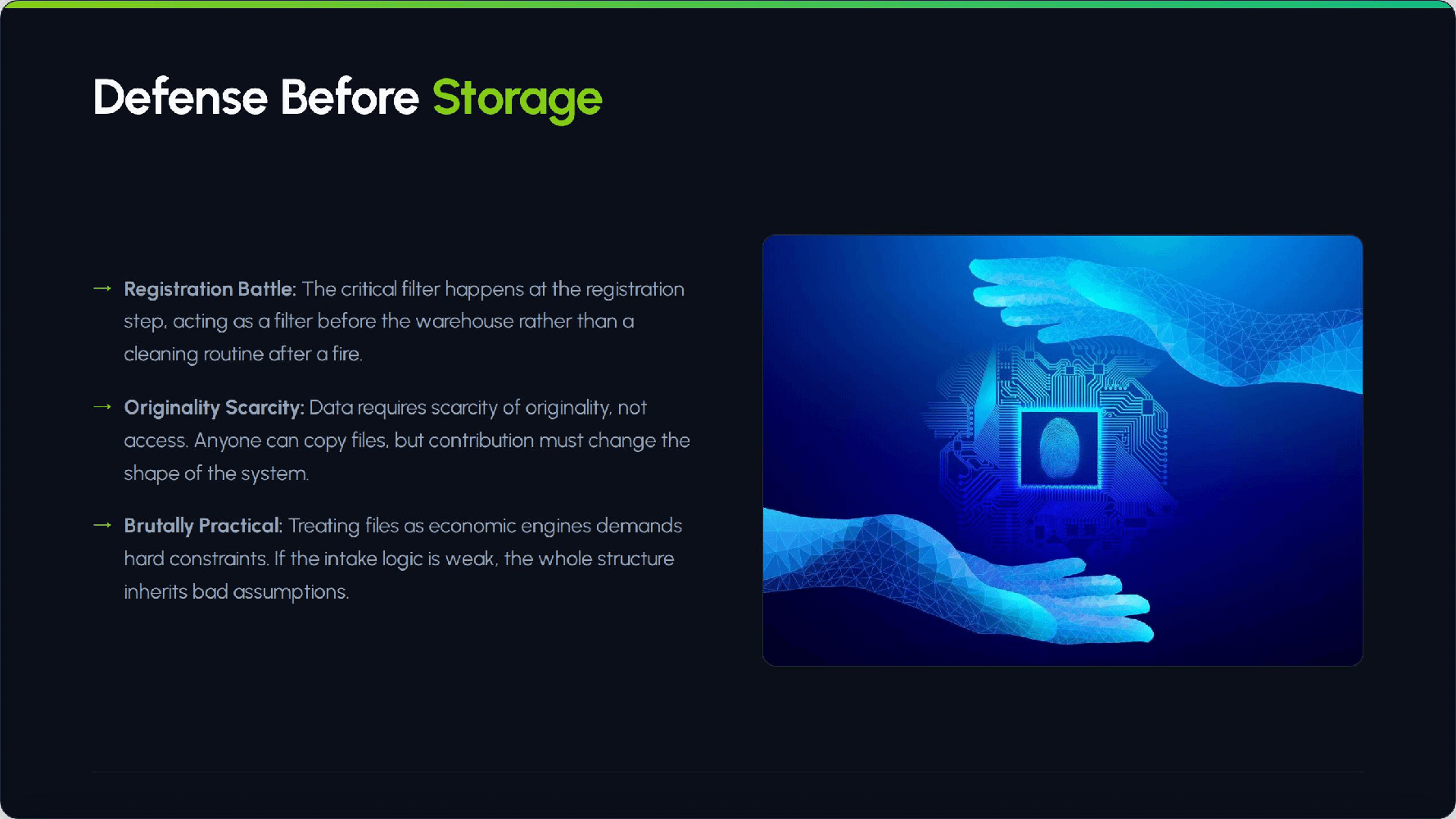
It’s a filter before the warehouse, not a janitor cleaning the mess after the fire. I like that design because it’s practical. Data needs scarcity of originality, not scarcity of access. Anyone can copy a file... But's that’s not contribution. Contribution is adding something that changes the shape, depth, freshness, or usefulness of the DataNet.
The deterministic hash forces that question is this new, or is this recycled material wearing a cheap disguise? But still, there’s a risk here. If the hashing logic is too rigid, tiny formatting changes could slip through. Different spacing. Rearranged fields. Slight edits. Same underlying content, different fingerprint.
That creates a bypass path where duplicate substance enters as fake novelty. Not catastrophic by itself, but enough to leak value over time. Drip, drip, and drip.. Then reward distribution starts looking clean on the dashboard while quietly becoming contaminated underneath.
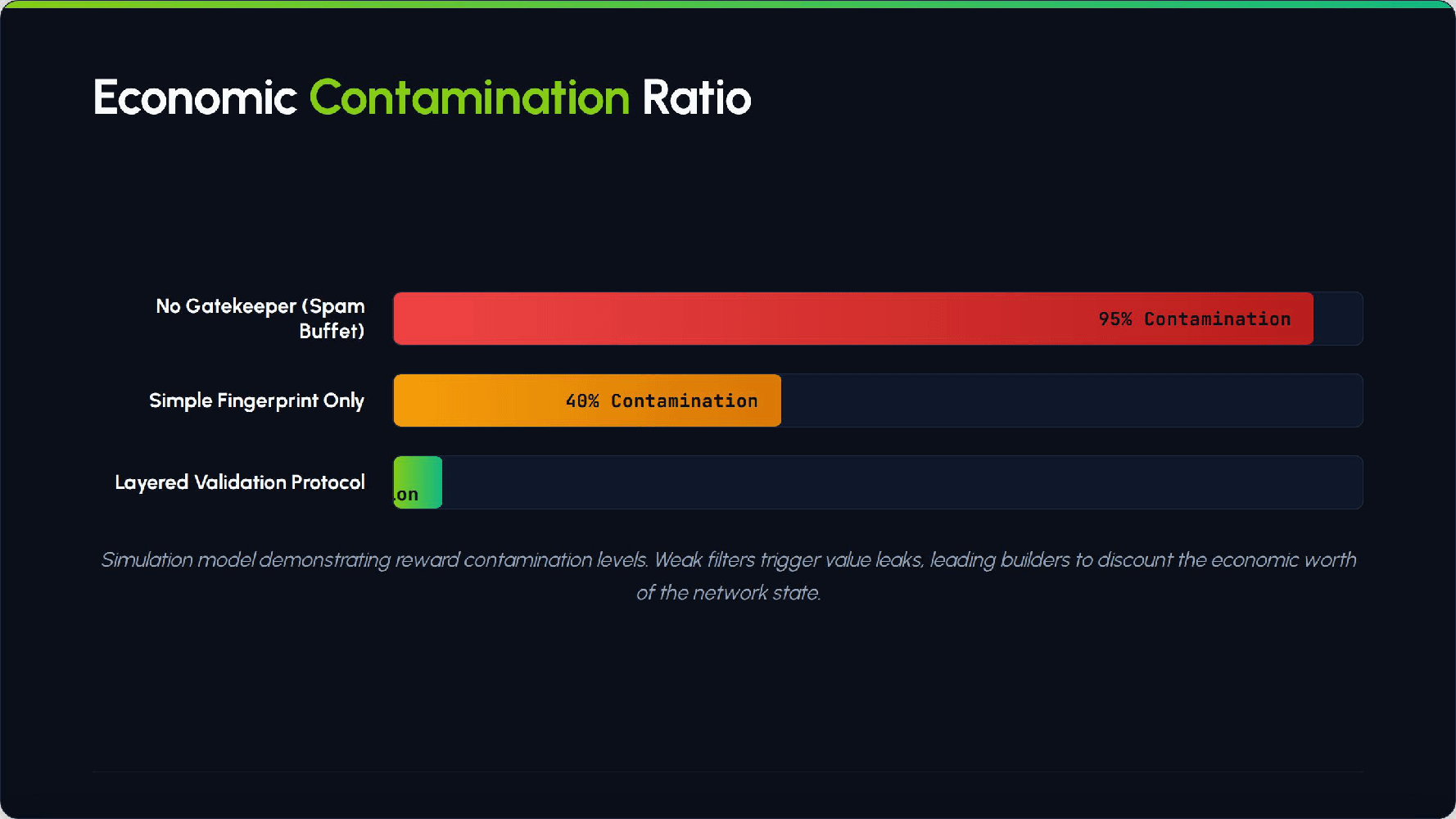
This is where engineering maturity matters. A good DataNet can’t depend only on exact-match hashing forever.. It needs layered checks. Deterministic fingerprints for obvious duplicates. Semantic similarity checks for near-copies. Curator review for edge cases.
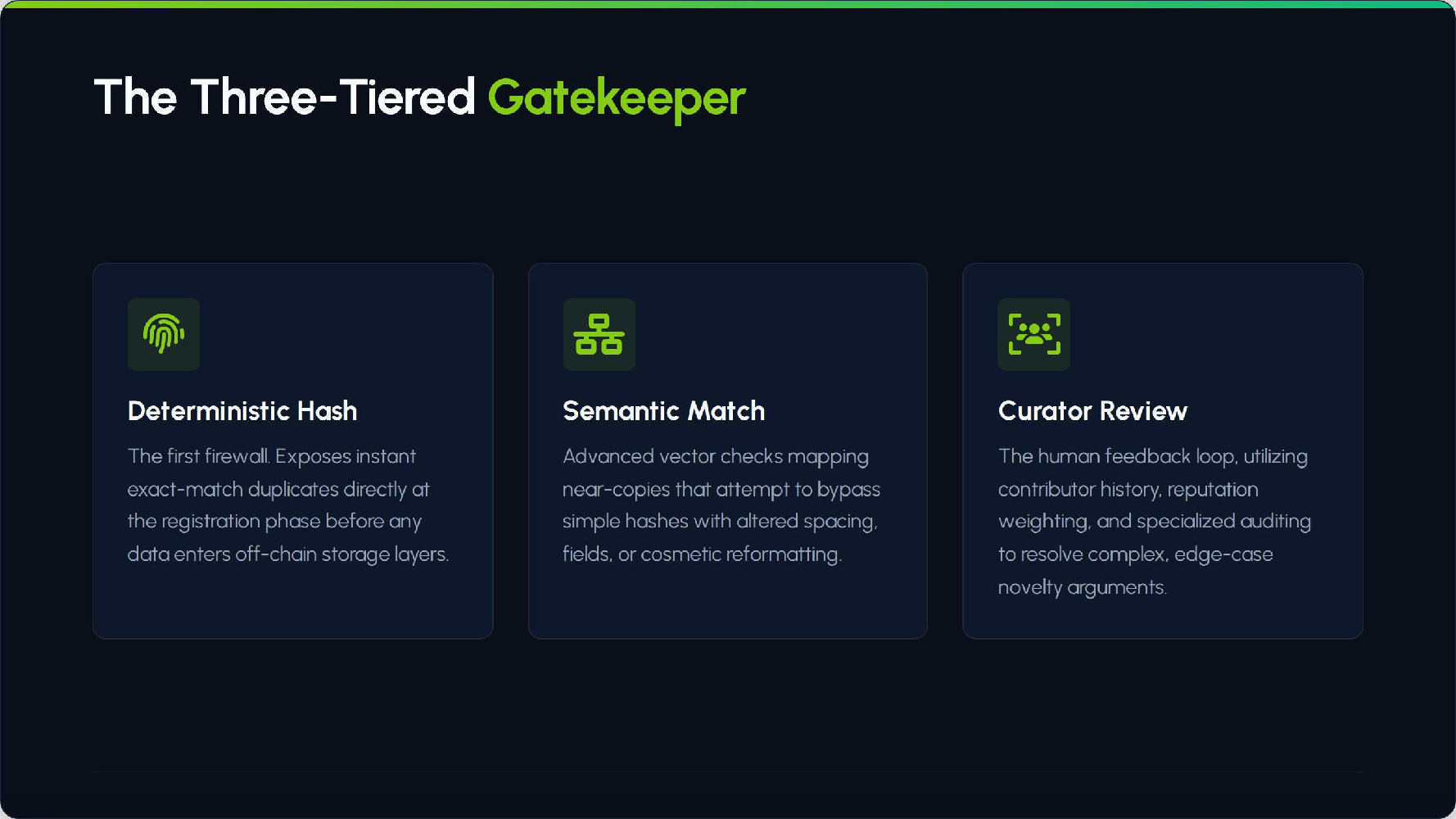
License validation. Contributor history. Maybe even reputation-weighted acceptance. Because real data is messy, and they are very talented at turning every open system into a loophole contest. The bigger shift is economic. Static datasets are like bottled water. Useful once, then consumed, copied, or forgotten. DataNets are closer to irrigation systems. They keep moving value if the pipes stay clean and the source keeps improving.
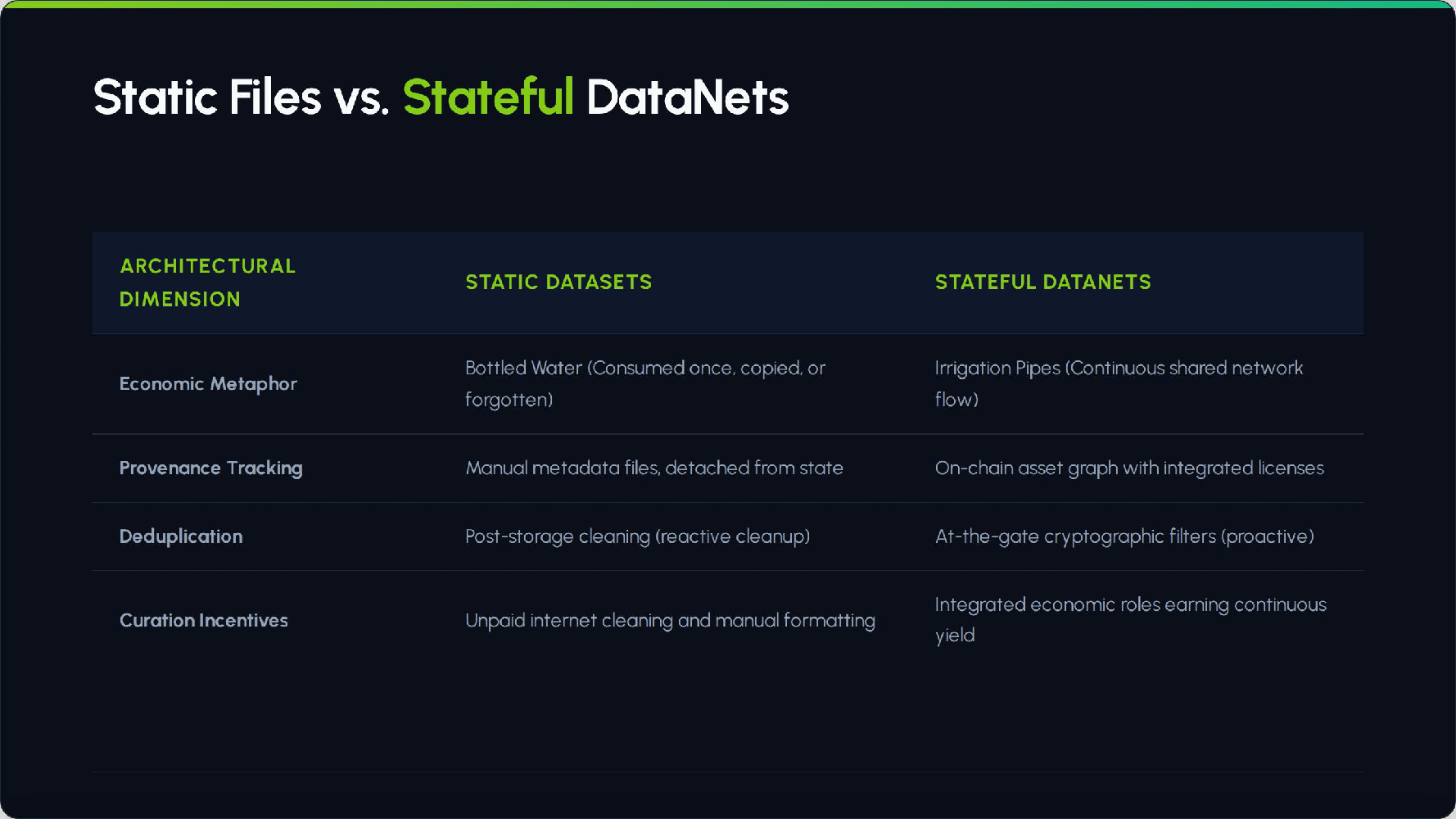
The asset is not just the file. The asset is the verified contribution graph around it. That’s the part many people will miss. The value isn’t only more data. More data can be garbage with volume. The value is structured, deduplicated, licensed, traceable data that can keep earning relevance as models, agents, and applications use it. Influence becomes measurable.
Contribution becomes persistent. Curation becomes an economic role instead of unpaid internet cleaning duty. For data engineers, this is not a marketing layer. It’s a quality-control stack. If the intake logic is weak, the whole DataNet inherits bad assumptions. If the intake logic is disciplined, the DataNet becomes more than a collection. It becomes a stateful asset with memory, provenance, and recurring utility. Boring words. Big difference.
For decentralized data curators, the question is even sharper. Are you adding new signal, or are you just moving old noise into a new container? The deterministic hash doesn’t care about your story. It checks the fingerprint. That coldness is useful. Systems need some cruelty at the gate, otherwise the gate is decoration.
DataNets only become serious if they defend originality before storage and defend economic fairness before distribution.
The deterministic hash is not the whole architecture, but it’s the first hard wall against fake contribution. Without that wall, community data turns into a spam buffet with nicer branding. With it, DataNets start to look like something more durable: not files waiting to be sold once, but living assets that can keep proving their value through verified influence.
So here’s the question is, if data becomes a stateful asset, who deserves the most weight, the person who uploads the most, or the person whose contribution keeps improving the system after everyone else forgets it exists?
I’d treat this as an engineering thesis to study, not a shortcut to conviction, because every design still needs real-world stress before it earns trust...
@OpenLedger #OpenLedger $OPEN #DataNets
