
Financial systems are defined less by what they allow than by who they let in.
A well-run building does not post guards in every hallway. It issues keys carefully. Some doors open daily. Others only when conditions are met. Most people never notice the system working.. until a door stays closed when it should.
Dusk follows that logic on-chain.
Rather than treating access as a blanket property of the network, @Dusk treats it as something attached to the asset and the moment. Eligibility is not broadcast. It is checked. Transferability is not assumed. It is earned. The rules live with the instrument, not the chain shouting reminders.
This matters when DeFi stops being anonymous capital and starts being governed capital. Funds with mandates. Instruments with jurisdictional limits. Participants with roles that change over time. A wallet address alone does not capture any of that. Dusk accepts that complexity instead of flattening it.
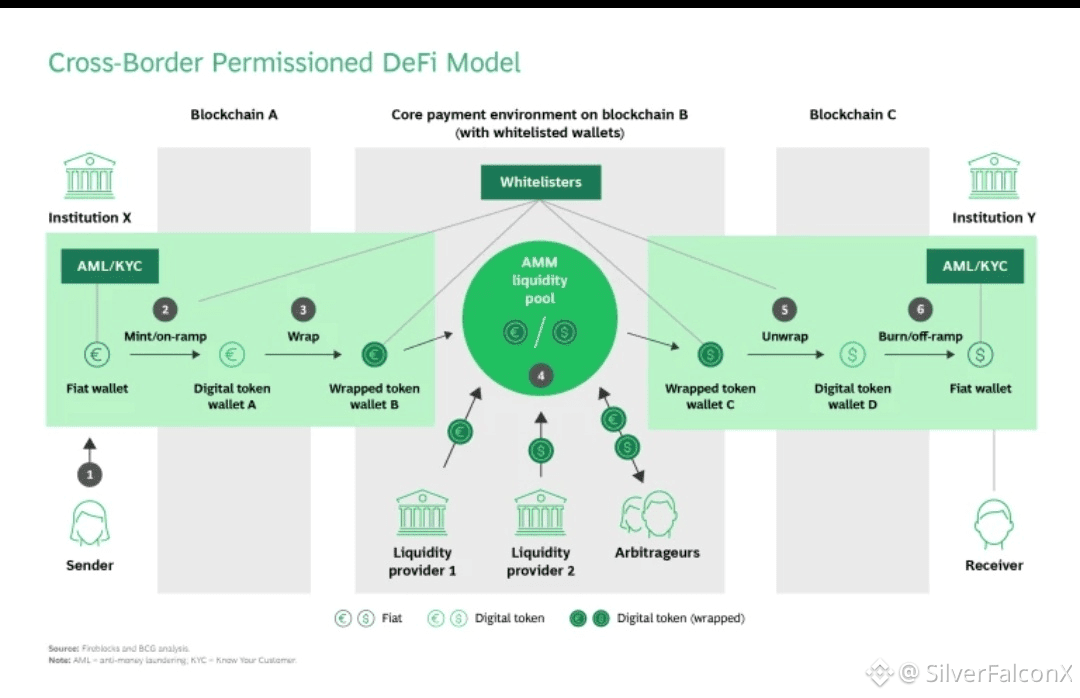
The result is quieter behavior. Less probing. Fewer edge-case interactions. Participants move with an understanding of where they are allowed to stand. When they are not, nothing happens... cleanly.
It resembles a train system that runs on schedules, not negotiations. You do not argue your way onto the platform. You arrive when your ticket is valid. The system does not need to explain itself; it simply enforces timing and permission.
For builders, this shifts priorities. Instead of designing flows that work for everyone and patching exceptions later, they design for defined participants from the start. For operators, it reduces guesswork. For counterparties, it removes the anxiety of unintended exposure.
Dusk does not promise openness everywhere. It promises correctness where it matters.
In finance, that distinction often decides whether systems scale quietly... or unravel loudly.