

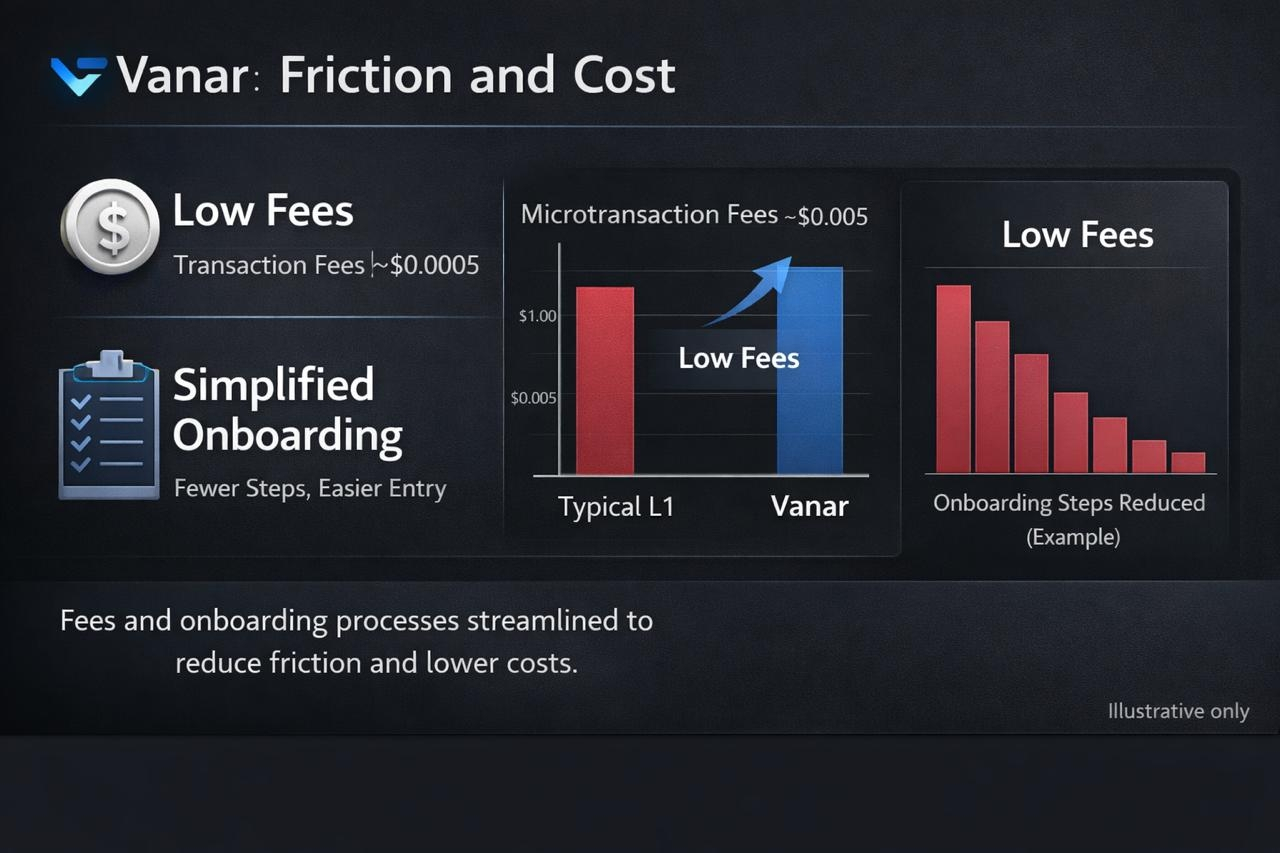
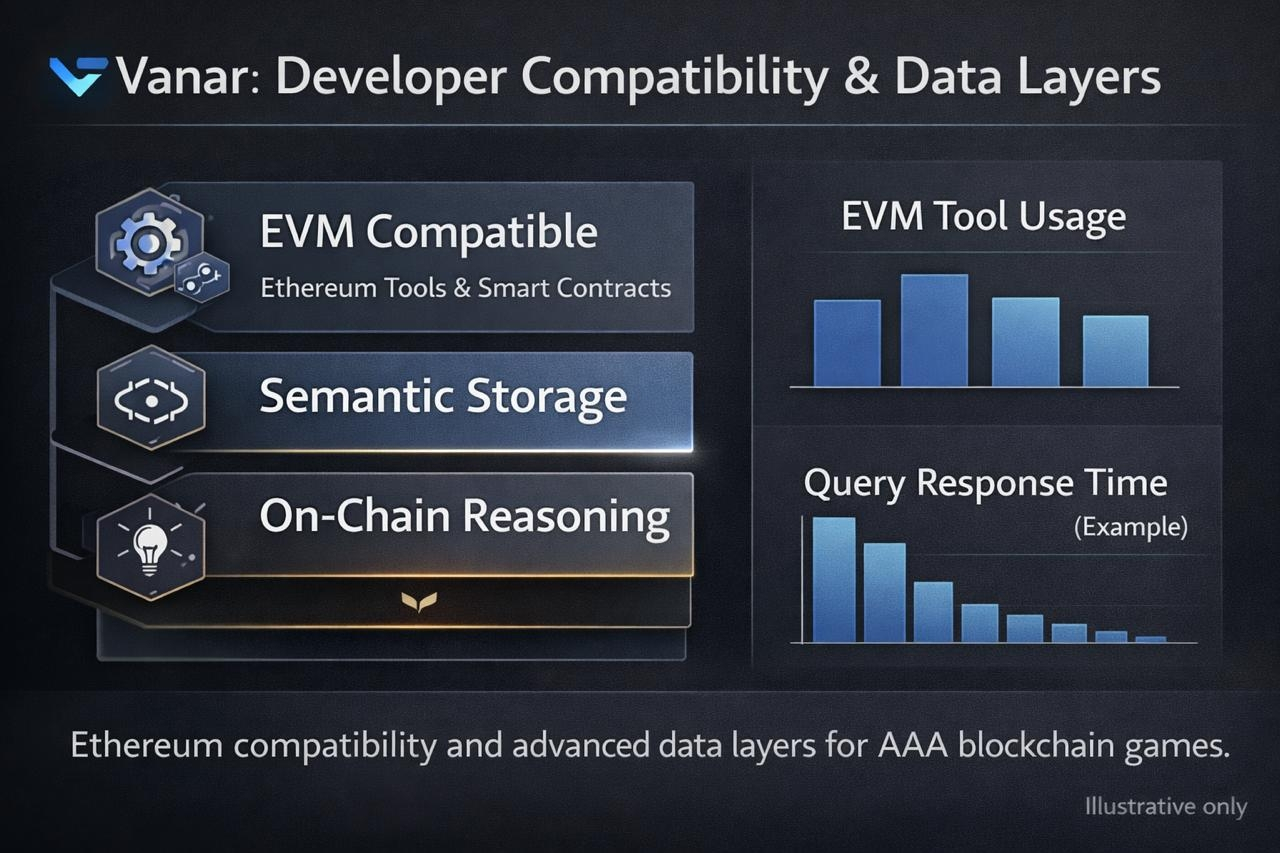
A couple years ago it was easy to picture “blockchain gaming” as a skin you could paste onto any title: mint some items, promise ownership, call it a day. Players pushed back hard, and honestly I think that was healthy. If a wallet install or a surprise fee shows up between someone and a match they were already enjoying, the game is the one that pays the price. What’s changed more recently is the tone; it has to feel normal for players. In 2024, one industry review pointed to a first meaningful wave of anticipated and AAA-adjacent releases reaching the public, including titles like Illuvium and EVE Frontier, and it also noted big publishers continuing to experiment. It’s a small sign of seriousness. Vanar enters that picture as an attempt to make the underlying rails less painful for game-like traffic. In its own documentation, Vanar describes the main blockers in plain terms: high transaction costs that hurt microtransactions, sluggish speeds that get in the way of real-time use, and onboarding that’s too complex for everyday players, with a target for fees around $0.0005. Another practical choice is compatibility: Vanar has chosen to be EVM compatible, so Ethereum-style tools and smart contracts can port over. Where Vanar tries to be more distinctive is in how it talks about “memory” and richer on-chain data. Its website presents a multi-layer stack that adds components for semantic data storage and on-chain reasoning on top of the base chain. I get why this is tempting for a game that’s meant to live for years. If you can anchor ownership, history, and a few core rules somewhere that doesn’t disappear when teams change or infrastructure moves, that’s real stability. I still get uneasy when the conversation shifts to running the minute-to-minute game loop on-chain. You might be able to pull it off, but it can quietly flip the priorities, where the game starts serving the system instead of the system serving the game. The cleaner approach, to me, is to use the chain for the handful of moments where trust matters, and let everything else run the way games have always run: fast, responsive, and basically invisible. The timing is also shaped by pressure on the AAA business. Bain’s 2025 gaming report describes large studios facing rising costs and tightening margins, squeezed between strong indies and giant “games-as-a-platform” ecosystems. In that environment, persistent economies can look like tools rather than gimmicks, as long as they don’t break the experience. And wallet UX is slowly improving; thirdweb’s account abstraction guide describes sponsoring gas fees, enabling one-click actions, and removing seed phrases from onboarding. Vanar’s public milestones fit that “make it boring” direction too: Binance completed the Virtua (TVK) to Vanar (VANRY) token swap and rebranding in December 2023. Binance’s verified news feed also reported Vanar’s announcement that it joined NVIDIA Inception in March 2024, framed as access to NVIDIA resources and expertise for developers building on the chain. None of this guarantees Vanar becomes the default foundation for AAA blockchain games, but it gives a clear lens for judging it: does it reduce friction, stay predictable under load, and let the game remain the point?
@Vanarchain #vanar #Vanar $VANRY
