Privacy is not the breakthrough having two transaction shapes that still converge into one final settlement is.Most people miss it because they only look at “hidden vs public,” not at how those two modes share the same state reality.For builders and users, it changes what can be safely composed without splitting liquidity or trust assumptions.
I’ve watched enough “privacy” systems get judged by screenshots and slogans to become skeptical of the surface story. When I try to understand a chain, I start from the boring questions: what is the state, who can verify it, and what exactly becomes irreversible. Over time, the most useful designs I’ve seen aren’t the ones that hide everything, but the ones that let different transaction needs coexist without creating two separate worlds.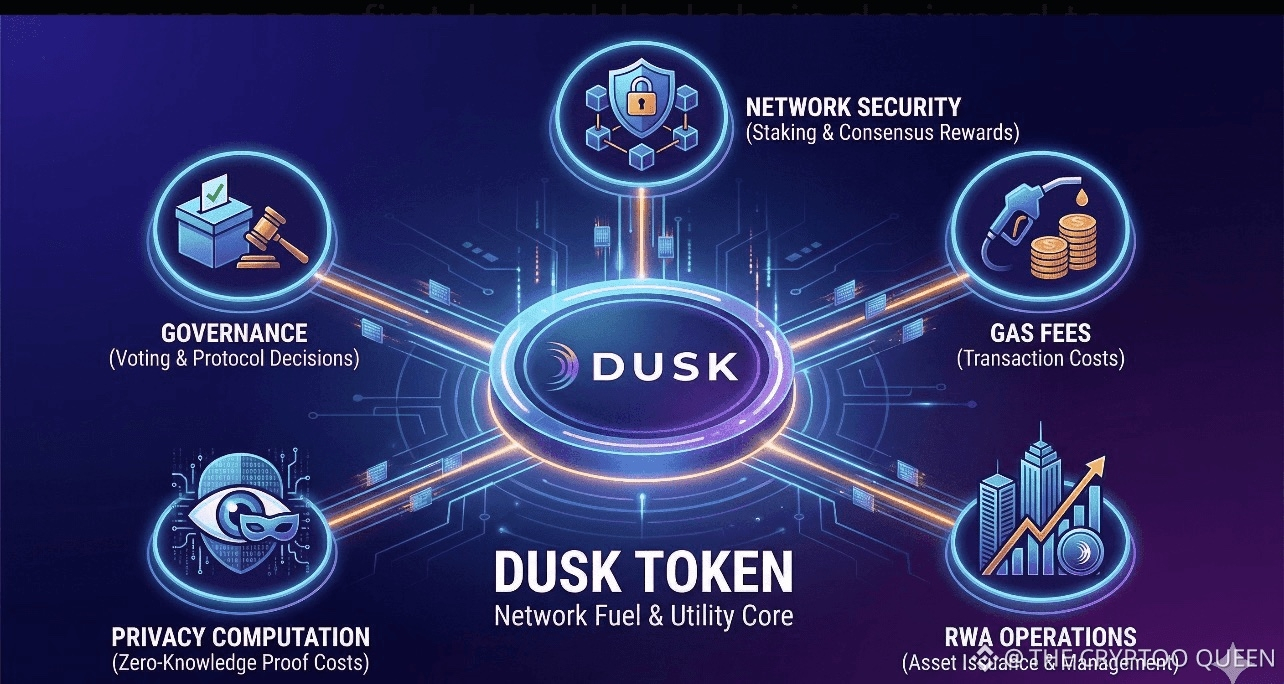
The concrete friction is that real financial activity does not fit one privacy setting. Some flows need selective disclosure, audit trails, or compliance-friendly visibility; other flows need confidentiality to avoid leaking counterparties, balances, or trading intent. If a network forces a single transaction shape, builders end up bolting on workarounds that fragment liquidity, add bridges, or introduce “privacy pools” that live outside the main settlement path. Users then pay for that fragmentation with worse execution, higher operational risk, and confusing guarantees about what is final versus what is merely “obscured.”
It’s like trying to run both cash payments and card payments in a city where they settle on different ledgers and only meet at the bank once a week.
The core idea in Dusk Foundation’s approach is treating “public” and “confidential” as two valid transaction shapes that update one shared ledger, rather than as two separate systems stitched together later. In practice, that means the ledger’s state has to be expressible in a way that both shapes can touch: think of it as a combination of publicly readable components (for things that must be visible) and cryptographic commitments (for things that should be private). A public-style transaction can update visible state directly with normal signatures and clear amounts. A confidential-style transaction updates committed state by proving, without revealing sensitive fields, that the spend is authorized, that it does not double-spend, and that the state transition follows the rules. The key is that both shapes land in the same block sequence, get the same ordering, and inherit the same finality conditions.
The verification flow is where the design either holds together or falls apart. A user constructs one of the two shapes, signs it, and includes whatever witnesses are required: for the public shape, that’s straightforward signatures and explicit values; for the confidential shape, that’s a compact proof plus the minimal public signals the network needs to maintain integrity (for example, markers that prevent reusing the same spend). Validators (or block producers) verify signatures, check proofs, confirm that the referenced prior state exists and hasn’t already been consumed, and then apply a deterministic state update. If anything fails—invalid proof, invalid signature, an attempt to reuse a spend marker, or malformed data—the transaction is rejected. What is and isn’t guaranteed becomes clearer with this framing: the network can guarantee the validity of the state transition and the uniqueness of spends, but it does not guarantee that your transaction will be included quickly if blockspace is scarce or if producers behave adversarially.
Incentives have to support both shapes without quietly favoring one. Fees are the obvious lever: users pay fees for network usage, and those fees compensate validators for bandwidth, computation, and storage pressure (confidential verification is typically heavier, so the fee model needs to reflect that cost without making privacy unusable). Staking aligns validators with honest verification and liveness; if a validator signs invalid blocks or violates consensus rules, a slashing or penalty regime is the backstop, while missed participation can be punished via reduced rewards. Governance then matters less as “politics” and more as operational tuning: adjusting fee parameters, proof verification limits, and resource caps so that one transaction shape doesn’t crowd out the other, and so spam resistance doesn’t become accidental censorship.
which is a feature. If confidential proof verification becomes too expensive, blocks get bloated or validation centralizes; if fees don’t price that cost, the network becomes an easy target for denial-of-service. If producers censor one shape (often the private one), users lose the practical benefit even if the protocol is sound. And if reorg risk exists before finality, then “settlement” is only as real as the consensus’s ability to converge under stress. The point of “one final settlement” is that once a transaction public or confidential crosses the network’s finality threshold, the application can treat it as done, not “done unless the privacy layer breaks” or “done unless the bridge stalls.”
This whole model still depends on real validators continuing to price and include both transaction shapes fairly when congestion, regulation pressure, or adversarial spam makes the incentives uncomfortable.
If you had to choose, which matters more to you in practice: confidentiality by default, or the ability to switch transaction shape without changing the settlement story?