

A bear market isn’t just “price going down.” It’s a regime where liquidity thins out, rallies get sold into faster, and your normal “bull-market instincts” (buy every dip, size up on breakouts, hold through noise) start leaking money. The hardest part is psychological: you’ll still get sharp green candles, but they often come from positioning (short covering, unwind flows) rather than fresh demand. If you treat every bounce like a new trend, you’ll slowly donate your capital to the market.
So the goal changes. In a bearish cycle your job is not to maximize performance; it’s to minimize error. That means smaller sizing, fewer trades, tighter invalidations, and refusing to trade inside messy mid-ranges. You want to survive long enough to be present when structure finally turns. In practice: reduce risk per trade, cut the number of attempts, and accept that “doing nothing” is a valid position when the market is low-quality.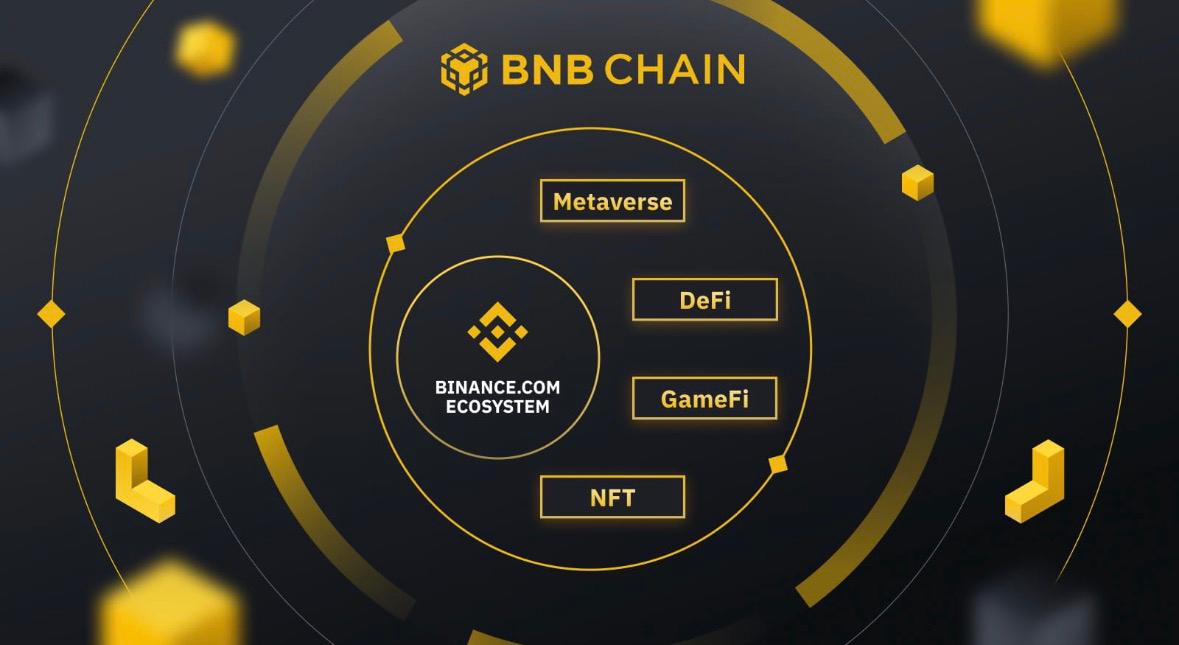
Technically, indicators matter less than structure and acceptance. In bear conditions, you’ll see range expansions, fake breakouts, and relief rallies that stall exactly where sellers were previously active. The cleaner setups are still boring: breakdown → retest → rejection; or a rally into a prior supply zone → failure to reclaim → continuation. The edge comes from aligning with the higher-timeframe trend and only trading when price proves it can hold a level, not when it simply touches it.
BNB is a good example because it sits at the intersection of “market beta” and “ecosystem-driven flow.” It’s not just an L1 token; it’s also tied to Binance utility and BNB Chain usage. That can create relative strength at times, but it doesn’t magically exempt it from risk-off conditions. As of now BNB is trading around the mid-$600s (roughly ~$636–$641 depending on venue). In a bear market, that price number matters less than how price behaves around key zones: does it reclaim and hold prior value, or does it keep failing at the same resistance and bleeding slowly?
Here’s the core way I’d “bear-market trade” BNB without getting chopped:
First, define your higher-timeframe levels using only obvious swings (weekly/daily). Mark the last major breakdown area and the last major demand area that produced a meaningful impulse. Your job is to trade reactions to those zones, not to predict the next headline.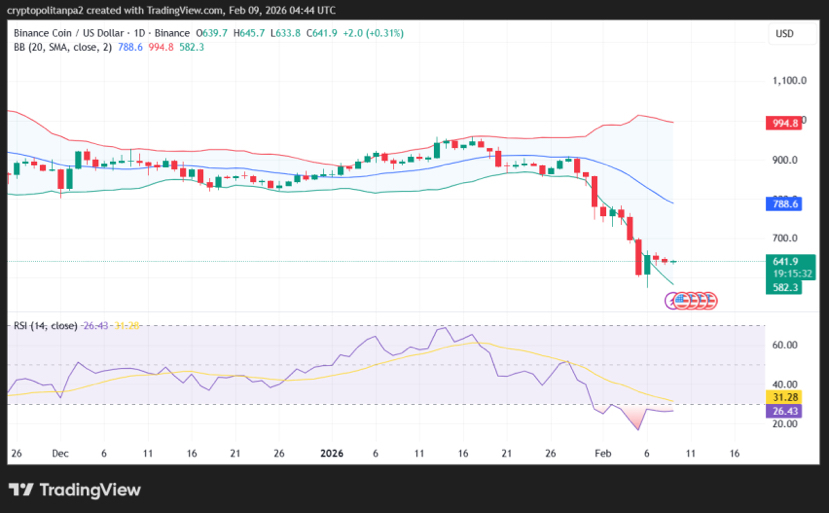
Second, demand confirmation before committing size. For longs, the minimum is: reclaim a level, hold it on a retest, and show acceptance (not just a wick). For shorts, the minimum is: fail to reclaim a level, reject on retest, and continue below. If you can’t describe the invalidation in one sentence, the trade is probably emotional.
Third, respect bear-market liquidity behavior: big pumps can be traps. If BNB rips upward but doesn’t hold above resistance with follow-through, assume it’s a positioning move until proven otherwise. That’s why I like watching Binance-native signals together: spot volume vs perp volume, funding shifts, and whether the move holds in the next session (acceptance) instead of immediately mean-reverting (rejection).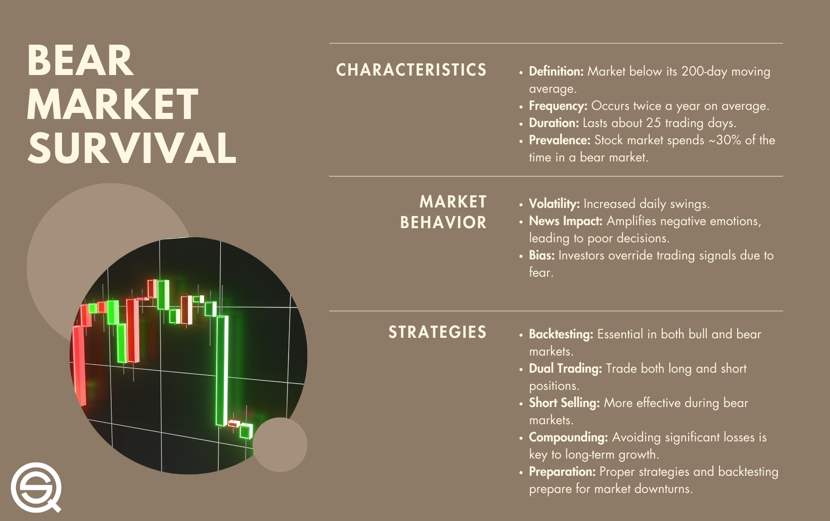
Now the Binance-specific “BNB tips” that actually help execution (not hype):
Use multi-market confirmation: don’t only watch BNB/USDT. Check BNB/BTC (relative strength) and BNB perps (positioning). If BNB/USDT looks strong but BNB/BTC is still weak, the move may just be USD-stablecoin drift rather than real outperformance.
Watch acceptance, not the spike: after any sharp candle, zoom out and ask: did price close above the level and stay there? If it returns below quickly, treat it as a liquidity sweep.
Trade smaller, trade cleaner: in a bear regime, reduce leverage and reduce attempts. One high-quality retest trade beats five “maybe” trades.
Plan the two scenarios: (1) reclaim + hold → you can trade toward the next resistance; (2) fail + reject → you can trade continuation toward the next support. Anything in the middle is chop.
On the “fundamental flow” side, it’s still worth knowing what can create structural demand over time. BNB has a supply reduction mechanism via Auto-Burn, and BNB Chain periodically reports quarterly burns (for example, the 33rd burn data and figures were published by BNB Chain). That doesn’t give you a day-trade signal, but it can matter for longer-horizon sentiment and positioning when the market is deciding “what deserves to hold up better.”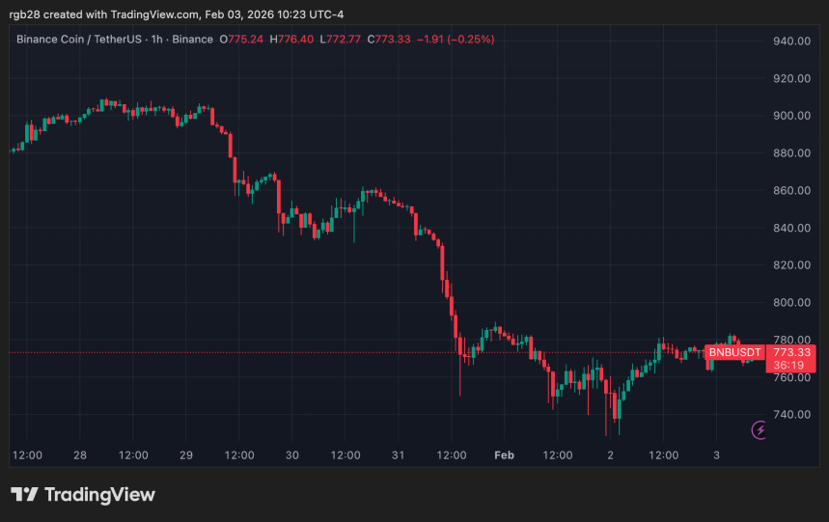
The honest limit: in a bear market, even the best structure can fail because macro liquidity and risk appetite dominate everything. You can do everything “right” and still get stopped—your protection is not predicting better, it’s losing smaller and staying consistent.
If you want engagement like your BTC article, end it with a simple question that invites scenarios, not opinions something like: “On BNB, what level would you need to see reclaimed and held before you’d believe the trend is actually shifting?”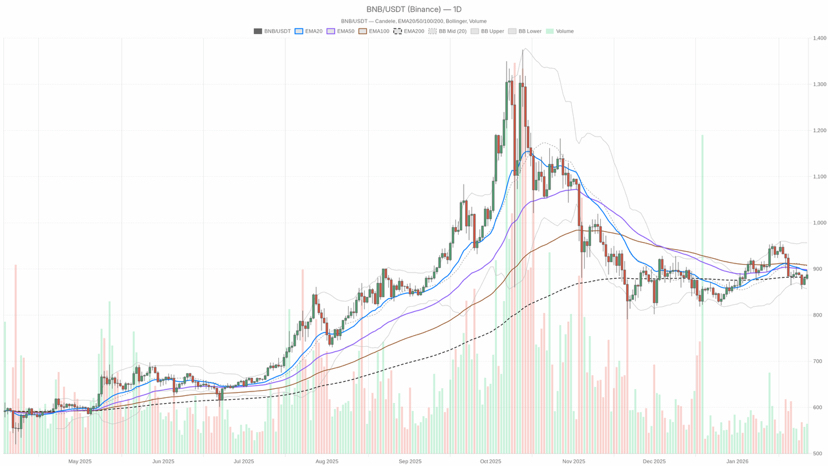 #bnb $BNB #Rewards