


Most crypto tokens are built to grab attention and trend on Twitter.
VANRY feels like it was built to quietly run in the background while people do other things.
That difference matters way more in 2026 than most people realize.
They’re Not Fighting Narrative Wars
Vanar Chain isn’t trying to win the narrative wars happening daily on crypto Twitter.
It’s quietly positioning itself where narratives eventually fade and die. Inside actual persistent digital environments that keep running.
Games that people play for months. Entertainment platforms with recurring users. Creator economies. Subscriptions. Identity workflows. Places where things need to keep working long after the tweet cycle moves to the next drama.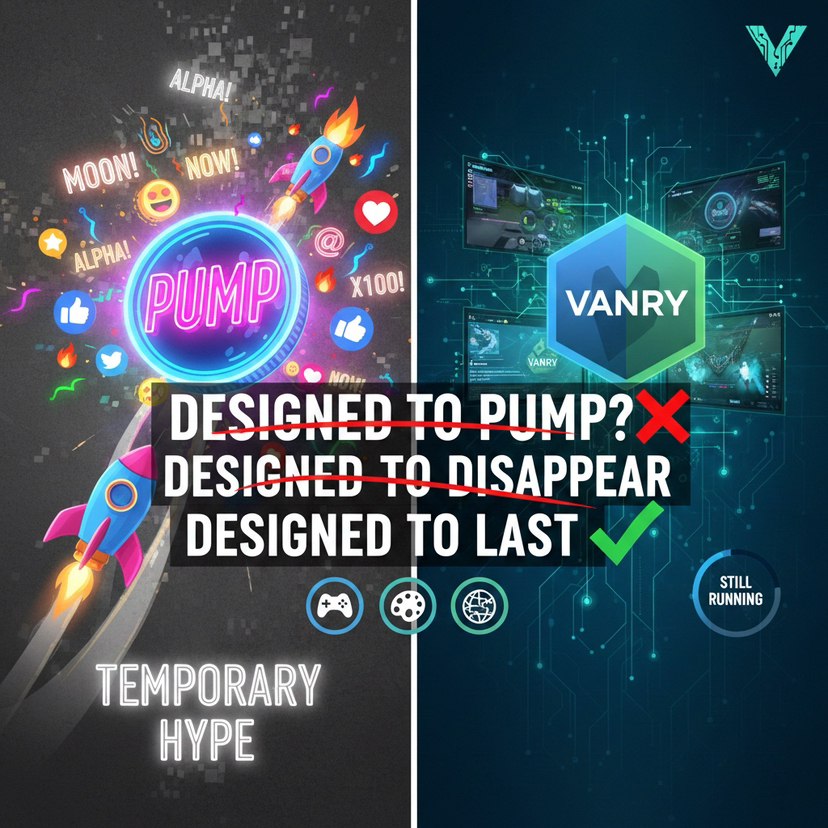
The Value Comes From Operation Not Holding
If Vanar succeeds, VANRY won’t be valuable because people are holding it waiting for a pump.
It’ll be valuable because people are actively operating through it daily without thinking about it.
That shift sounds subtle but it’s foundational.
Infrastructure Doesn’t Pump First It Settles First
Narrative tokens thrive on attention spikes and hype waves.
Infrastructure tokens thrive on boring repetition.
Fees get paid automatically. Access gets granted seamlessly. Stakes stay locked long term. Systems update quietly. Users return habitually.
None of that is remotely glamorous. That’s exactly the point.
When people expect VANRY to behave like a hype driven meme coin, they’re missing the entire design intent.
Vanar is building for environments where thousands of small boring actions compound into habit over time. Microtransactions. Creator payouts. Gated access. Persistent world state. Automated workflows that don’t feel like crypto at all.
That Kind of Adoption Doesn’t Go Viral
That kind of adoption doesn’t arrive as a viral Twitter moment.
It arrives as complete normalcy where nobody even notices blockchain is underneath.
The Moment Nobody Panics
One of the most revealing moments in any shared digital world isn’t when something breaks catastrophically.
It’s when something changes significantly and nobody reacts or panics.
In live environments like Virtua, updates don’t pause reality. Finality lands. State moves forward. Users catch up in their own time.
When that happens without chaos or confusion, you’re no longer looking at a demo or proof of concept. You’re looking at infrastructure successfully doing its job invisibly.
That’s Where Vanar Feels Different
Vanar’s focus isn’t raw speed benchmarks or headline grabbing TPS numbers.
It’s consistency under crowd pressure. Predictable settlement. Coherent shared state. Systems that don’t fracture into parallel realities when load increases.
In consumer grade digital worlds, that reliability is the actual product people care about.
Memory and Context Matter More Than Speed
Most Web3 applications behave as if every interaction is the first one ever.
Context resets constantly. Memory fragments. Users adapt until they get frustrated and leave.
Vanar’s architecture hints at a genuinely different future. Persistent memory layers. Reasoning layers. Workflows that remember what the system was, not just what it is right now.
This isn’t jumping on AI hype. It’s attempting to solve one of the hardest problems in digital experience design. Context loss.
When Platforms Forget Trust Dies
When platforms forget themselves between sessions, users lose trust quickly.
And trust is the only currency that actually matters in persistent environments where people spend real time.
VANRY Becomes a Lever Not a Story
Viewed honestly, VANRY isn’t positioned as a marketing centerpiece or hype vehicle.
It functions as an economic coordination layer. Fees. Staking. Governance. Access control. Incentives tied directly to usage rather than speculation.
That restraint is genuinely telling.
Projects that survive long term tend to undersell early and compound quietly over years. Vanar’s pattern of slow announcements, minimal token hype, and visible consistent progress attracts a different class of participant.
Less reactive traders. More conviction driven builders. Over time that changes how volatility behaves and how negative narratives struggle to stick.
My Honest Take
Vanar doesn’t seem interested in being the loudest Layer 1 chain screaming for attention.
It seems interested in being dependable enough to host actual digital life that people care about.
If shared persistent reality becomes the product, worlds that remember and adapt and keep working, then VANRY won’t need attention campaigns to justify its value.
It’ll be priced by necessity. By being infrastructure people depend on without thinking about.
And in crypto, necessity always outlasts narrative hype eventually.
The question is whether they can execute consistently enough for that future to actually arrive.