
First of all, in crypto, users do not only pay transaction fees; they also price uncertainty into every decision they make. When fees fluctuate wildly, settlement timing becomes unclear, and congestion spikes all of a sudden, users begin to demand a hidden risk premium before committing capital. It is clear that this premium is not written on-chain or displayed on any dashboard. However, it quietly shapes behavior across the entire ecosystem in ways that are easy to overlook.
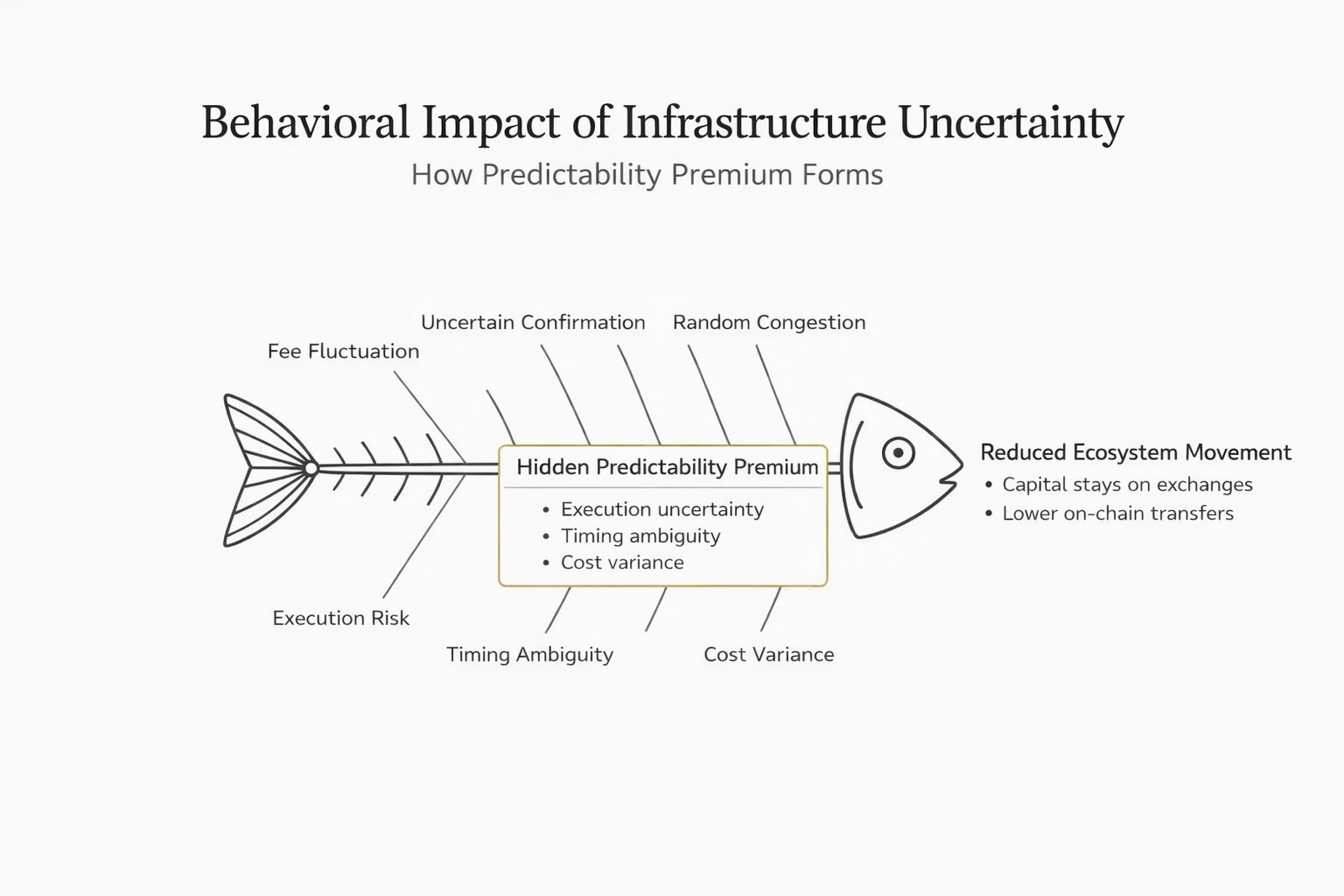 For example, a trader on Binance may identify an opportunity and intend to move funds on-chain in order to capture it efficiently. Yet if network costs are unpredictable or confirmation times feel inconsistent, hesitation naturally appears. Capital remains on exchanges for the time being, activity slows down, and participants choose optionality over execution. Consequently, ecosystem movement weakens. In fact, unpredictability functions like a silent tax on confidence rather than a visible line item in a fee schedule.
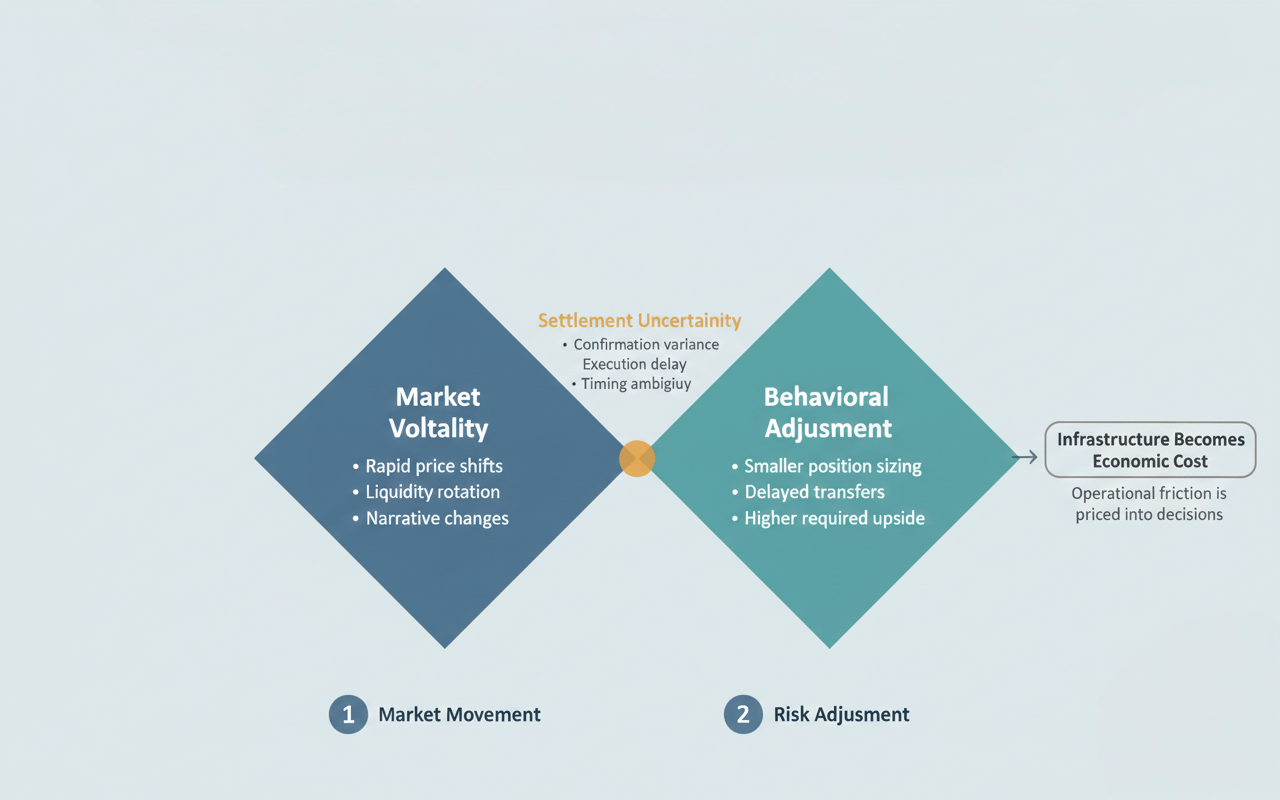 Second, consider settlement timing during volatile market conditions. Markets adjust rapidly, particularly when narratives shift or liquidity rotates between sectors. As soon as users cannot reasonably estimate confirmation speed, they begin to adjust their behavior in subtle but meaningful ways:
They size positions more cautiously.
They delay transfers.
Moreover, they demand additional upside to compensate for operational friction.
As a result, infrastructure instability transforms into an economic cost rather than remaining a purely technical inconvenience.
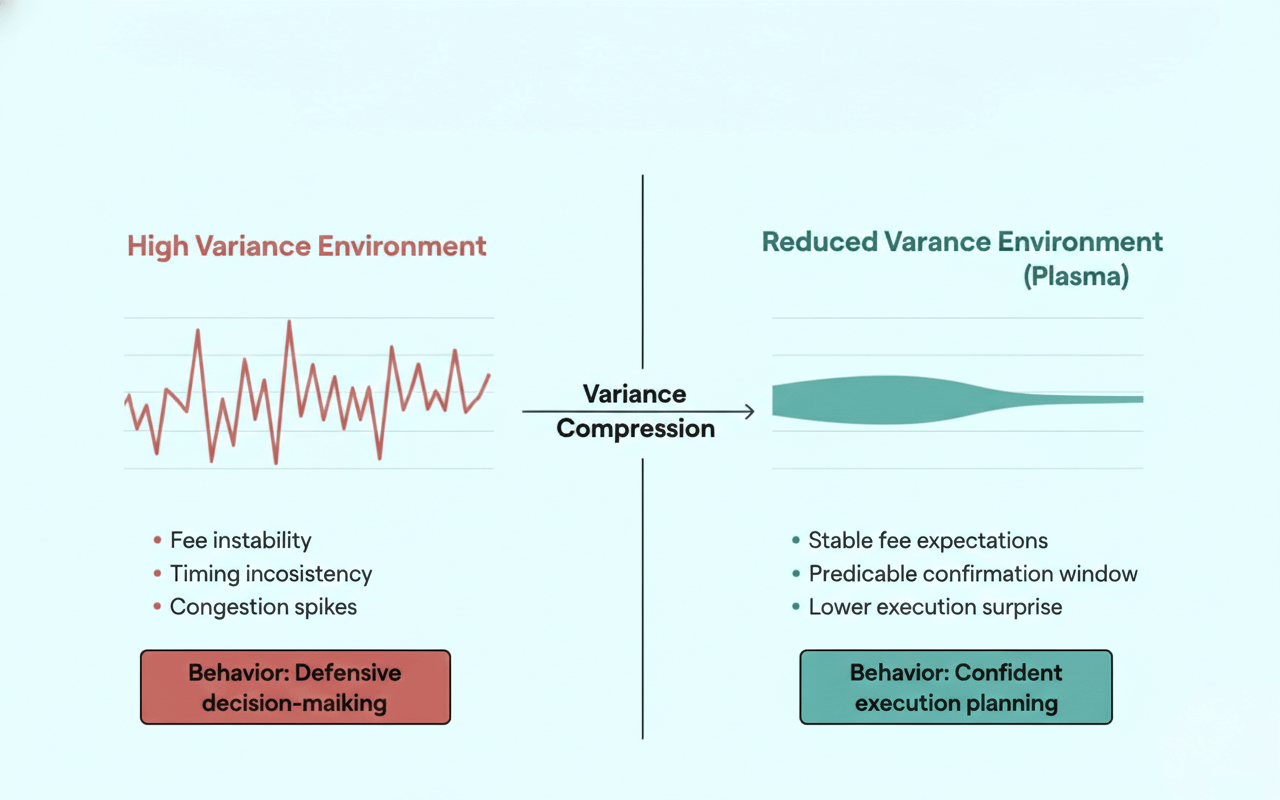 Plasma approaches this challenge from a different and more practical angle. It is not generic scaling rhetoric, nor is it built on dramatic claims about maximum capacity. Instead, it focuses on reducing variance in user experience. Because lower variance translates into fewer negative surprises, users can plan transactions with greater clarity and stronger expectations about outcomes. Furthermore, predictable fees and settlement windows allow participants to make up their mind quickly without constructing defensive buffers for worst-case scenarios that may never materialize.
Consider a practical comparison between two networks that show similar performance on paper but feel very different in real use. In the first, fees are occasionally low yet unpredictable, and confirmation delays disrupt timing. In the second, costs and settlement remain consistent even as activity rises. Users typically prefer the stable environment because reliability compounds over time. Although volatility attracts attention, consistency builds trust. Therefore, systems that reduce uncertainty lower the mental premium users demand before participating.
From my point of view, this is where Plasma becomes strategically relevant for Binance users. Binance thrives on activity, and activity thrives on confidence that operational steps will execute as expected. When infrastructure becomes more predictable, users do not need to overthink transfer timing or fee spikes due to sudden congestion. Consequently, participation becomes more fluid, and capital moves with less psychological resistance.
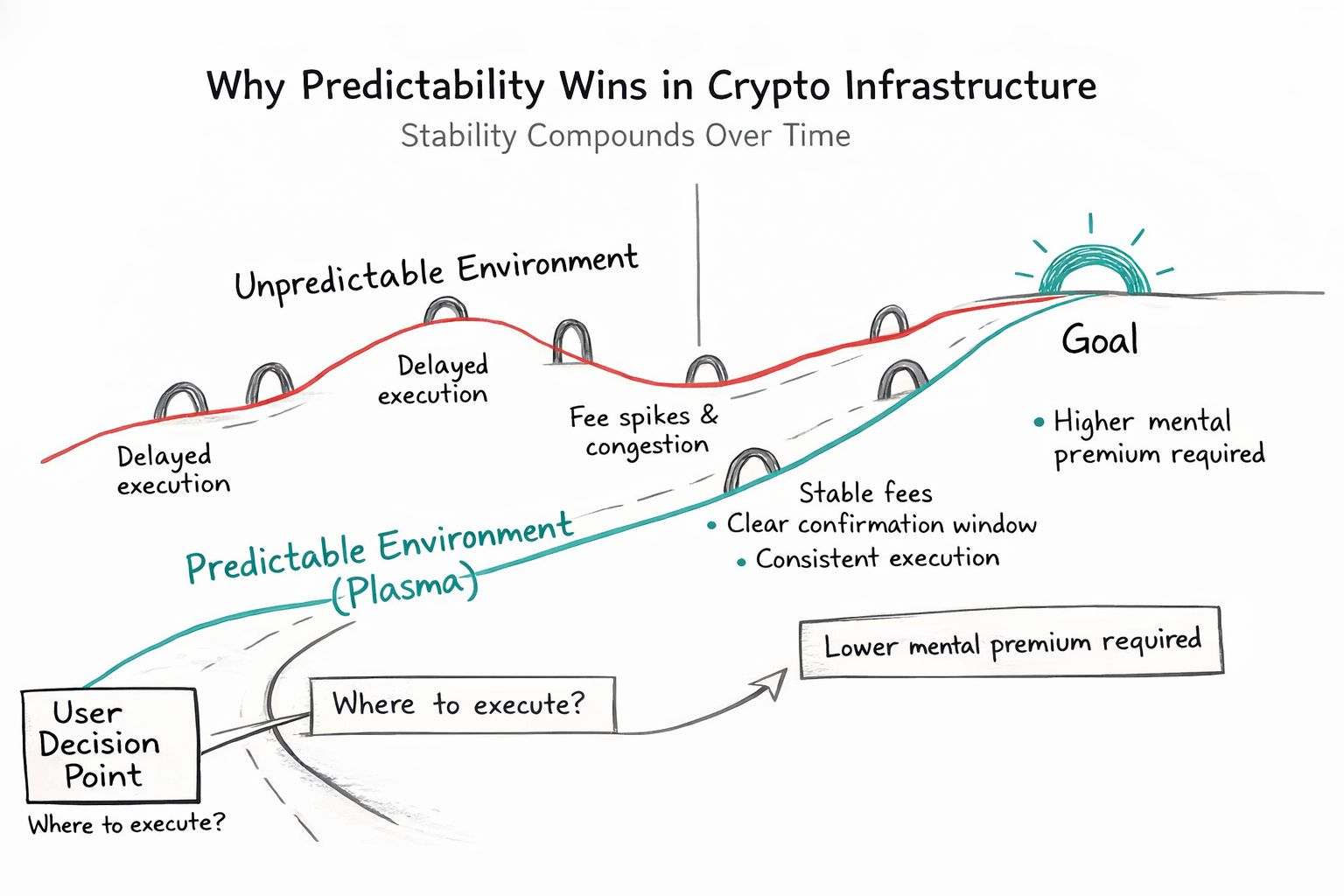 Indeed, infrastructure reliability influences economic behavior in practical, everyday ways that shape decisions from time to time without dramatic headlines. In short, lowering unpredictability reduces friction before it even becomes visible.
In conclusion, the “predictability premium” is real, even if it remains invisible in most discussions. Users price uncertainty because uncertainty threatens execution quality and timing. Plasma reduces that uncertainty. Hence, it lowers the hidden premium users mentally attach to participation.
Lower unpredictability is an economic advantage, not just a technical one.

