
Most people evaluating a new Layer 1 ask the same set of questions in the same order. How fast are the transactions. How cheap are the fees. How many developers are building on it. These are reasonable starting points, but they are also the questions that cause serious capital to consistently miss the most important variable, which is not how a chain performs when conditions are comfortable but what the chain fundamentally is at the architectural level and whether that architecture creates advantages that compound over time or merely compete on dimensions that every other chain is also optimizing for simultaneously. The question worth asking about @fogo is not how fast it is. The question worth asking is what it built into the protocol itself that other chains simply do not have and cannot add without rebuilding from the foundation.
The answer to that question is the enshrined DEX, and it is worth spending serious time understanding what that phrase actually means before moving past it, because it is easy to hear and easy to underestimate. Most decentralized exchanges that traders interact with today are applications that live on top of a blockchain. They are programs deployed by teams, maintained by developers, upgraded through governance, and dependent on the underlying chain for execution without being part of the underlying chain in any meaningful architectural sense. The chain does not know what a trade is. The chain does not know what a price is. The chain processes instructions without understanding the economic context of those instructions, and that gap between what the chain knows and what the application needs creates friction at every layer of the execution stack.
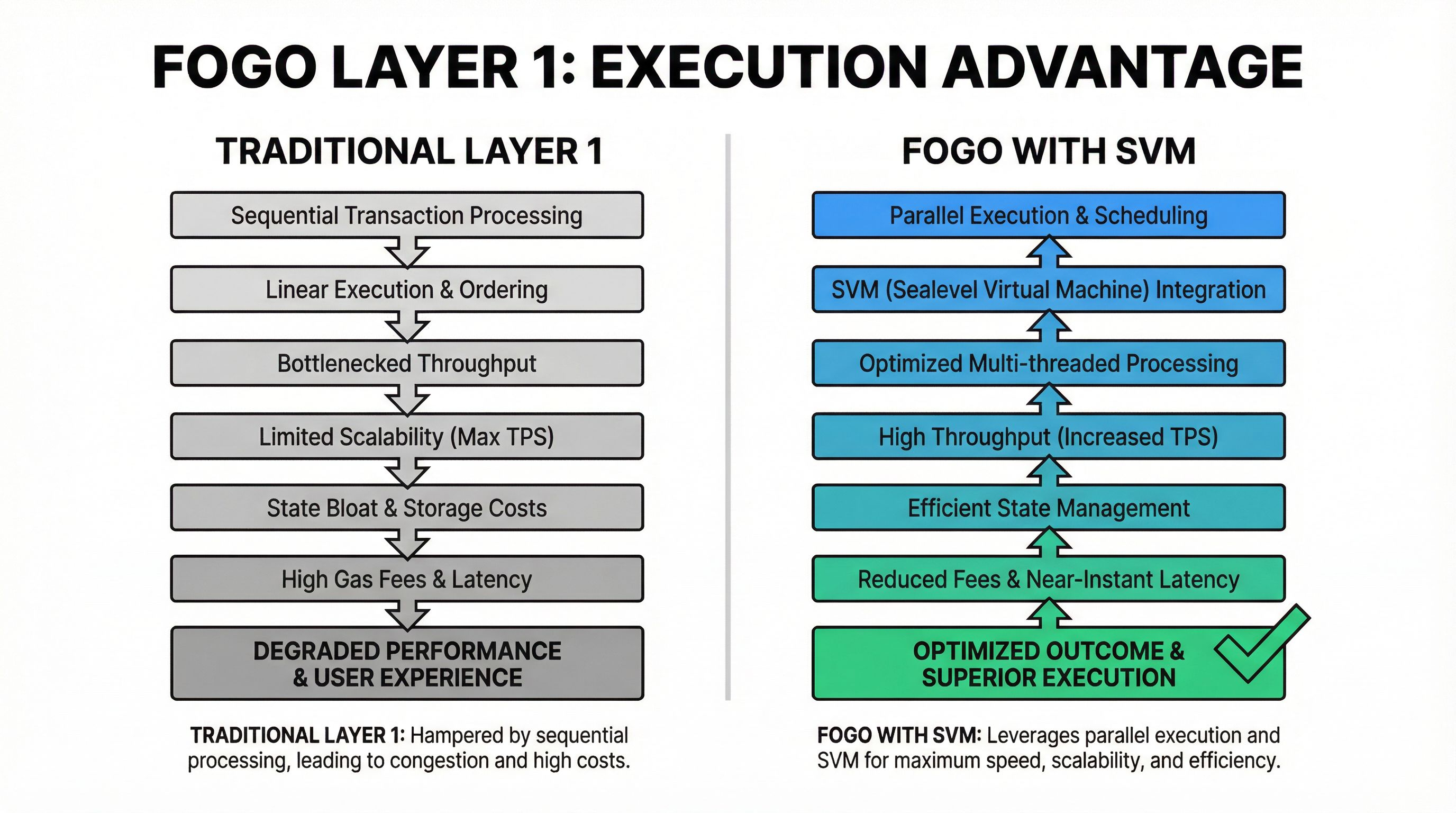
Fogo made a different architectural choice by enshrining the DEX at the protocol level, and the implications of that choice are more significant than most commentary has acknowledged. When the exchange is part of the chain rather than sitting on top of it, the chain itself develops awareness of market structure in a way that changes what becomes possible for every application built afterward. Price feeds do not need to arrive from an external oracle because the protocol generates them natively as a product of its own activity. Liquidity does not need to be bootstrapped separately by every new application because it exists at the layer where execution happens rather than being scattered across competing pools maintained by independent teams with independent incentives. The DEX and the chain share the same block, the same finality, and the same validator set, which means the latency gap that exists between an application and its underlying infrastructure on every other chain simply does not exist here.
The practical consequence for traders is not abstract. When liquidity is collocated with execution at the protocol level, market makers can update their quotes at chain speed rather than at oracle speed, and the difference between those two speeds is the difference between a market that reflects current conditions and a market that is always slightly behind reality. Stale quotes are not just an inconvenience, they are a structural tax on every trader who interacts with a venue where the price feed cannot keep pace with the underlying asset. That tax shows up as slippage, as unfavorable fills, as liquidations that happen at prices that do not reflect where the market actually traded. Eliminating that tax requires either accepting oracle latency as a permanent constraint or building the price discovery mechanism into the protocol itself. $FOGO chose the second path, and that choice is not available to chains that did not make it from the beginning.
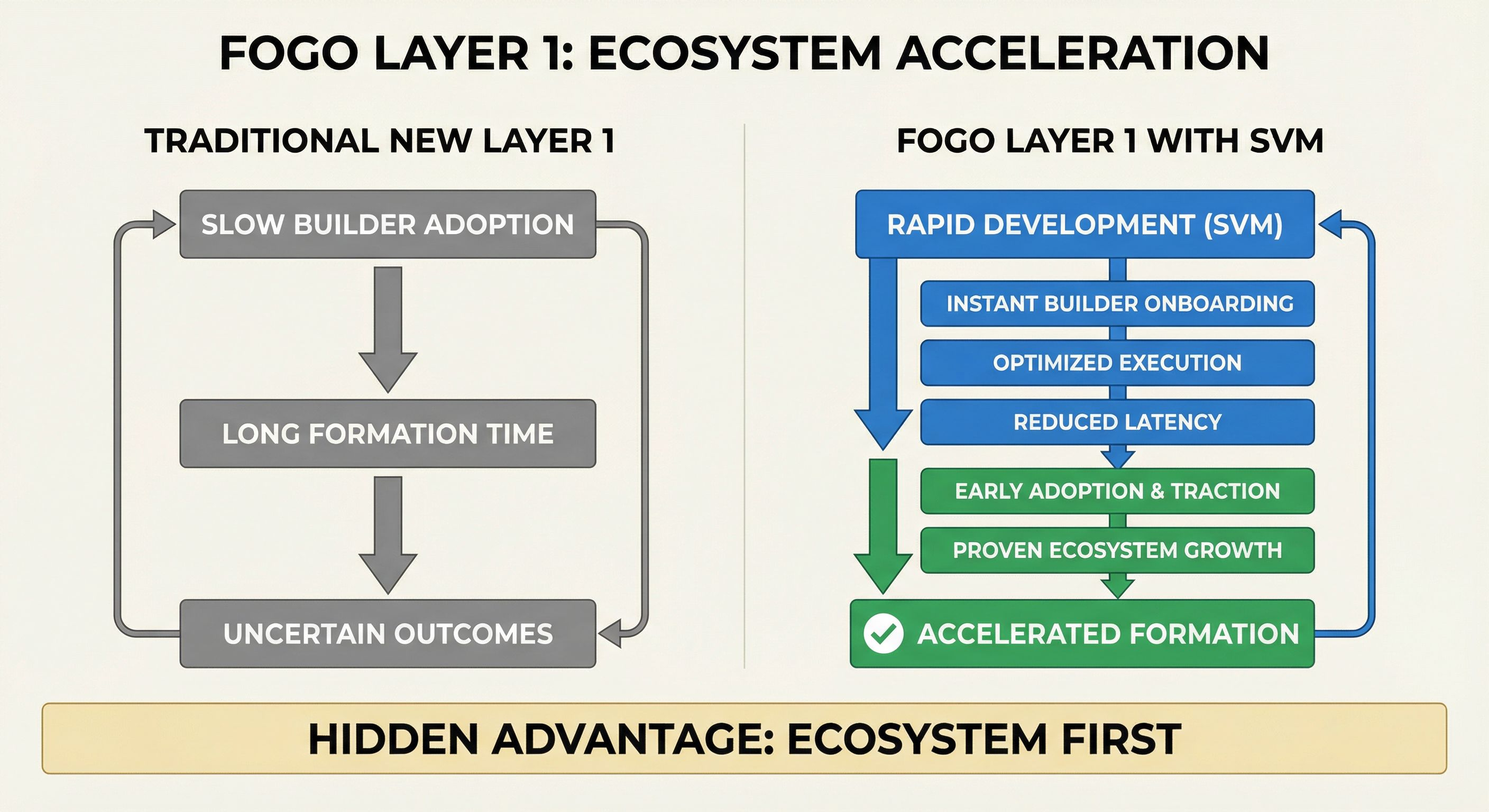
Understanding why this matters requires thinking about what happens when a chain begins to attract serious application density, because density is not just a sign of ecosystem health, it is the mechanism through which ecosystem health produces durable competitive advantages. When multiple high-throughput trading applications share a single execution environment that has native price discovery and collocated liquidity, the second order effects begin to compound in ways that become increasingly difficult for other chains to compete with. More applications create more trading pairs, more trading pairs create more routing options between assets, more routing options allow aggregators to find paths that minimize slippage, better routing makes execution feel more reliable to users who have experienced worse elsewhere, and users who trust the execution quality bring volume that deepens the liquidity that makes the routing even better the next time. This loop does not start from a protocol that treats the DEX as an external application. It can only start from a protocol that made market structure a first-class concern from the first day of architecture decisions.
The competitive moat this creates is not the kind of moat that can be closed by a competitor announcing faster transaction speeds or lower base fees, because neither of those things addresses the structural gap between a chain that knows what trading is at the protocol level and a chain that merely processes the instructions that trading applications send to it. Adding an oracle integration does not produce enshrined price feeds. Deploying an AMM does not produce collocated liquidity. Reducing block time does not eliminate the execution gap between an application layer DEX and the consensus mechanism beneath it. The only way to replicate what @fogo built is to start over with the same architectural priorities, and starting over means giving up every network effect and every liquidity relationship that already exists on a competing chain. That cost is prohibitive for any chain that has already made different choices, which means the advantage is durable in a way that speed advantages and fee advantages rarely are.
What remains genuinely uncertain is the speed at which the market recognizes the distinction between a chain that has enshrined trading infrastructure and a chain that hosts trading applications, because markets are not always efficient at pricing architectural depth in the early stages of a new network. There will be periods where chains with better marketing or larger existing communities attract attention that the underlying architecture does not justify, and there will be pressure on @fogo to compete on narrative dimensions rather than staying focused on the structural work that makes the thesis real rather than theoretical. The signal worth watching is not whether Fogo wins the attention competition in any given week. The signal worth watching is whether the liquidity on the enshrined DEX deepens organically, whether market makers treat it as a primary venue rather than an experimental one, and whether the applications being deployed are serious enough that their developers have real capital at risk in the quality of the execution environment they chose.
When those signals appear and hold across multiple market cycles, the enshrined DEX stops being a design decision that requires explanation and becomes a structural fact that the rest of the market has to build around. That is the version of $FOGO the architecture was built to become, and the distance between the current moment and that version is where the entire risk and the entire opportunity reside simultaneously.