
Iran's nuclear program is once again in the spotlight. The United States has concentrated planes and warships in the region and, apparently, is ready to strike if Tehran does not agree to a deal regarding its nuclear developments.
On February 19, U.S. President Donald Trump threatened that Iran would face 'bad consequences' if a 'substantive agreement' was not reached.
'They cannot have nuclear weapons, it's very simple... it is impossible to achieve peace in the Middle East if they have nuclear weapons,' said the president.
Iran denies that it ever sought to create a nuclear bomb; however, many countries, as well as the leading international nuclear oversight organization — the International Atomic Energy Agency (IAEA) — are not convinced of this.
What is the current state of Iran's nuclear program?
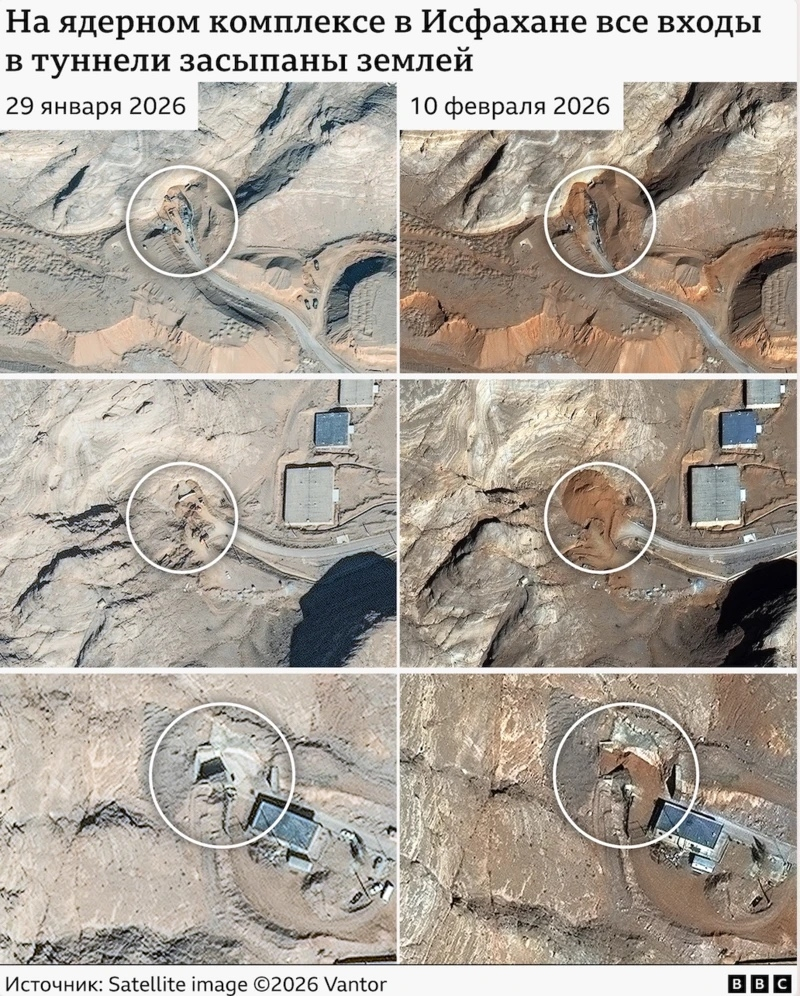
The status of Iran's nuclear program remains unclear after strikes on key nuclear facilities during the 12-day war between Israel and Iran last June.
The United States briefly joined the combat operations, striking three nuclear facilities: the largest Iranian research nuclear center in Isfahan and the facilities in Natanz and Fordow, where uranium enrichment is carried out.
After the strikes, Trump stated that these facilities were 'completely destroyed.'
However, a week later, the head of the IAEA, Rafael Grossi, stated that the strikes caused significant damage but did not completely destroy the facilities, suggesting that uranium enrichment could resume within a few months.