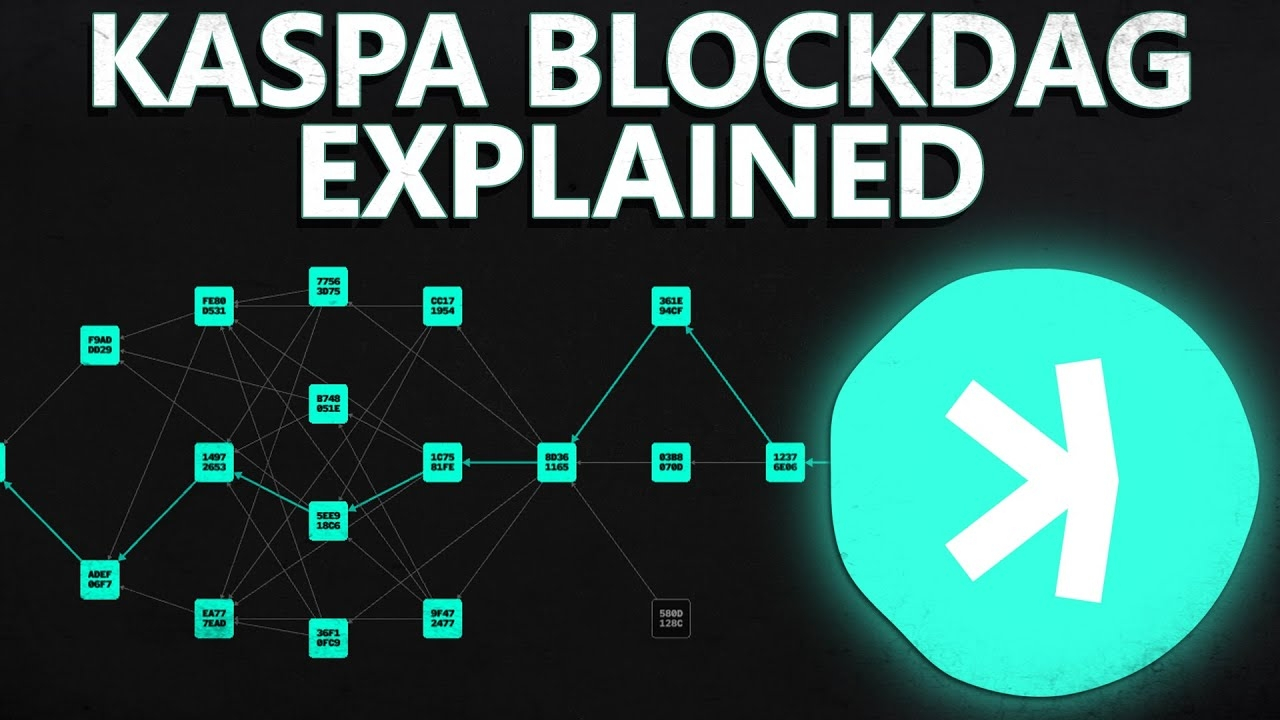
Kaspa is a high-speed cryptocurrency that uses BlockDAG (Block Directed Acyclic Graph) instead of a traditional blockchain.
Let’s break it down in simple terms 👇
1️⃣ What Is a Traditional Blockchain?
In networks like Bitcoin:
Blocks are added one after another
Only one block can be confirmed at a time
If two miners find a block simultaneously → one becomes an orphan block
This limits speed
Think of it like a single-lane road 🚗
2️⃣ What Is BlockDAG?
BlockDAG = Block + Directed Acyclic Graph
Instead of one block at a time:
Multiple blocks can be created at the same time
They are connected in a graph structure
No valid blocks are wasted
All honest blocks are included in consensus
Think of it like a multi-lane highway 🛣️
3️⃣ How Kaspa’s BlockDAG Works
Kaspa uses a protocol called:
🔹 GHOSTDAG
GHOSTDAG:
Orders parallel blocks
Selects a “blue set” (valid blocks)
Keeps network secure
Prevents centralization
Instead of rejecting blocks, Kaspa organizes them smartly.
4️⃣ Why Kaspa Is Fast
Kaspa can produce:
~1 block per second (and upgrading toward 10+ BPS)
Very fast confirmations
Low fees
Because blocks don’t compete — they cooperate.
5️⃣ BlockDAG vs Blockchain
FeatureTraditional BlockchainKaspa BlockDAGBlocks per time1ManyOrphan blocksYesNo (included)SpeedSlowerVery FastScalabilityLimitedHigher
6️⃣ Is Kaspa Still Proof-of-Work?
Yes ✅
Kaspa is still:
Proof-of-Work
Decentralized
Permissionless
But it improves scalability without sacrificing security — something many other chains struggle with.
7️⃣ Why BlockDAG Matters
BlockDAG allows:
Faster payments
Better mining fairness
Stronger decentralization
Higher throughput
It’s considered one of the most advanced PoW designs today.
If you want, I can also explain:
Kaspa mining strategy
Kaspa tokenomics
Kaspa vs Bitcoin comparison
Kaspa price growth potential 🚀
 XRPUSDTPerp1.4221+4.99%
 KERNELUSDTPerp0.08035-1.73%
 ONDOUSDTPerp0.2674+4.33%