
@Fabric Foundation #robo $ROBO
Fabric Protocol is one of those names that made me stop scrolling for a second. Not because I think it is some guaranteed winner. I’ve been around this market long enough to know how these stories usually go. Nice vision, clean branding, a lot of confident posts, then months later you’re looking at a dead chart and a silent community pretending they still care.
So I’m not coming at this with fresh-eyed optimism. I’m looking at it the way I look at every project now with a bit of curiosity, a bit of doubt, and a lot of built-up exhaustion from watching the same cycle repeat.
What caught my attention here is that Fabric at least seems to be aiming at a real problem. Not the usual recycled AI noise. Not just slapping a trendy label on a token and hoping the market does the rest. The core idea is actually simple enough to matter: if machines, robots, and autonomous systems are going to do real work in the future, then they need some kind of structure underneath them. Identity. Coordination. Payment. Rules. A way to prove they did something useful.
That part makes sense to me.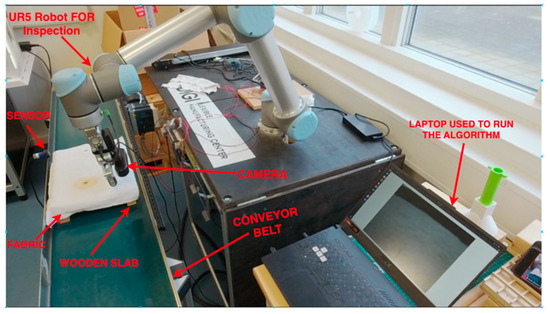
Because once you strip away all the glossy language, that’s the real question. If machines become active participants in the economy instead of just passive tools, what is the system that lets them operate? What handles trust? What handles value? What handles interaction between humans and machines without turning everything into a closed corporate black box?
Fabric seems to be going after that layer.
And I’ll be honest, that already puts it ahead of a lot of projects I’ve looked at. Most of them don’t even get that far. They live off mood and momentum. They survive on vibes, recycled talking points, and a community that mistakes activity for substance. Fabric, at least from the outside, feels like it is trying to build around a use case that could actually become important if this whole machine economy idea keeps developing.
But here’s the thing. A strong concept is cheap. I’ve seen a thousand strong concepts.
The market is full of projects that sounded smart before they ran into reality. That’s where the friction starts. Building something people can describe is one thing. Building something people actually need is another. And building something they keep using after the hype fades that is where most of this stuff breaks.
That’s where my head is with Fabric.
I’m not really interested in the abstract version of the story anymore. I don’t get excited just because a project sounds early or ambitious or “positioned for the future.” I’ve heard all of it. What I’m looking for now is whether this thing can survive the grind. Whether it can move from a clean idea into something with actual weight. Something that doesn’t disappear the second the market gets bored and starts chasing the next shiny narrative.
Because the idea itself does have weight. I’ll give it that. The thought of autonomous systems needing a real economic layer underneath them is not hard to understand. It doesn’t feel forced. It doesn’t feel like one of those desperate stretches where a project invents a problem just to justify the token. This one feels more grounded than that.
I also think there’s something important in the way Fabric seems to frame participation. Not just machines existing on a network, but machines doing work, value being assigned to that work, and some kind of structure around how that activity gets verified and rewarded. That’s a more serious direction than the empty “future of AI” stuff that gets recycled every other week when the market is slow and people need a fresh angle.
Still, I can’t say I’m sold. Not even close.
I’ve learned to be careful with projects that sound intelligent on first read. Sometimes those are the most dangerous ones because people lower their guard. They hear a strong thesis, they see a marketable narrative, and suddenly they stop asking hard questions. I don’t want to do that here. I want to see where this starts to get messy. I want to see where the idea runs into resistance. I want to see whether the project can hold up when it has to do more than just explain itself well.
That is always the real test.
And that’s the part I keep coming back to with Fabric. I’m not asking whether the vision sounds good. It does. I’m asking whether this can become something the market respects for the right reasons. Whether the network starts showing real signs of life. Whether the use case starts feeling less theoretical and more necessary. Whether this turns into infrastructure people rely on, or just another well-written concept that gets buried under the noise six months from now.
I’ve seen both outcomes too many times.
So yeah, I’m interested. More than I expected to be. There’s enough here to make me keep watching. Enough to make me think this isn’t just another lazy attempt to ride a trend. But I’m not rushing to romanticize it either. That part of me is gone. The market beat that out of me a while ago.
Now I just watch. I look for cracks. I look for proof. I look for the moment the story has to carry real weight instead of borrowed attention.
Maybe Fabric gets there. Maybe it doesn’t.
I’m still watching for the point where this stops sounding good and starts feeling real.
Fabric with conviction. At this point I barely come into anything with conviction.
You stare at this market long enough and everything starts to blur into the same grind. Same recycled language. Same neat little frameworks. Same promise that this time the infrastructure actually matters and this time the token is not just bolted onto a story that sounded better in a deck than it ever will in the real world. So when I looked at Fabric, I was not looking for reasons to believe. I was looking for the crack. The place where the narrative starts slipping.
And I still do not know if I have found it.
Because Fabric is not being framed like a small project trying to carve out a lane. It is aiming at something much heavier than that. It wants to sit underneath machine coordination, identity, verification, data, incentives, all the ugly parts that show up once people stop fantasizing about autonomous systems and actually have to run them in the wild. That is not a trivial pitch. It is not even really a pitch. It is more like a claim on future infrastructure.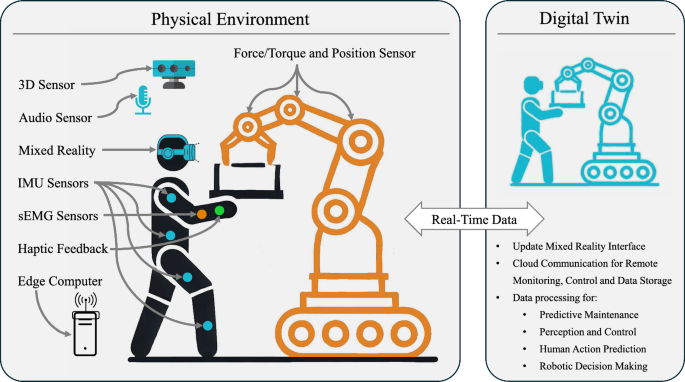
I have seen enough projects fail to know that big framing means nothing by itself. Sometimes it is just camouflage. A wider story gives people more room to hide inside. If the product is vague, make the future bigger. If adoption is unclear, talk about inevitability. That trick is old.
But here is the thing. Fabric is at least circling a real problem.
If machines are going to do anything meaningful across open environments, somebody has to deal with trust. Not the soft social kind. The hard kind. Who did what. What was real. What data can be trusted. Who gets paid. Who gets blamed. What gets challenged. That mess is real. I do not roll my eyes at that part. I probably would if the project were smaller and dumber about it, but this one is pointed at actual friction.
That does not mean I trust it.
It just means I cannot dismiss it in the lazy way people dismiss most launches.
What wears me out is how quickly a real problem turns into market theater. That happens fast in crypto. Faster now, maybe. A project finds one true thing, just one, and then the whole machine builds around it. Suddenly there is a token, a narrative, a community, a reason you were supposedly still early five minutes after everyone started repeating the same lines. The noise comes first. Proof comes later, if it comes at all.
Fabric has some of that smell on it. I cannot pretend it does not.
I read the thesis and I get why people latch onto it. A protocol layer for machine coordination. Verifiable identity. Economic rails for agents and robots. Fine. I get it. It sounds serious. It sounds heavier than another disposable chain narrative. And maybe it is. But I have been around long enough to know that sounding serious and being necessary are two completely different things. This market keeps confusing the two because it is exhausted and desperate for anything that feels like it has weight.
So I keep asking the same question in slightly different forms. Does this actually need to exist as a protocol. Does the token end up doing real work. Does the coordination layer become unavoidable in practice, not just attractive in theory. Or is this another case where crypto found a valid future bottleneck and rushed in to financialize it before the underlying system was mature enough to prove what kind of infrastructure it really needed.
That is where I get stuck.
Because I can feel the project reaching for something real. I can also feel how much of it still depends on projection. A lot of projection. The kind the market is always happy to do for you when the theme is large enough. Robotics. agents. verification. public infrastructure. machine economies. You put enough of those words in the same room and people start acting like doubt is a failure of imagination.
I do not think doubt is the problem here. I think doubt is probably the only healthy response.
And I do not even mean that in a dramatic way. I just mean I have seen this movie too many times. The polished framing. The clever abstraction. The promise that the rails matter more than the apps until you realize nobody has proved the rails are the bottleneck yet. Then months go by. Then a year. Then the market moves on and the people who were loudest at the start quietly stop posting.
Maybe Fabric breaks that pattern. Maybe it does turn into something the market is only describing badly because the language has to arrive before the infrastructure does. That happens sometimes. Not often, but sometimes.
I am just not there yet.
Right now it feels like one of those projects I keep off to the side of my screen. Not ignored. Not trusted. Just watched. Because there is enough here that I cannot write it off as another dead-end cycle artifact, but not enough that I am ready to hand it the kind of belief this market is always trying to manufacture on schedule.
Maybe that is the fairest read I have for now.