

Most people are watching narratives. I’ve been watching where capital actually feels comfortable.
In crypto, we often assume liquidity goes where returns are highest. But the more I think about it, the more I realize that’s only part of the story. Capital doesn’t just chase yield, it also looks for environments where it can operate without unnecessary risk.
And transparency, as useful as it is, creates a different kind of risk.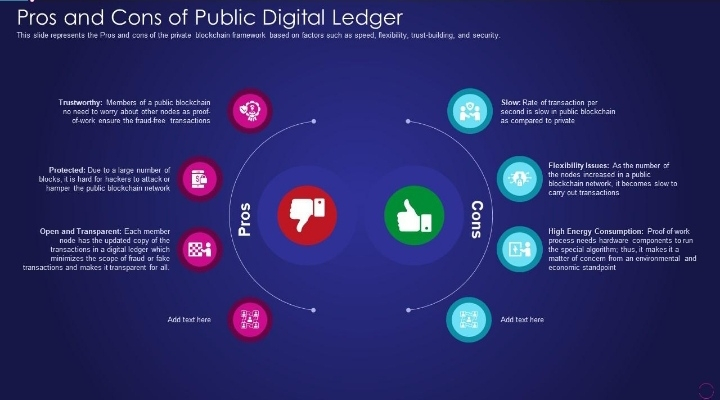
On-chain, everything is visible. Positions, transaction flows, strategies. That works well for retail trading, but it starts to break down when larger capital is involved. Because once size increases, visibility becomes a disadvantage.
That’s the part most people don’t think about.
We built a system where anyone can verify everything, but in doing so, we also made it harder for certain types of capital to participate. Institutions don’t just care about returns. They care about discretion. They care about not exposing positions, not signaling intent, and not revealing strategy.
Without that, capital hesitates.
That’s where @MidnightNetwork starts to change the equation.
Instead of forcing everything into full transparency, it introduces a model where transactions and computations can be verified without exposing the underlying data. The way I see it, it’s not removing trust, it’s redefining how trust is achieved.
And that has direct implications for capital flow.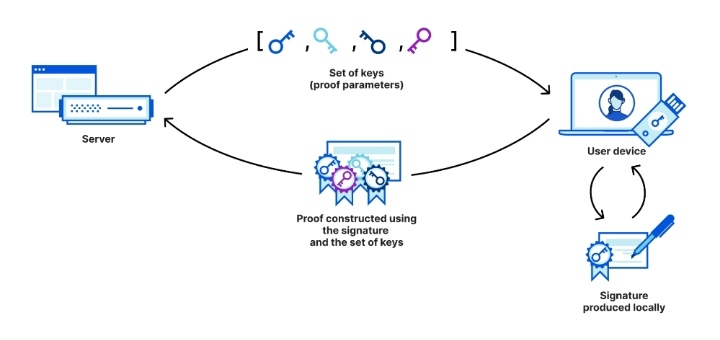
Because if the environment changes, behavior changes with it. Capital doesn’t move into systems where it’s disadvantaged. It moves into systems where it can operate efficiently. If confidentiality becomes available, that removes a key friction that currently exists in DeFi.
That’s not just a technical upgrade. That’s a behavioral shift.
The $NIGHT token sits at the center of this system, supporting participation and coordination across the network. But what stands out to me is how the design tries to separate usage from pure token pressure. With mechanisms like DUST handling operational aspects, the system appears to be structured in a way that avoids direct friction between activity and speculation.
From a market perspective, that matters.
If capital begins to flow into environments where privacy is preserved, then demand for that infrastructure doesn’t come from hype alone. It comes from actual usage. Trading, settlement, asset management. That creates a different kind of demand compared to narrative-driven cycles.
Looking at the current context, as of early 2026, most DeFi activity is still happening in fully transparent environments. That means the friction still exists. Capital can participate, but not without tradeoffs.
And capital doesn’t like tradeoffs.
The bull case is straightforward. If privacy becomes a requirement for larger participants, then networks like Midnight could start capturing flows that currently stay on the sidelines. In that scenario, capital doesn’t just follow opportunity, it follows structure.
And structure decides where money settles.
The bear case is just as important. If institutions don’t move on-chain in meaningful ways, or if transparency continues to be accepted despite its limitations, then the advantage never fully materializes. A better system doesn’t always mean a widely adopted one.
Markets don’t reward potential. They reward behavior.
For me, the signals are simple. If I start seeing activity that reflects real capital moving through confidential systems, that’s confirmation. If not, then this remains an interesting idea that hasn’t translated into actual flow.
Because in the end, liquidity doesn’t just appear.
It moves.
And I keep coming back to this.
If transparency creates friction for capital, then the networks that reduce that friction may be the ones that capital chooses next.#night