
been going through everything OpenLedger dropped about OctoClaw since yesterday and honestly the thing that keeps stopping me is not any single feature
its the combination.
i've used research tools. i have used execution tools. i've used generation tools. and i've used automation pipelines that stitch things together with duct tape and prayer. what gets me about OctoClaw is that the pitch isnt "we made a better research tool" or "we made a smarter execution layer." the pitch is that all four of those thingsliveinside one agent. and that changes something fundamental about how you think about what an agent can actually do.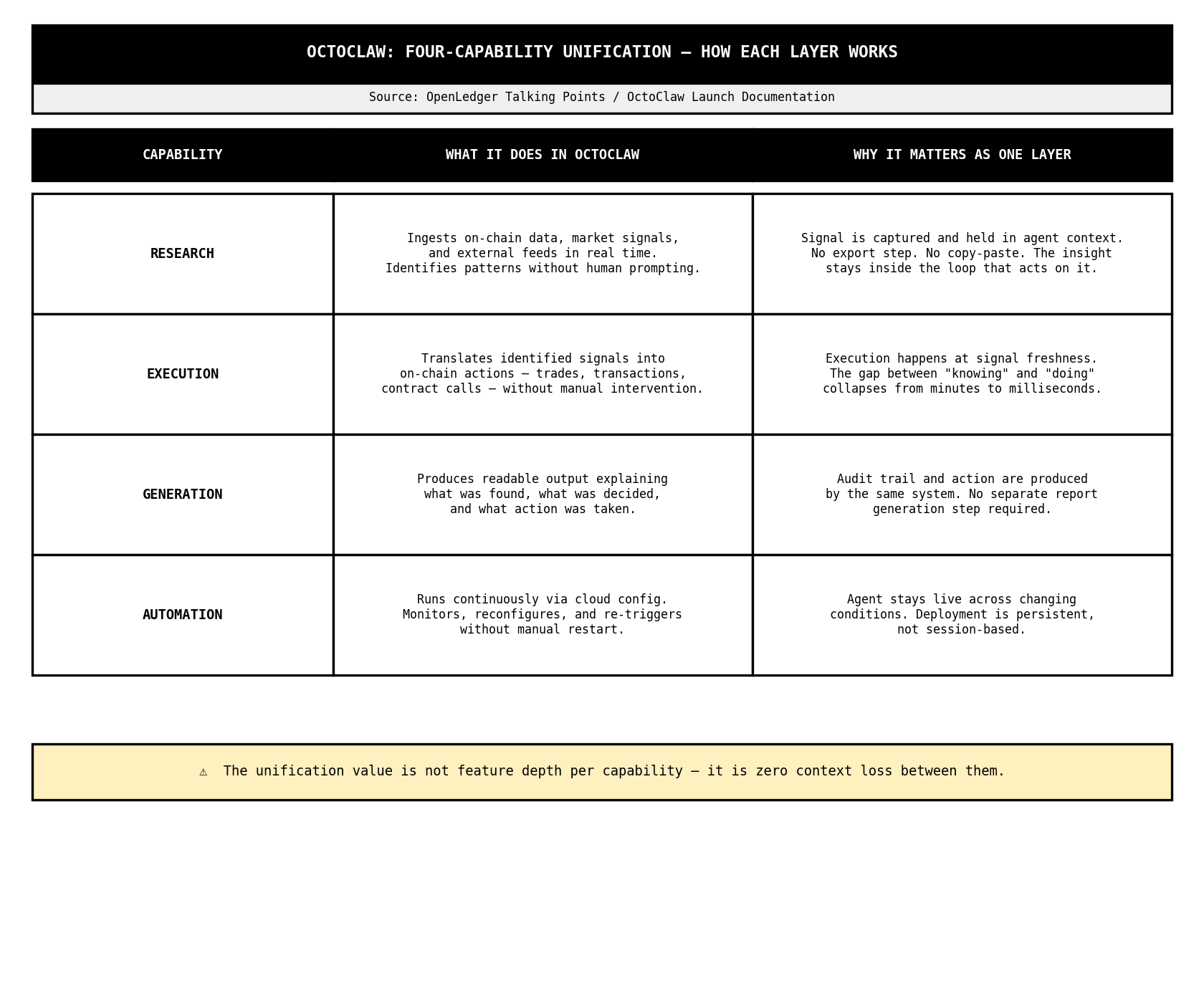
let me sit with why that matters.
when research and execution are separate systems, you are always managing a handoff. the research layer finds something.you interpret it.you decide to act. you switch to the exxecution layer. you configure the action.then it runs.every one of those steps is a place where context bleeds out. the insight that was sharp at the research
layer arrives at the execution layer slightly diluted. time has passed. market conditions have shifted.the original signal is weaker.
OctoClaw collapses that gap.research and execution run inside the same agent context. which means the signal that triggered the decision is the same signal that executes it.no handoff.no translation loss.no waiting for a human to bridge the two systems.
And then generation sits on top of that...this is the part i keep re-reading.
most agents either act or explain. they execute a trade or they write a summary.having generation inside the same layer means OctoClaw can produce a readable output— what it found, what it decided, what it did —without exiting the agent context to go generate that explanation elsewhere. the audit trail and the action are produced by the same system.
automation is the fourth piece and honestly the most important for actual deployment.its one thing to build an agent that can do all three of the above when you ask it to.its another thing for it to run continuously, pick up new signals, ,reconfigure itself based on changing conditions,and keep doing that without someone manually restarting it.the cloud config piece of OctoClaw is how that automation actually stays live.
i genuinely like the architecture here.the unification is not cosmetic. its not f0ur separate modules with a shared UI.the value is that context doesnt degrade across the four capabilities because they're running inside the same agent...
what i cant fully resolve is the complexity cost of that unification.any system that does four things simultaneously has more failure surfaces than one that does one thing well.ressearch, execution, generation, and automation each have their own failure modes.OctoClaw has all of them at once, inside one agent, running on-chain.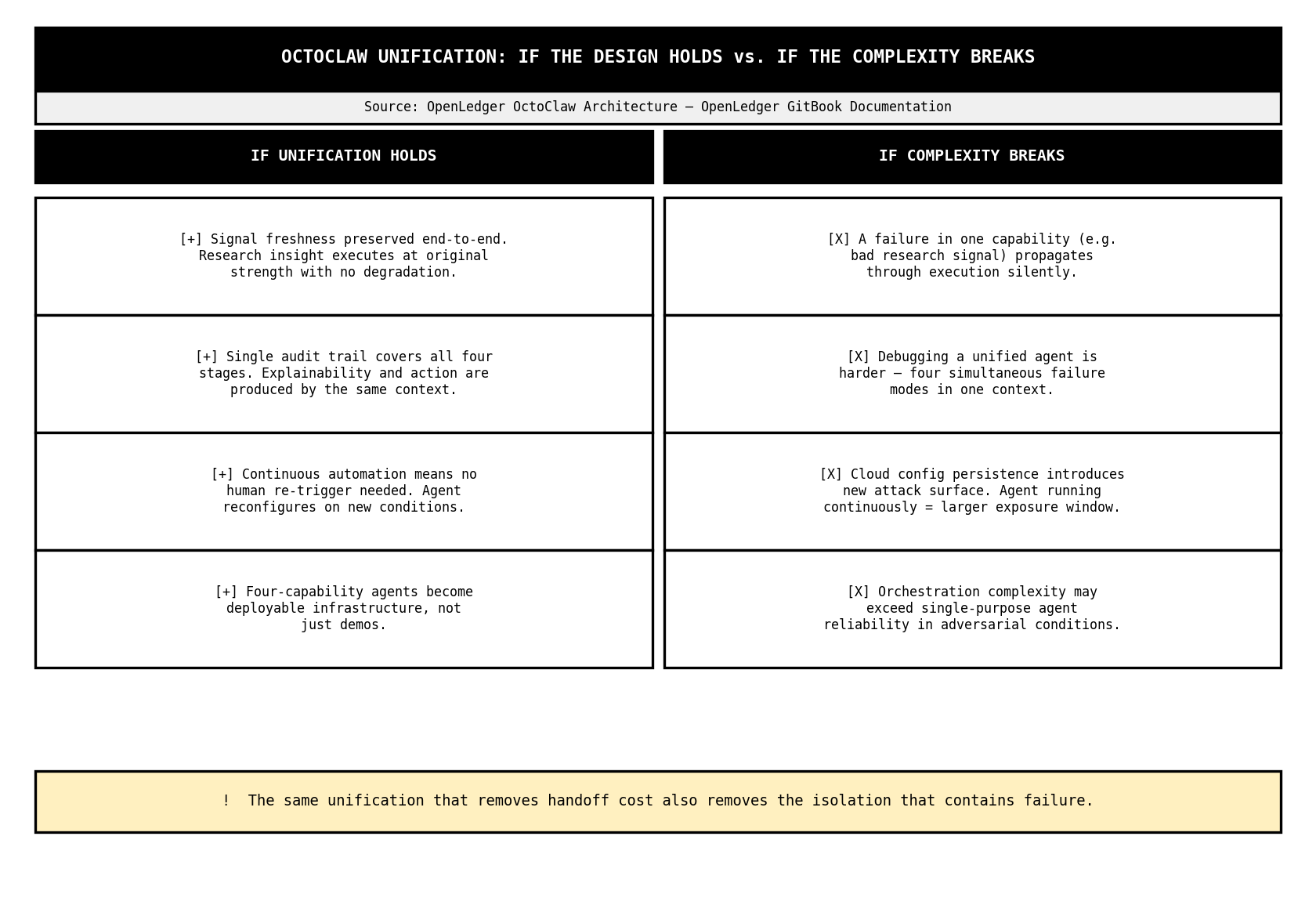
honestly dont know if collapsing four capabilities into one agent produces something genuinely greater than the sum of its parts or just creates a more complex single point of failure that breaks in four different ways simultaneously??
