
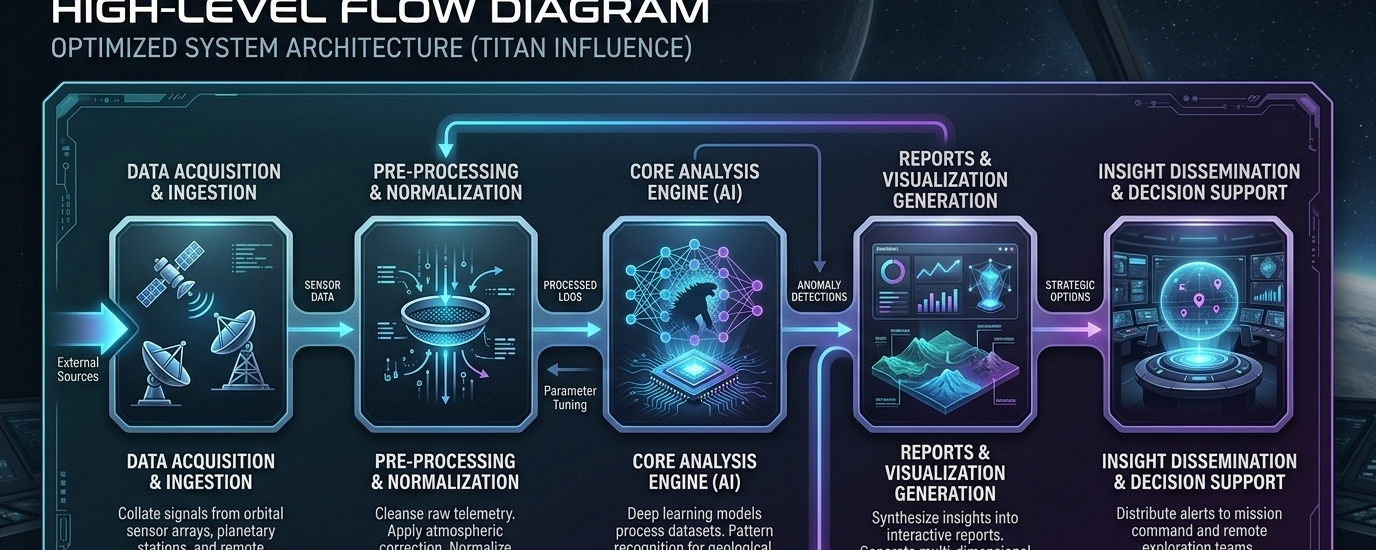
At first glance, OpenLedger triggered the same reflex most of these projects trigger now. You read “AI blockchain” and your brain almost starts auto-completing the pitch before the page even finishes loading. Decentralized intelligence. Monetized data. Autonomous agents. Infinite scale. Some diagram with arrows floating between clouds. We’ve all seen it too many times already. Half the industry feels like it’s remixing the same four narratives with slightly different fonts.
And honestly, after enough cycles, you stop reacting to whitepapers and start reacting to behavior. You look for what a project quietly assumes about users. About infrastructure. About human incentives. That usually tells you more than whatever headline claim they lead with.
What caught my attention with OpenLedger wasn’t really the AI angle itself. That part almost works against them now because the term has been stretched so thin it barely means anything anymore. Everybody is “AI-powered.” Wallets are AI. Bridges are AI. A Discord bot that summarizes governance posts is apparently revolutionary now. The word lost shape somewhere along the way.
But underneath the branding, there does seem to be a more practical observation sitting there. Something less glamorous.
Most AI systems today depend on a weird economic imbalance nobody really talks about honestly. Tons of people contribute value indirectly — datasets, labeling, niche models, inference resources, tiny specialized agents that solve one boring task extremely well — and almost none of that value flows back outward cleanly. Everything eventually collapses into a handful of API endpoints controlled by companies large enough to absorb all the margins. Open source communities generate momentum, centralized platforms capture the gravity.
OpenLedger seems to notice that imbalance more than it tries to “disrupt AI” in the cinematic sense. And that distinction matters a little.
Still, this is where crypto history starts whispering in the background. Because the industry has heard variations of this story before. Replace AI with storage, compute, gaming, social, identity, creator economies, prediction markets. Same structure every time. The chain becomes the settlement layer for some massive future digital economy. Then reality arrives slowly and awkwardly. Users don’t migrate. Developers hedge. Liquidity stays where it already lives because moving money is psychologically harder than crypto people pretend.
That part never changes.
The Layer 1 conversation itself feels exhausted at this point too. Every few months there’s another chain arriving with the implication that previous chains simply lacked the correct architecture. As if crypto’s problems were mostly engineering mistakes waiting for a cleaner codebase. But chains rarely fail in isolation under laboratory conditions. They fail socially. They fail operationally. They fail when actual humans arrive all at once and start behaving irrationally.
Traffic is the real audit. Not benchmarks.
You can already see this pattern across the market. Solana is probably the clearest example. When it works well, it genuinely feels smooth in a way older chains often don’t. Cheap transactions. Fast confirmations. Less psychological friction. People like using systems that don’t constantly remind them they’re using infrastructure. But then periods of extreme demand hit, and suddenly the conversation shifts from elegance to survival. Congestion exposes philosophy very quickly. You learn what a chain optimized for. You learn what corners were intentionally cut.
That’s the thing people forget about scalability discussions. Every architecture is basically a list of preferences disguised as technical design.
OpenLedger appears to lean toward a world where AI-related economic activity becomes fragmented and modular enough that existing chains may not comfortably absorb all of it. Data marketplaces here. Specialized models there. Agents transacting constantly in the background. Small payments happening between systems instead of humans. Maybe they’re right about that. Maybe not. But at least it’s pointing toward a concrete operational future instead of vague “AI changes everything” language.
The harder question is whether blockchain actually improves those interactions enough to justify the complexity overhead.
Because crypto people sometimes underestimate how exhausting infrastructure fragmentation becomes for normal participants. Multiple wallets. Bridges. Gas abstraction layers pretending not to be bridges. Wrapped versions of wrapped assets. Users tolerate this stuff during speculative periods because price appreciation anesthetizes inconvenience. Remove the speculation and suddenly everybody remembers they hate friction.
That’s why I keep circling back to adoption when looking at projects like this. Not theoretical throughput. Not TPS charts. Just simple behavioral gravity.
Will developers build there if users aren’t there yet?
Will users move before liquidity moves?
Will liquidity move before exchanges care?
And if the answer to all three is “eventually,” that usually translates to a very long wait.
At the same time, I do think there’s a reason these AI-focused infrastructure projects keep emerging despite the skepticism around them. Something real is happening underneath the noise. Not necessarily AGI fantasies or humanoid robot narratives. More the slow realization that machine-generated economic activity might become large enough to need its own coordination layers. Not in ten years. Possibly much sooner.
The current internet stack wasn’t really designed for autonomous software entities constantly exchanging value with each other. It barely handles humans properly half the time.
So when OpenLedger talks about monetizing data, models, and agents as network-native assets, I can at least understand the instinct behind it. It’s not completely detached from reality. The idea itself isn’t absurd. What remains unclear is whether blockchain is the cleanest solution or simply the most financially legible one for raising attention and capital.
And there are trade-offs visible already. The project seems willing to simplify certain things in favor of composability around AI assets. That can be smart. Focus matters. But specialization also narrows your margin for error. General-purpose chains can survive identity crises because they host everything. Niche ecosystems have to prove their niche actually exists at scale.
That’s a much harsher test.
There’s also the uncomfortable possibility that the future really does end up multi-chain in practice, but not in the idealistic way people imagine. Not some harmonious interoperability utopia. More like a messy industrial zone where different networks handle different forms of digital labor because no single environment manages to optimize everything simultaneously.
Maybe one chain becomes efficient for stable settlement. Another for high-frequency machine interactions. Another for privacy-heavy workloads. Another for gaming economies. That sounds plausible in theory. But theories in crypto usually look cleaner before users touch them.
And users tend to consolidate around convenience eventually.
I think that’s why OpenLedger feels mildly interesting instead of instantly dismissible to me. It isn’t pretending the existing system is perfect, but it also isn’t claiming to replace the internet by next quarter. There’s at least an implicit understanding that infrastructure adoption is slow, uneven, and deeply tied to economic incentives rather than ideology.
Whether they can execute is a completely separate question.
Because execution is where crypto projects stop being narratives and start becoming operational burdens. Validators. Developer tooling. Ecosystem incentives. Liquidity coordination. Downtime management. Governance disputes. Spam resistance. Real-world usage patterns nobody predicted. That’s the part no branding deck captures properly.
And honestly, most chains don’t die dramatically anymore. They just fade into low-volume background radiation while everybody moves to the next thing.
OpenLedger could end up there too.
Or maybe this particular intersection — AI systems needing economic coordination layers — becomes large enough that projects like this finally have a legitimate reason to exist beyond speculation. Hard to know yet. The market still feels early, noisy, and deeply confused about what AI infrastructure actually means in practice.
Still. Underneath the recycled language and familiar crypto theater, there does seem to be a real question hiding here.
Who owns the economic output of machine intelligence once it becomes decentralized enough to escape a few giant platforms?
That question probably matters more than most people realize.
It might work. Or nobody shows up.
