
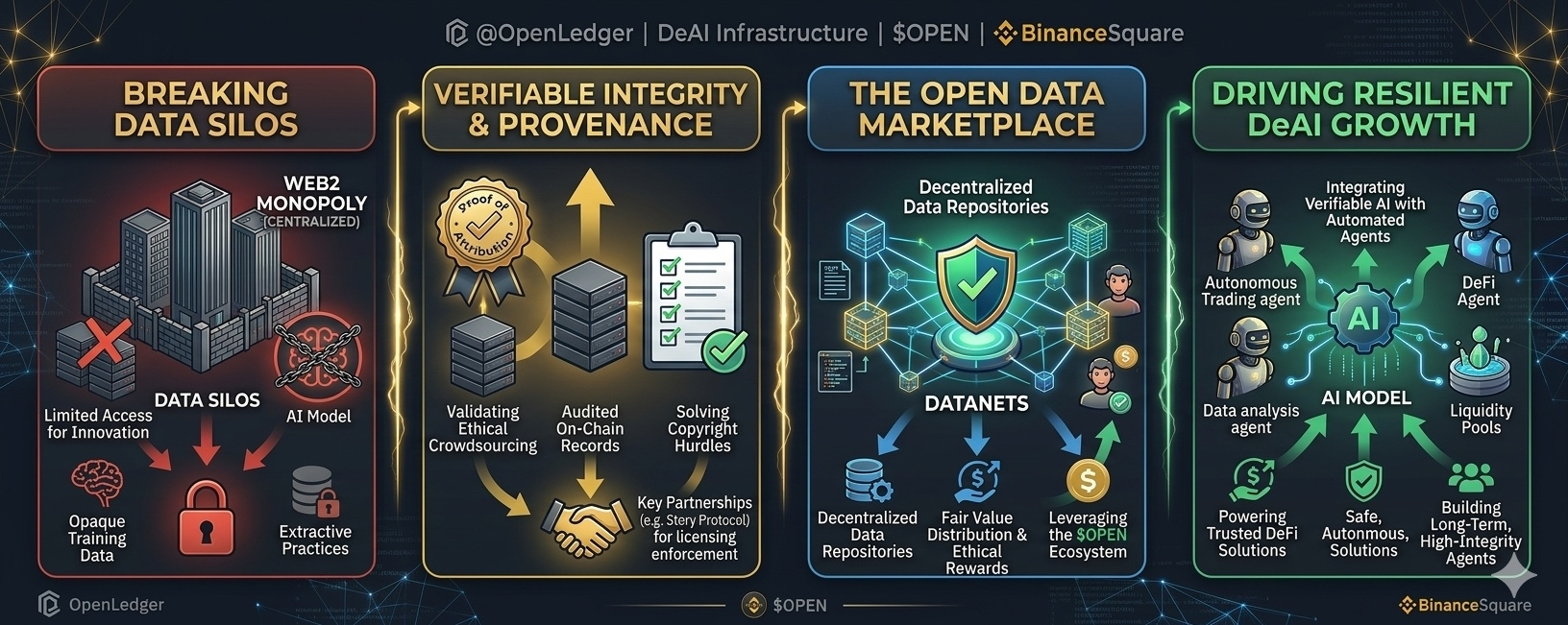
The fast-paced evolution of artificial intelligence has highlighted a glaring flaw in the current tech ecosystem: the dangerous centralization of data. Right now, a handful of Web2 tech conglomerates hold a near-monopoly over the massive datasets required to train advanced foundation models. This reality limits innovation, centralizes wealth, and turns data contribution into an unpaid extractive process. @OpenLedger is directly challenging this paradigm, building a decentralized infrastructure layer that allows the Web3 community to reclaim sovereignty over AI's most valuable asset—high-fidelity data.
The Problem with Centralized Data Silos
To build smarter AI agents, models need continuous access to high-quality, specialized information. In a centralized system, this data is kept behind walled gardens. Independent developers and decentralized protocols are priced out or blocked entirely. Furthermore, individuals who generate this valuable digital data receive zero compensation or recognition. This data scarcity bottleneck prevents decentralized AI (DeAI) from competing on a level playing field with traditional corporate models.
How OpenLedger Redistributes the Power Structure
#OpenLedger acts as the fundamental bridge enabling a decentralized, permissionless data marketplace. Instead of relying on a singular corporate database, the network coordinates specialized Datanets—decentralized data repositories managed and verified by network participants.
This model introduces a completely new data lifecycle for AI:
Ethical Crowdsourcing and Provenance: Through OpenLedger’s Proof of Attribution mechanism, data contributions can be securely audited, validated, and permanently tracked on-chain. This ensures that any data used to optimize a model has a clear, unalterable record of origin.
Tokenized Data Ecosystem: The $OPEN token functions as the core economic catalyst driving this machine. It incentivizes node operators to secure data storage and rewards individual contributors for feeding clean, high-utility datasets into the ecosystem. This flips the Web2 model completely: data generation shifts from an extraction process to a value-earning activity.
Cross-Chain Composability: OpenLedger isn't building in a vacuum. By actively collaborating with key Web3 protocols—such as executing automated AI workflows alongside networks like Injective and ensuring automated licensing enforcement via frameworks like Story Protocol—OpenLedger is ensuring that verified data can seamlessly flow into automated DeFi agents and cross-chain applications safely.
Securing the Next Leg of DeAI Growth
We are rapidly approaching an era where automated agents will handle complex financial transactions, manage portfolios, and negotiate on-chain agreements. These agents cannot afford to run on gamed, unverified, or legally compromised data. By giving developers an infrastructure layer that guarantees data integrity and secure on-chain computational receipts, OpenLedger provides the defense mechanisms necessary for Web3 AI to operate autonomously without corporate intermediaries.
True decentralization requires breaking the data monopoly. OpenLedger is creating the precise data-governance tools and sovereign frameworks needed to build an open, fair, and highly collaborative AI future.
What do you think? Will decentralized data networks like OpenLedger completely replace corporate data silos, or will the future be a hybrid of both? Let’s talk about it in the comments! 👇
#OpenLedger #DeAI #Web3Infrastructure #DataSovereignty #BinanceSquare #CryptoData #altcoins