

What is Price Action?
Price action focuses on how the price behaves as buyers and sellers interact in real time. Every candle reflects a negotiation between participation, urgency, and resistance.
The size of the body, the length of the wick, and the way candles form in sequence reveal intent that cannot be captured by indicators alone.
When observed within a proper context, price action becomes a direct expression of market behavior rather than a derived interpretation.
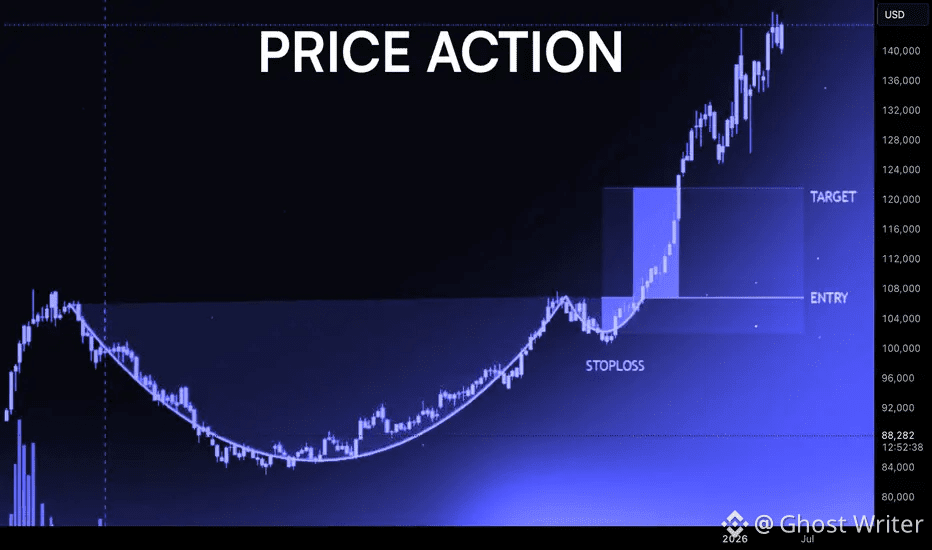
Individual candles carry limited information in isolation. Their relevance depends on what preceded them and where they appear within the broader structure.
A rejection only becomes meaningful when it occurs near a level where liquidity has been taken or where the market previously made a decision. Context transforms movement into information by tying price behavior to location and sequence.
Key characteristics of price action
The relationship between candles matters more than their individual appearance. Strong impulses followed by shallow, orderly pullbacks show that one side is willing to defend progress. Overlapping candles, repeated wicks, and slow advancement indicate hesitation and balanced pressure. When price struggles to advance despite repeated attempts, tension builds beneath the surface. When price moves cleanly with little opposition, control is visible without further confirmation.
Shifts in price action often precede visible reversals. Momentum gradually weakens, extensions fail to follow through, and ranges begin to compress. These changes develop over time and reflect evolving participation rather than abrupt transitions. Traders who focus on static patterns often miss these developments because they emerge through subtle changes in sequence and tempo.
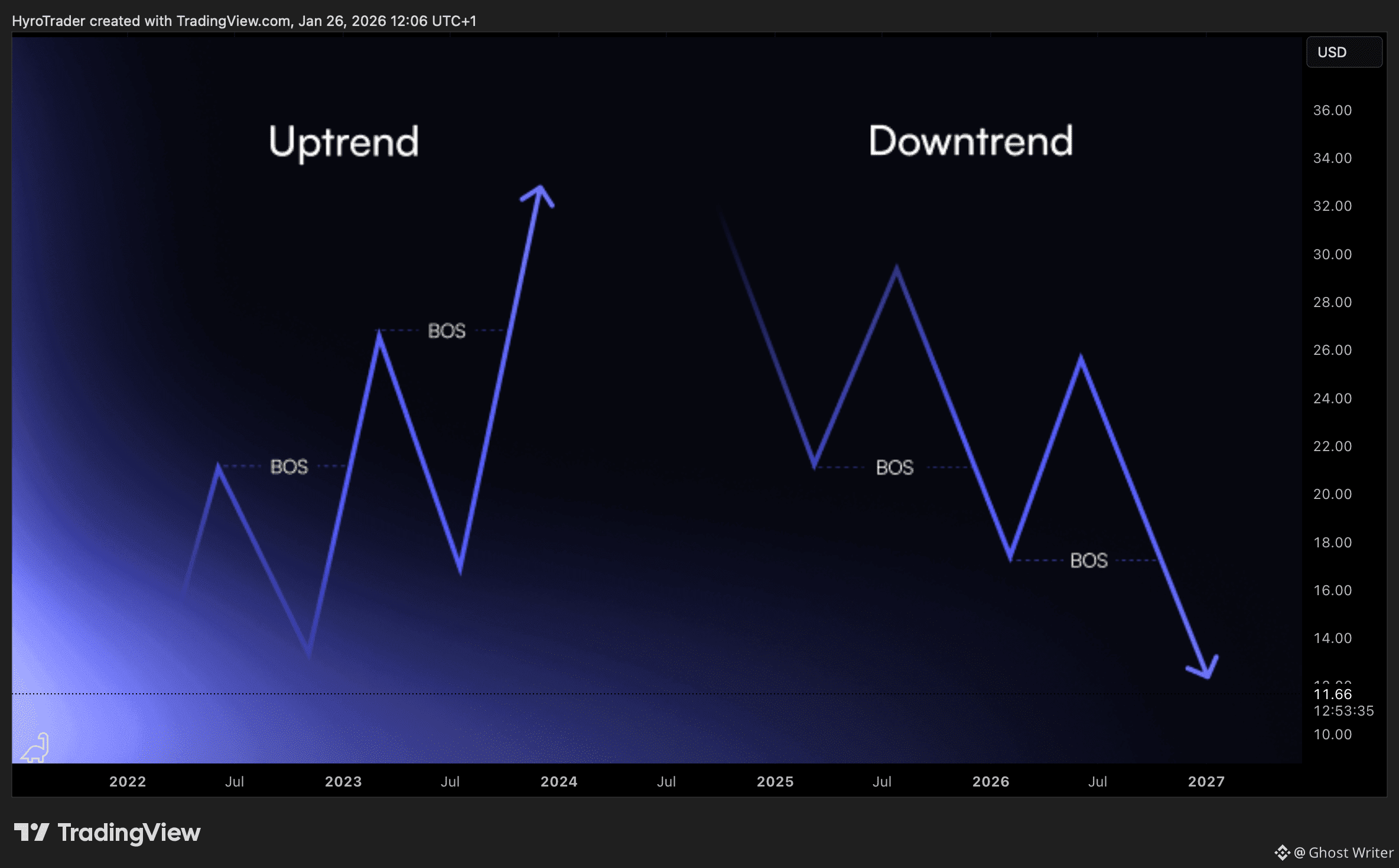
Alignment across timeframes provides clarity. Lower timeframe price action reveals execution detail and entry precision, while higher timeframes define context and directional bias. Reading lower timeframe behavior without reference to higher timeframe structure leads to unnecessary activity and inconsistent outcomes. When both align, execution becomes cleaner and decision-making stabilizes.
Price action communicates how the market is behaving in the present moment. It shows where effort is being absorbed, where pressure is building, and where participation is thinning. Interpreting these signals requires patience, repetition, and structured review. Over time, this process sharpens the ability to recognize active conditions, uncertain phases, and emerging opportunities before they become obvious.
This skill develops through observation and feedback rather than shortcuts. As familiarity with price behavior deepens, reactions give way to informed responses, and execution becomes more deliberate. That progression marks the transition from reactive trading to structured decision-making grounded in how the market actually moves.