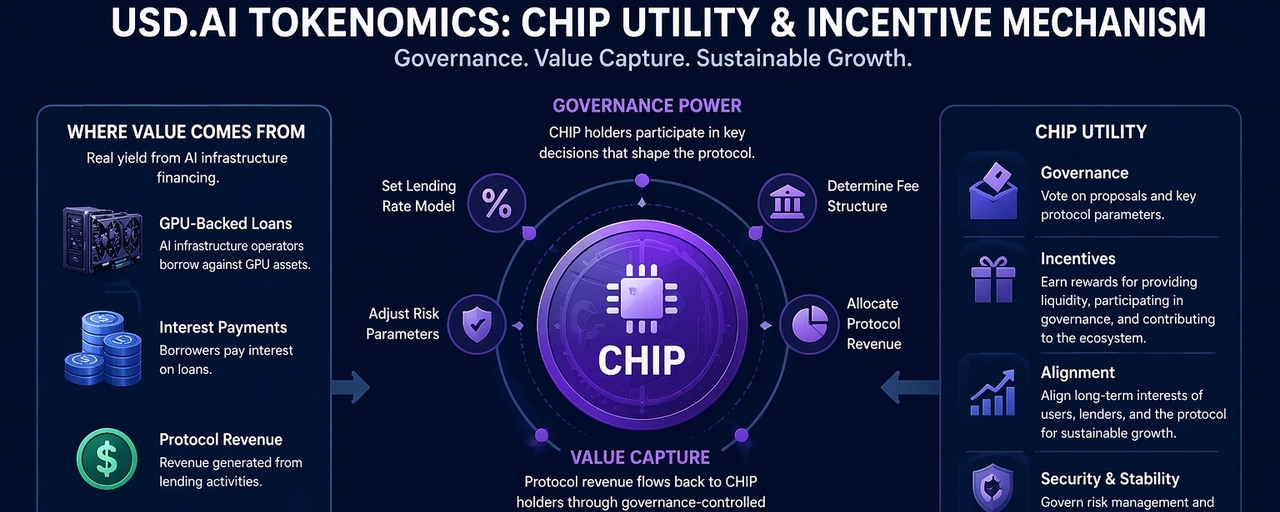
The risk that no one talks about... If demand for AI training drops tomorrow (the AI bubble bursts), the market will be flooded with cheap used GPUs, and the collateral for USD.AI loans could devalue faster than the protocol can liquidate it.
Most crypto investors see CHIP as just another token on Binance. However, the real innovation of the project lies not on the blockchain, but in the legal offices of Delaware and in data centers around the globe.
CALIBER Standard: Legal Bridge
The least known aspect of the project is the CALIBER system. It's not just a smart contract, but an entire legal framework. When a company takes a loan from USD.AI secured by GPUs (like the NVIDIA H100), these graphics cards are tokenized as NFT titles.
What's the secret? These NFTs are tied to real UCC-1 (Uniform Commercial Code) documents registered in the USA. This means if the borrower defaults, the protocol has the legal right to physically seize the equipment from the data center and resell it through its curators. This is the first historical attempt to create 'decentralized bailiffs.'
QEV: Time as Currency
In USD.AI, there's a mechanism called QEV (Queue Extractable Value). In normal protocols, you hit 'withdraw' and instantly receive your funds. Here, it's different. If there's a liquidity shortage in the pool (since the funds are invested in real 'hardware'!), you get queued up.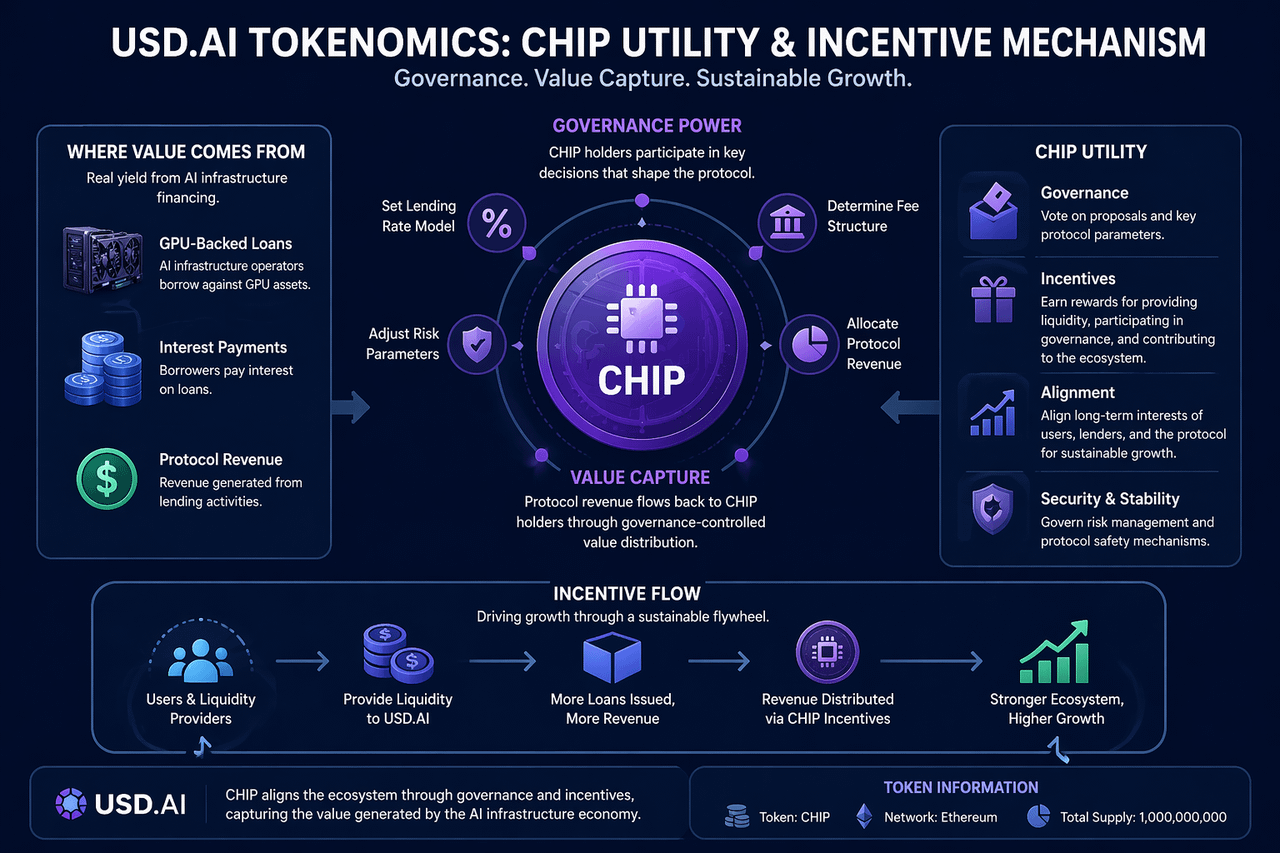
Little-known fact: You can 'buy' your way up the queue. Users willing to pay a premium move up the withdrawal list. This premium is distributed among those who agree to wait. Thus, the project has turned the liquidity problem of RWA assets into a market where your patience literally earns you income.
'First Loss' for stakers
Many are staking CHIP for the yields, not realizing their role in security. The protocol uses a First Loss Module model.
If the price of GPUs drops sharply (for example, if a new generation of chips is released, making the old ones obsolete) or if the borrower defaults, the first to lose their funds will be the large stakers of CHIP (holders of sCHIP). They act as an insurance buffer for USDai stablecoin holders. Essentially, by holding CHIP, you are a 'insurer' of the global neural network market.
Why 7 days?
USD.AI claims to finance GPU purchases in 7 days. In the traditional banking and leasing world, this takes months. The secret to this speed lies in the Curators. These are independent experts pre-accredited by the protocol. They risk their reputation and collateral to quickly verify the quality of the equipment while banks conduct endless audits.
Summary
The CHIP project isn't about AI-generated art. It's about infrastructure arbitrage. It takes 'cheap' money from the crypto world and directs it to where liquidity is critically low — to purchase chips for AI.