
═════════════════════════════════════════
═════════════════════════════════════════
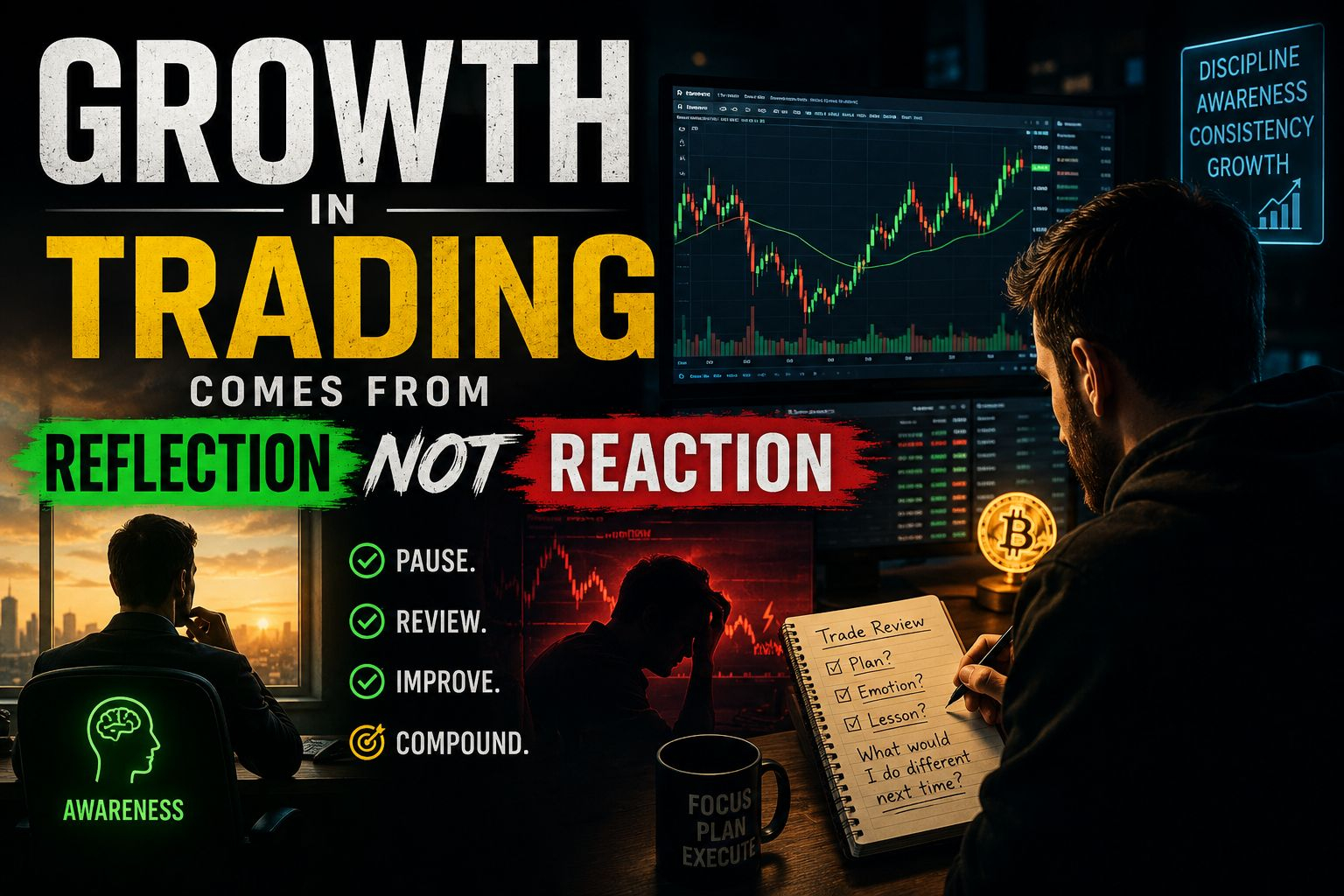
◆ Most traders are busy. Few traders are growing.
There’s a difference — and it took me longer than I’d like to admit to understand it.
You can spend 10 hours a day watching charts, catching every move, reacting to every candle — and still be in the exact same place six months from now.
➜ Not because the market didn’t give you opportunities.
➜ But because you never stopped long enough to ask yourself why you did what you did.
That’s the trap.
① We think activity equals progress.
② We think more screen time means more growth.
③ We think constant action means we’re improving.
But real growth in trading doesn’t come from being faster.
✔︎ It comes from being more honest with yourself.
═════════════════════════════════════════
◆ THE TRADER WHO REACTS VS. THE TRADER WHO REFLECTS
Let’s be real for a second.
➤ The reactive trader sees a red candle and panics.
➤ The reactive trader sees others profit and starts chasing.
➤ The reactive trader closes a winning trade too early out of fear.
➤ The reactive trader revenge trades after a loss.
Every serious trader has been there.
Now picture the other type:
➜ The reflective trader asks: “Was this a bad trade, or just a bad outcome?”
➜ The reflective trader reviews decision quality — not just PnL.
➜ The reflective trader studies personal behavior before the market punishes it again.
➜ The reflective trader treats mistakes as data, not damage.
One trader runs on adrenaline.
The other runs on awareness.
✔︎ Only one compounds long-term.
═════════════════════════════════════════
◆ WHY REACTION FEELS SO NATURAL
Here’s what makes this difficult:
Reaction feels productive.
The market moves.
You move with it.
It feels like trading.
But most reactions are just emotions wearing a strategy costume.
① Fear of missing out disguised as opportunity.
② Frustration disguised as aggressive risk-taking.
③ Overconfidence disguised as “trusting your edge.”
The market constantly triggers emotion:
➤ Fake breakouts
➤ Violent wicks
➤ Sudden volume spikes
➤ Fast reversals
And when something feels personal, logic disappears.
That’s where expensive mistakes happen.
═════════════════════════════════════════
◆ WHAT REAL REFLECTION LOOKS LIKE
Reflection is not sitting in silence hoping for enlightenment.
✔︎ It’s a structured habit.
After every trade, ask yourself:
➤ Did I follow my plan?
➤ If I deviated, what triggered it?
➤ What would I do differently next time?
That’s it.
➜ Five minutes.
➜ Three questions.
➜ Massive long-term impact.
Over time, you stop reacting automatically.
You begin recognizing patterns inside yourself:
① Fear affecting position sizing
② Greed affecting exits
③ Emotion affecting discipline
And that self-awareness becomes your real edge.
═════════════════════════════════════════
◆ THE JOURNAL IS NOT OPTIONAL
Almost everyone says journaling matters.
Very few traders actually do it consistently.
But here’s why it changes everything:
➜ Memory is unreliable.
➜ Emotions distort past decisions.
➜ Patterns only appear across dozens of trades.
A journal captures the truth.
✔︎ Entry
✔︎ Exit
✔︎ Setup reason
✔︎ Emotional state
✔︎ Lesson learned
That’s enough.
Writing forces clarity.
If you can’t explain your trade clearly in writing, there’s a good chance you took it emotionally instead of logically.
✔︎ Traders who journal seriously stop repeating the same mistakes.
═════════════════════════════════════════
◆ SLOWING DOWN IN A MARKET THAT NEVER SLEEPS
Crypto never closes.
There’s always:
➤ Another setup
➤ Another narrative
➤ Another breakout
➤ Another reason to stay glued to charts
That creates a permanent reactive state.
Traders become:
① Always watching
② Always alert
③ Always emotionally engaged
But the traders who survive long-term create space between stimulus and response.
They see the setup.
They pause.
They evaluate.
Then they decide.
✔︎ That pause is not weakness.
✔︎ That pause is skill.
═════════════════════════════════════════
◆ GROWTH IS INVISIBLE — UNTIL IT ISN’T
Nobody talks enough about this part:
Real trading growth feels invisible at first.
① One month of reflection may feel pointless.
② Three months later, revenge trading decreases.
③ Six months later, you barely recognize your old mindset.
That’s actual progress.
Not bigger leverage.
Not faster entries.
Not dopamine from one lucky trade.
✔︎ A completely different relationship with risk, loss, and uncertainty.
And that transformation only comes through honest reflection.
═════════════════════════════════════════
The market will always offer another opportunity.
But growth does not happen automatically.
➜ Growth comes from reviewing your decisions.
➜ Growth comes from studying your emotions.
➜ Growth comes from brutal honesty with yourself.
The traders who succeed long-term are rarely the fastest or most aggressive.
✔︎ They are the most self-aware.
They reflect.
They adjust.
They improve.
One trade at a time.
═════════════════════════════════════════
➤ Do you keep a trading journal?
➤ Has reviewing your trades ever changed your approach to the market?
Share your experience below.
Whether you’re a beginner or experienced trader, your perspective may help someone else improve.
✔︎ Follow for more content that goes beyond charts and explores the real psychology of trading.
═════════════════════════════════════════
═════════════════════════════════════════


#StriveQ1Results15009BTCHoldings #MoscowExchangeCryptoTrading #SouthKoreaNPSIncreasesStrategyStake #NakamotoQ1Revenue500PercentGrowth #SolanaTreasuryQ1SPSUp108