
Lately, every time a new AI drops, I notice the internet reacting in a weird way.
Users are loving it because AI is getting smarter by the day.
Artists, writers, creators... are starting to lock down their content, slap on watermarks, and block bots from scraping data.
The internet style is starting to catch on:
"My data is being turned into assets for others."
And that's when I realized @OpenLedger was hitting on something.
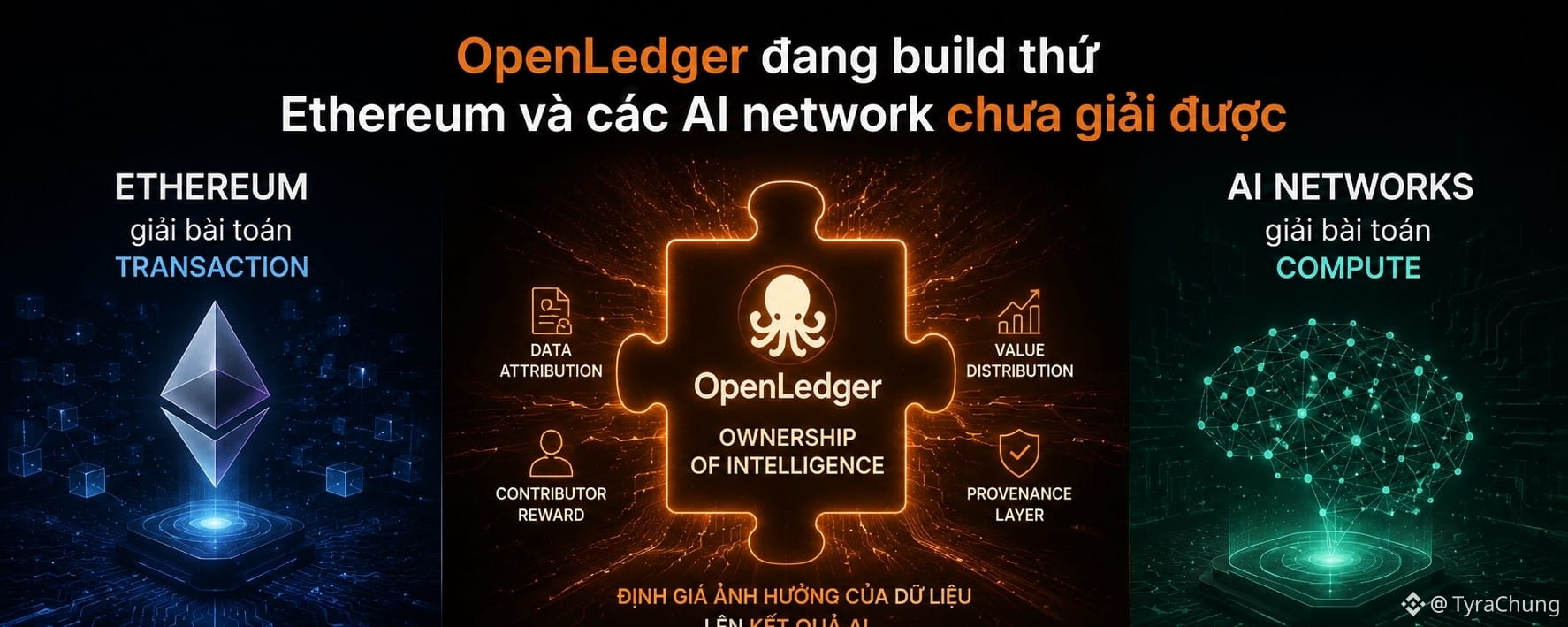
They're not racing with smart contracts like Ethereum.
There won't be a compute race like Bittensor or other AI networks.
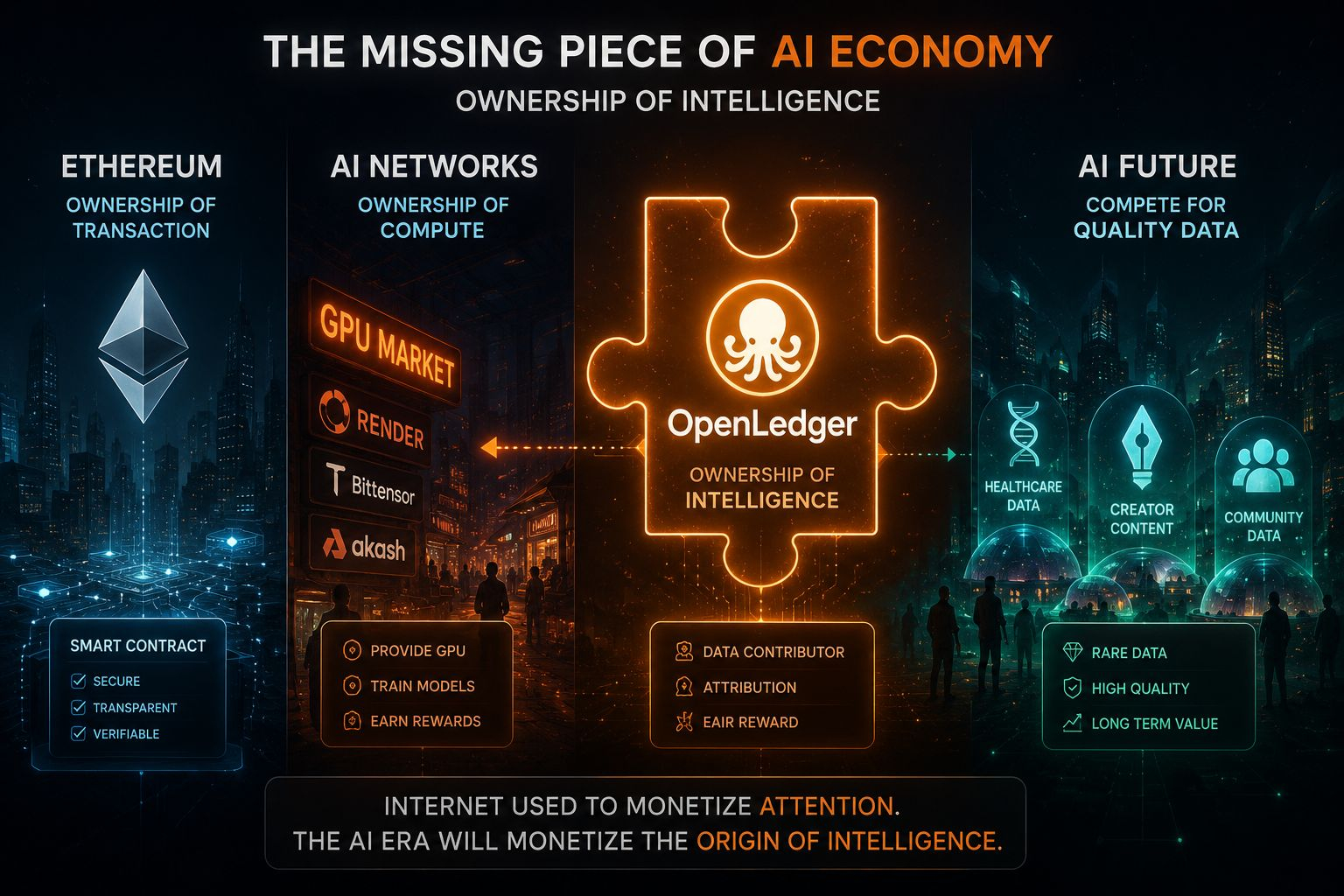
Ethereum solved the transaction problem.
AI networks are solving the compute problem.
Meanwhile,#OpenLedger is trying to solve the equation:
ownership of intelligence.
The core idea is quite simple:
not to value raw data,
but to value the impact of data on AI output.
A hospital has a rare MRI dataset.
A creator has a deep content archive.
Or a niche community owning quality behavioral data.
All of this could help AI improve... but there's almost no economic upside returning to the data creators.
OpenLedger wants to build an attribution layer for that value using token $OPEN .
Sounds small, but if this model scales, the internet will change the incentive structure significantly.
The internet first monetized attention.
Internet AI could monetize the source of knowledge.
And this is also the part that creates the most tension.
Because the entire AI economy right now is built on the assumption:
the internet is a free extraction layer.
But if attribution becomes the standard, AI won't just compete on models anymore.
And competing for access to high-quality data.
The paradox is:
the more you reward contributions, the more the internet is incentivized to spam data to farm rewards.
So the biggest challenge for @OpenLedger might not be scaling.
But the question is:
can the internet reward real value... more than spam with incentives?