

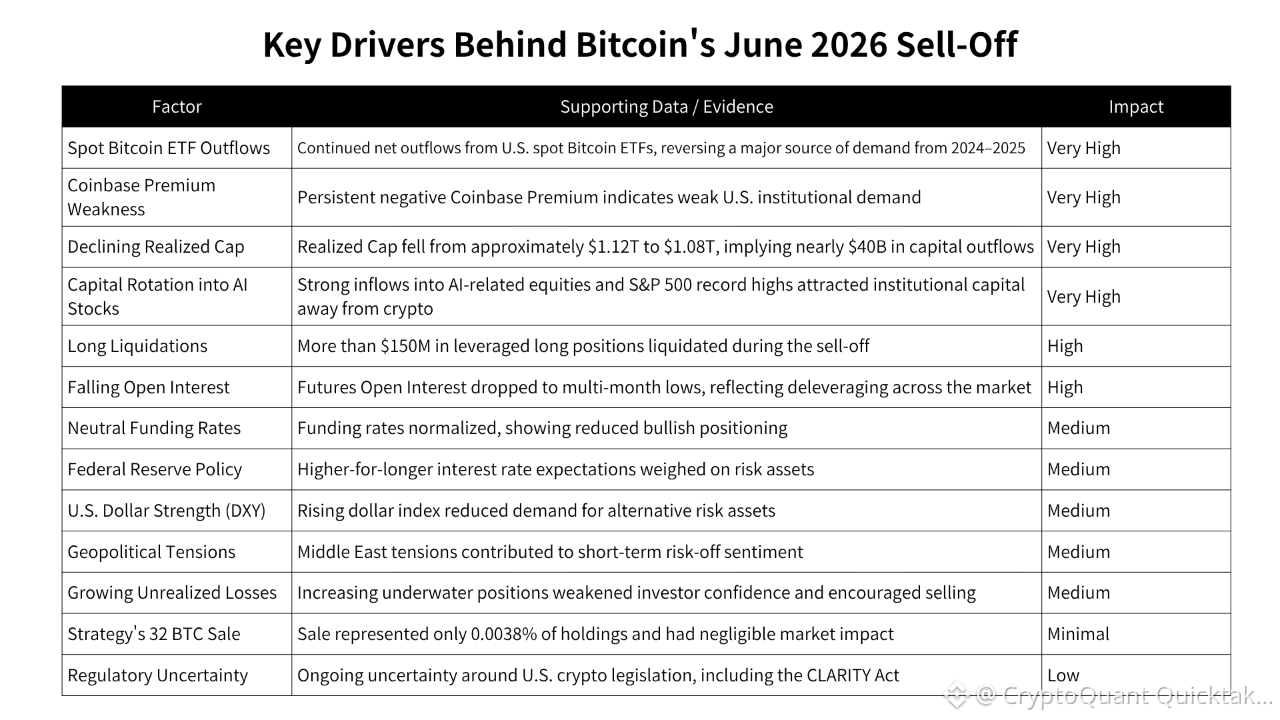
In early June 2026, Bitcoin experienced a sharp correction. While many pointed to geopolitical tensions, Federal Reserve policy, or Strategy’s small BTC sale, CryptoQuant data suggests a simpler explanation: buyers disappeared.
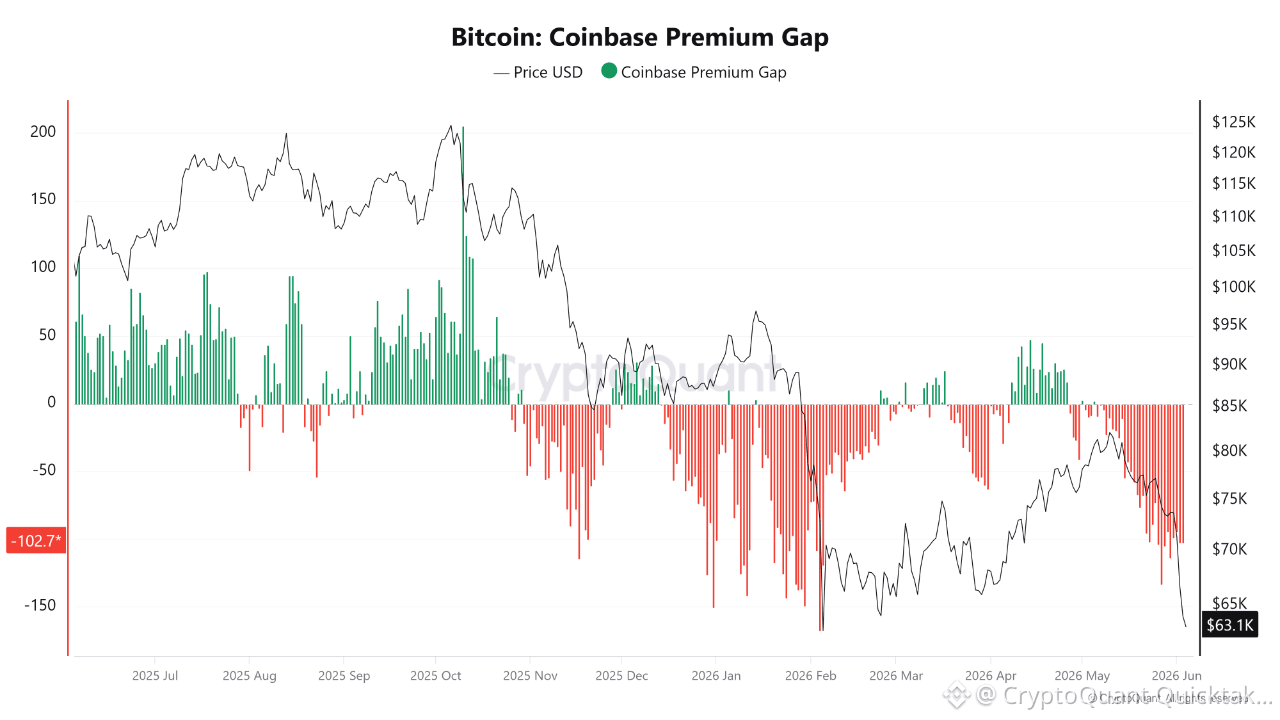
The biggest driver of Bitcoin’s 2024–2025 rally was strong inflows into U.S. spot Bitcoin ETFs. Those inflows consistently absorbed supply and supported higher prices. In 2026, however, the trend reversed. ETF outflows increased, and the Coinbase Premium remained negative for an extended period, indicating weak demand from U.S. institutional investors.
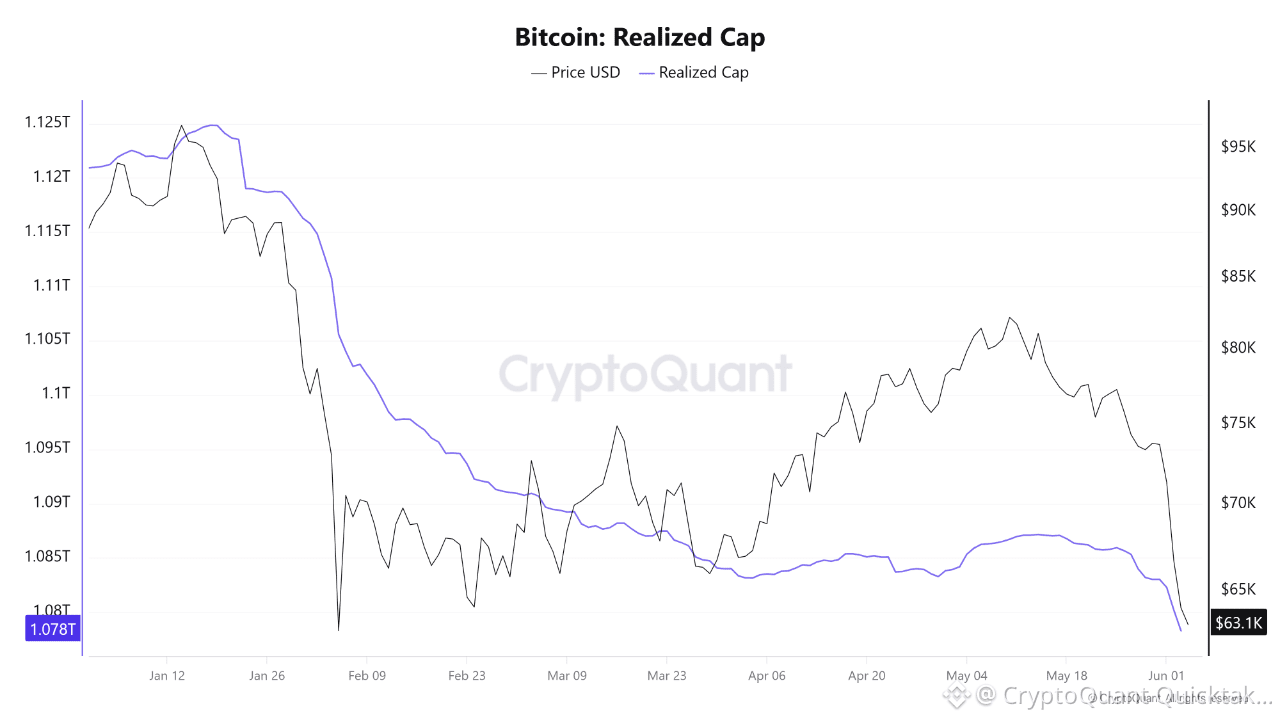
At the same time, Bitcoin’s Realized Cap declined from roughly $1.12 trillion to $1.08 trillion. Since Realized Cap measures the amount of capital actually invested in the network, this suggests that nearly $40 billion left the market.
Meanwhile, capital flowed aggressively into U.S. equities, particularly AI-related companies. With strong earnings growth, continued share buybacks, and record highs in the S&P 500, many institutions found AI stocks more attractive than Bitcoin.
The futures market amplified the decline. Open Interest dropped sharply, Funding Rates normalized, and more than $150 million in leveraged long positions were liquidated between June 3 and June 4. However, these liquidations were likely a consequence of weakening demand rather than the root cause.
This does not resemble the panic-driven collapse of 2022. Long-term holders remain largely intact, and exchange balances are still historically low. The issue today is not excess supply—it is insufficient demand.
Key indicators to watch going forward include ETF flows, the Coinbase Premium, Realized Cap growth, and whether capital concentration in AI stocks begins to slow. CryptoQuant data suggests that June’s sell-off was not a market breakdown, but a demand-driven correction. The return of demand will likely determine Bitcoin’s next major trend.
Written by XWIN Japan