
In the ever-evolving world of cryptocurrency, high-stakes trades are a reality that many investors face. For those who have the capital to make large bets on the market, there are both monumental gains and devastating losses. The recent saga of a whale's $ETH (Ethereum) trading position serves as a perfect illustration of the risks and psychological dynamics that come into play in these high-pressure environments.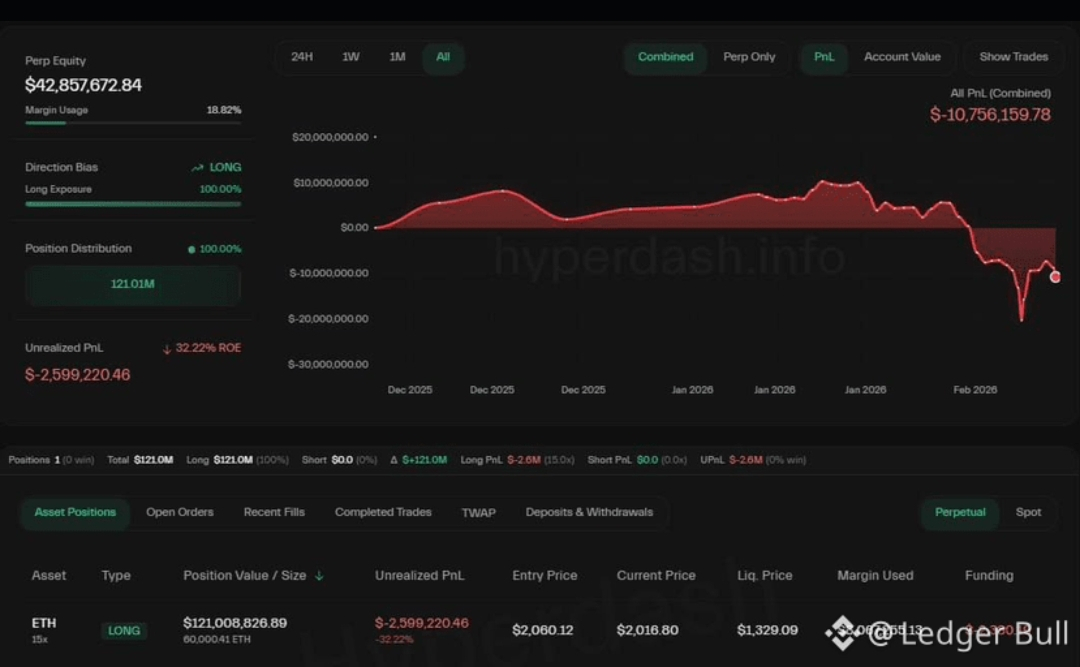
In November 2025, a whale, a trader or investor with a significant amount of capital, decided to make a bold move by going long on $ETH, one of the most widely traded cryptocurrencies. With a conviction that Ethereum's price would continue its upward trend, this whale placed a massive bet, amounting to millions of dollars. For a while, the position seemed to be paying off. The market surged, and by the following month, the whale was up a staggering 10 million dollars. This would have been a moment of triumph for many traders, a clear indication that their market analysis was correct, their timing impeccable, and their investment strategy on point.
However, cryptocurrency trading is not for the faint of heart. The volatility that makes these markets so appealing for traders is the same force that can undo gains in a flash. After months of upward movement, Ethereum experienced a significant drop in price. As the market corrected, the whale’s position began to go underwater. Despite the temporary setback, many traders would have chosen to cut their losses, reassess their strategy, and wait for the market to stabilize before re-entering. Not this whale.
Rather than closing the position or adjusting the strategy, the whale chose to double down. On a fateful day, the whale capitulated—closing their position for an 8.8 million dollar loss. While this was a painful loss, the story didn’t end there. Moments after closing the trade, this investor, unwilling to accept defeat, opened a fresh long position. This time, however, the position was even more aggressive, totalling 121 million dollars, leveraging 15x on Ethereum, with a liquidation price set at 1,329.
This decision sent shockwaves through the trading community, prompting the question: why would anyone, especially a seasoned trader with deep pockets, choose to risk so much after a massive loss? To understand this behavior, we need to delve into the psychological aspects of cryptocurrency trading, the influence of ego, and the human tendency to avoid acknowledging defeat.
For those unfamiliar with the term, a whale in cryptocurrency trading refers to an individual or entity that holds a significant amount of a particular cryptocurrency, enough to influence its market price when they make large trades. Their actions can cause dramatic price movements, often leading to increased volatility. A whale’s involvement in a market is both an opportunity and a risk for other traders, as the whale’s moves are often unpredictable and highly influential.
The decision to re-enter the market with such a massive position after suffering a substantial loss is a classic example of the gambler's fallacy. In trading, this occurs when an investor believes that a losing position will inevitably turn around because they have been "wrong" for too long. This fallacy often drives traders to double down on losing bets, thinking that a reversal is imminent. However, this behavior rarely pays off. In fact, doubling down increases the risk exponentially, especially when using high leverage. The more leverage a trader uses, the higher the potential for liquidation if the market does not move in their favor.
This whale’s choice to open a fresh position worth 121 million dollars after an 8.8 million dollar loss is also a clear manifestation of ego-driven trading. In the world of finance, traders and investors often face immense pressure to maintain their reputation, both publicly and within their own minds. For a whale, whose decisions can impact market sentiment, it becomes a matter of pride to recover from a loss, especially after such a significant amount of capital has been wiped out. The idea of admitting defeat or accepting a loss can be psychologically damaging, especially for individuals who have a history of success or significant experience in the market.
Moreover, cryptocurrency markets often exacerbate the psychological toll on traders. The round-the-clock nature of crypto markets, the lack of centralized control, and the high levels of volatility create an environment where emotional decisions are made more frequently. Investors are often compelled to make snap judgments based on real-time price action, which is not always an accurate representation of a long-term market trend. In the case of this whale, the decision to open a new, highly leveraged position in Ethereum was likely influenced by short-term price movements, ignoring the broader, more sustained trend.
The use of leverage in this case further amplified the whale’s risk. Leverage allows traders to control larger positions with less capital, but it also increases the potential for large losses if the market moves against them. The decision to leverage 15x on a 121 million dollar position places the whale at the mercy of the market. If Ethereum’s price continues to fall, the whale faces the real possibility of liquidation at the 1,329 mark, which could wipe out their entire position. This level of risk is not uncommon in cryptocurrency trading, but it is also a gamble that many traders are not willing to take, especially after experiencing significant losses.
As we analyze the events surrounding this whale’s decision-making, it becomes clear that the market's unpredictable nature and the psychological dynamics of high-stakes trading are not to be underestimated. The whale’s initial decision to enter a long position on Ethereum, the capitulation and acceptance of an 8.8 million dollar loss, and the eventual re-entry into the market with an even larger position, all reflect the complex interplay between market analysis, emotional impulses, and the ego’s desire for redemption.
Cryptocurrency traders, especially those dealing with large sums of money, must be mindful of the psychological factors that influence their decisions. The cryptocurrency market is notorious for its volatility, and while it offers enormous profit potential, it can also lead to significant losses. Risk management strategies, such as setting stop-losses, diversifying portfolios, and avoiding overleveraging, are essential in protecting against large-scale losses. In addition, traders must understand the importance of emotional discipline, knowing when to cut losses and when to walk away.
In conclusion, the story of this $ETH whale serves as both a cautionary tale and a powerful reminder of the human factors at play in cryptocurrency trading. It underscores the dangers of letting ego cloud judgment and highlights the importance of sound risk management practices. While the potential for significant profits in the crypto market is undeniable, the ability to make rational decisions and control emotions is equally crucial for long-term success. The whale’s actions—first the massive long position, then the capitulation, and finally the high-risk re-entry—demonstrate how high emotions and the desire to recover losses can lead to reckless behavior, even in those who possess significant expertise. In the end, the most successful traders are those who can balance their understanding of the market with the emotional discipline necessary to navigate its ups and downs.