
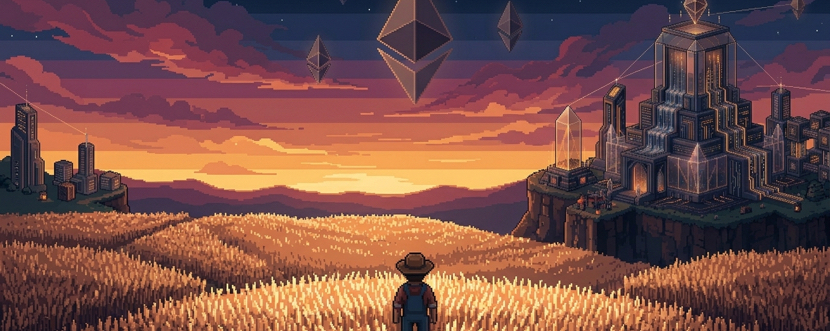
Most things in crypto begin by pretending to be simple.
A token is just a token. A game is just a game. A wallet is just a place to keep things. We keep renaming machinery so it feels harmless. We wrap friction in color, complexity in mascots, extraction in community language. The softer the surface becomes, the heavier the system beneath it often is.
I keep thinking about that when I look at Pixels.
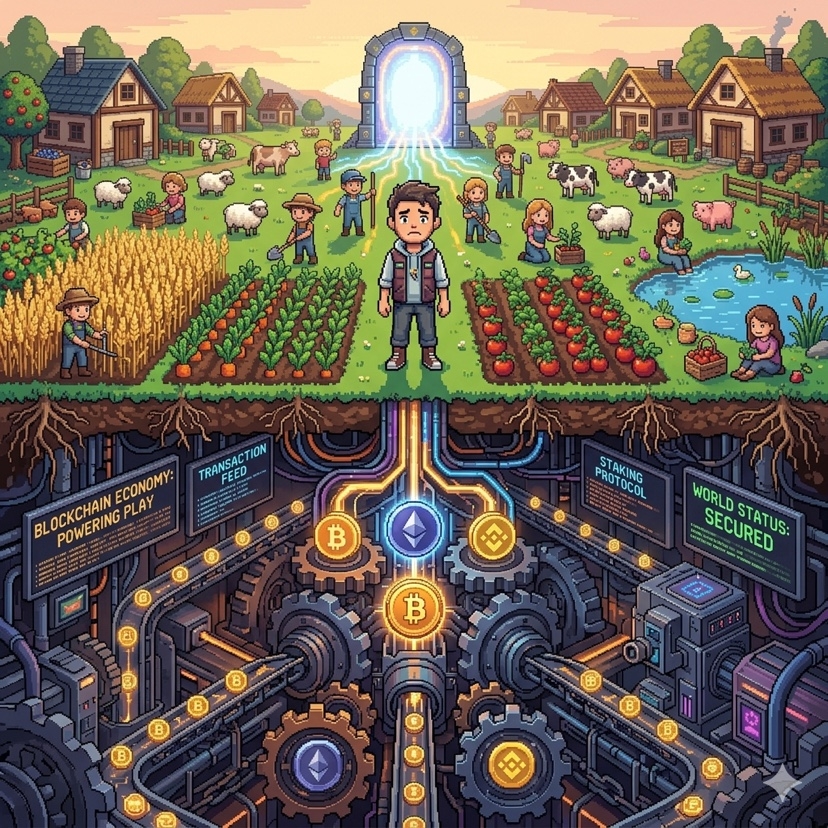
At first glance it arrives like an answer to fatigue. Bright land. Familiar tasks. Farming, crafting, wandering, building. A world that asks very little from you at the door. No need to understand liquidity, vesting schedules, emissions curves, or why so many previous economies collapsed under their own incentives. You plant, gather, move, repeat. It feels closer to a place than a protocol.
But nothing in this industry is ever only what it feels like.
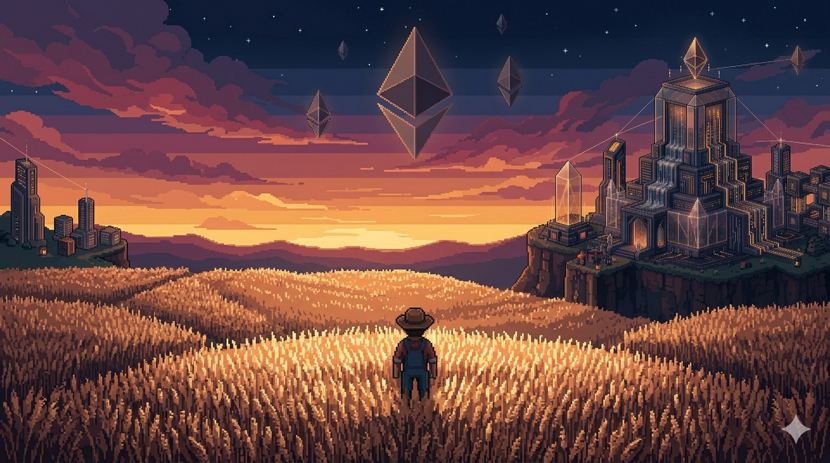
Under the soil sits a token. Under the token sits a network. Under the network sits the old question every crypto project eventually reaches, no matter how playful the art style may be. How do you make people stay once rewards become ordinary?
That question has ruined more projects than hacks ever did.
We often talk about broken tokenomics as if the numbers themselves were the problem. I have never fully believed that. Most token systems fail for a more human reason. They misunderstand behavior. They assume users can be bribed into belonging. They mistake motion for loyalty. They see daily active wallets and imagine attachment.
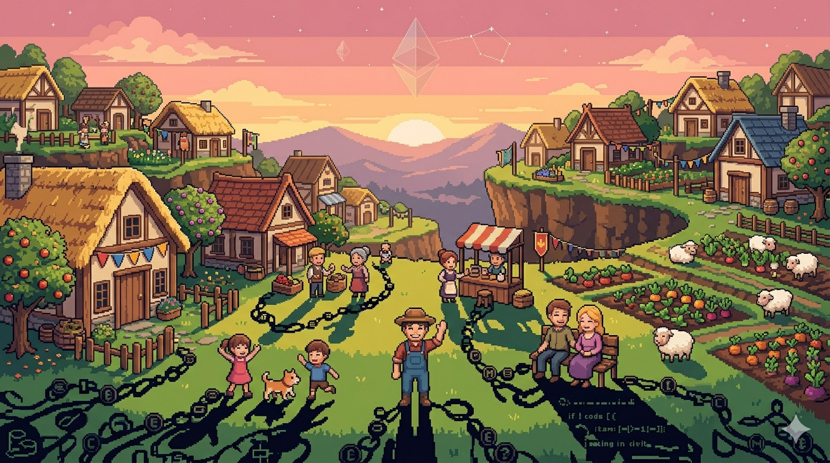
Pixels seems aware of this history, which already makes it more interesting than many projects that came before it. It is built on Ronin, a chain that understands game distribution better than most ecosystems understand users at all. It uses a token not only as reward, but as access point. Membership, guild entry, upgrades, future mints, governance. The token is asked to do many things because the project knows a token with one purpose is fragile.
Still, I wonder if giving a token more jobs changes its nature, or only hides it.
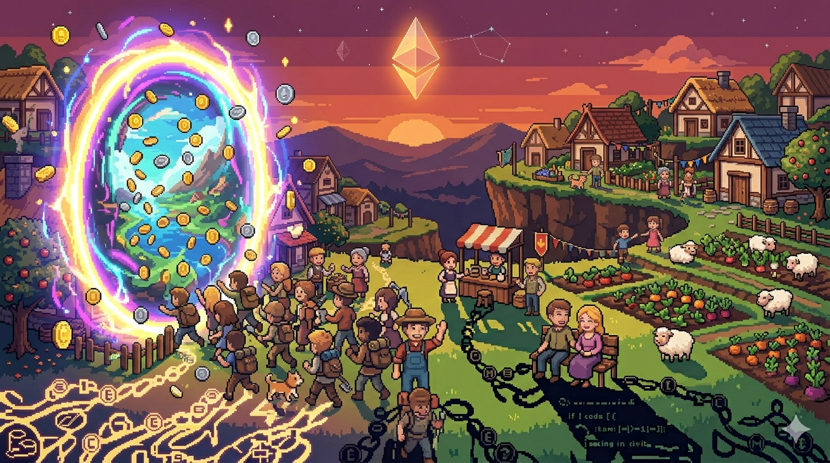
When a currency buys cosmetics, status, convenience, coordination, and voice, has utility deepened or has dependence widened? When governance is attached to the same asset used for progress, who is speaking and who is purchasing the right to be heard?
These are old questions in new clothing.
The cleverness of Pixels may be that it places these questions inside something gentle. A farm. A social loop. Small routines. The daily comfort of tending digital land can make larger systems feel natural. This is how most power works now. Not through force, but through ease. Not by closing doors, but by making one doorway smoother than the rest.
I do not mean this as criticism. Ease matters. Friction kills products. Simplicity is often kindness.
But simplicity also asks for trust.
The more seamless an experience becomes, the less visible its terms are. If joining a guild costs a token, it can feel like participation. If premium upgrades cost the same token, it can feel like personalization. If future governance uses that token, it can feel like voice. Yet one asset sits underneath all three experiences, tying leisure, hierarchy, and influence together.
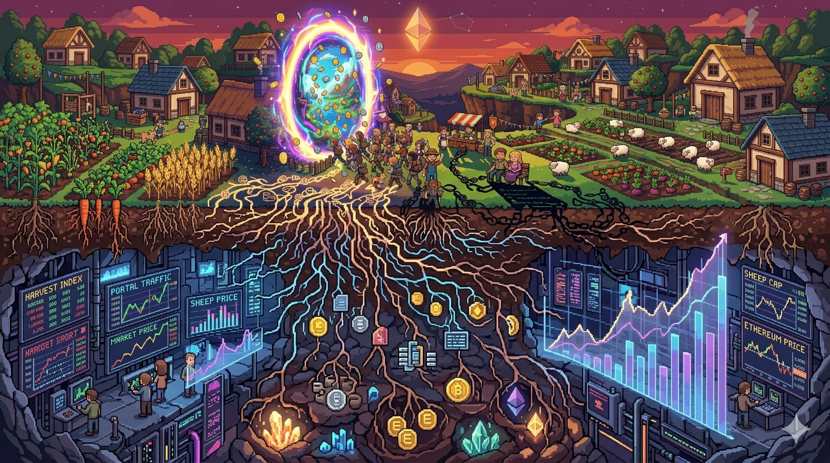
How many players notice that while harvesting crops?
Maybe they do not need to. Most people do not inspect the plumbing of places they enjoy. They only notice systems when systems fail. When prices move too sharply. When progression slows. When status becomes expensive. When the cheerful surface no longer absorbs the weight below it.
This is why retention in web3 games has always interested me more than launch numbers. Retention is the moment illusion meets habit. A user can be acquired by incentives. They can be entertained by novelty. But staying asks something deeper. Staying asks whether the world still means something when the obvious rewards fade.
Can Pixels create that meaning?
Can a token become background infrastructure instead of the center of motivation?
Can ownership feel less like speculation and more like memory?
I do not know.
I suspect many builders still underestimate how difficult it is to create genuine attachment in systems where every object has a visible price. Price changes how people look at things. A sword can become a chart. Land can become inventory. A guild can become a funnel. Even friendships become slightly distorted when every layer has an asset beneath it.
And yet people keep trying, which tells me there is something unresolved here.
Perhaps the dream was never just to financialize games. Perhaps it was to make time spent online feel portable, recognized, accumulative. To let effort persist beyond one company’s server. To make digital life less disposable. That desire is understandable. Maybe even noble. But desires often arrive mixed with appetites they did not invite.
Pixels sits inside that tension.
It looks soft. It runs on harder logic. It invites routine while quietly teaching economics. It offers community while measuring participation through assets. None of this makes it doomed. None of it makes it safe either.
I think projects like this matter because they show where the industry is maturing. Not away from tokens, but toward subtler uses of them. Not away from extraction, but toward systems where extraction is less obvious and perhaps less central. Whether that is progress or merely refinement is harder to say.
Sometimes I think the future of crypto will not be won by the loudest protocols or the largest treasuries. It will be won by products that feel so ordinary people stop noticing what they are touching.
A farm can hide a market very well.