
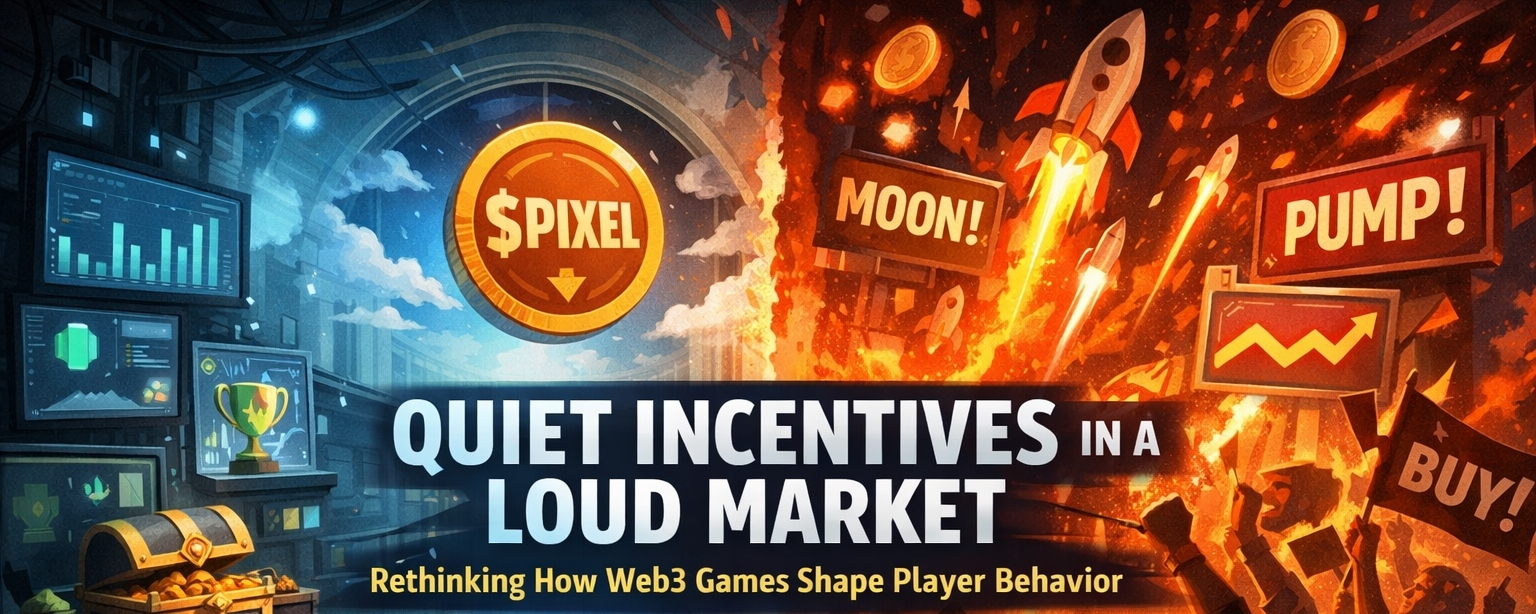
I was just sitting in the middle of the day, not really doing anything in particular, just watching the market move the way it always does. No strong positions, no urgency. Just charts flickering in the background like they don’t really care if anyone is paying attention or not. Small candles forming, fading, reversing, and repeating. It felt less like trading and more like observing something alive that never settles into one clear shape for too long.
In that quiet space, my attention drifted away from price and started focusing on something else entirely the systems underneath it. The invisible layers that decide what people chase, what they ignore, and what keeps them coming back even after they’ve convinced themselves they’re done with it.
That’s when I came across Stacked. A rewarded LiveOps engine for games, built with an AI game economist sitting on top of it. It doesn’t really announce itself. There’s nothing loud about it. It just works in the background, deciding when a reward should appear, who should receive it, and what kind of behavior it’s trying to encourage. Real-money or in-game incentives, but placed with timing and intention instead of randomness or constant emission.
What stayed with me wasn’t the product description, but the feeling of it. Like something quietly shaping movement without needing to be seen doing it.
It made me think about how different most of crypto feels in comparison.
Because most of crypto is not quiet at all. It’s loud by design. Tokens move on narratives that spread fast, sometimes faster than the underlying product can even keep up. Communities amplify momentum, speculation builds on speculation, and attention becomes the thing everyone is actually competing for. Incentives are usually very direct too airdrop campaigns, yield boosts, emissions schedules designed to attract users quickly rather than keep them.
Everything is visible. Everything is immediate. Everything wants a reaction.
Then there’s $PIXEL It doesn’t really show up in the same way. It stood out to me, but not because it was trying to. More because of how it structures incentives differently. The design feels more layered, less reactive. Instead of just pushing users toward short-term engagement spikes, it seems more focused on shaping behavior over time how players stay, how they return, and how the system gently adjusts around them.
The token isn’t just sitting there as something to trade. It feels more embedded in the loop itself, tied to progression and interaction in a way that makes it part of the environment rather than just an external asset.
There’s something almost invisible about that kind of design. Like a quiet force holding things together without asking to be noticed. Not fireworks, more like infrastructure.
But I still find myself unsure about it.
Because subtle systems don’t always survive in markets that reward visibility. If people don’t immediately see value, do they assume it isn’t there? And if it does scale, does it stay elegant and restrained or does pressure slowly push it into the same loud cycles it was meant to avoid?
It feels like a tension that doesn’t resolve easily. Between patience and attention. Between long-term design and short-term survival.
And maybe that’s the real question sitting underneath all of this. Not whether these systems are clever, but whether they can exist long enough, in enough silence, to prove what they actually are without being forced to become something louder just to be understood.
I don’t have an answer yet. Just that same quiet feeling that something important is happening, but still in a way that’s hard to fully name..