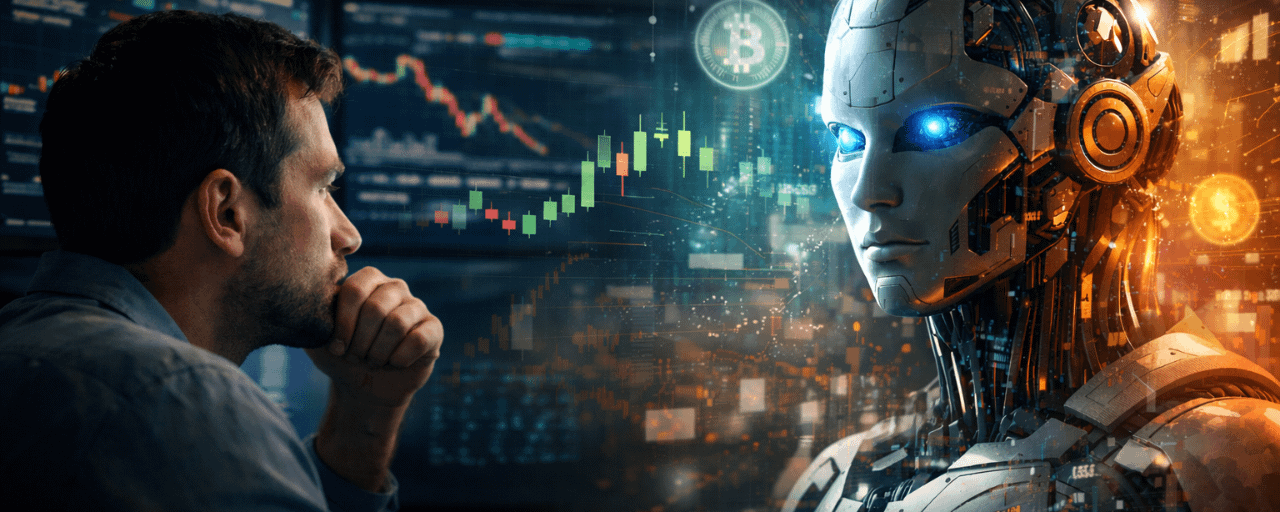
There was a moment when I realized my curiosity around trading tools had started to fade. Most automation products I came across felt like variations of the same idea—predefined strategies, backtested promises, and a thin layer of abstraction over manual execution. But when I started reading about Binance AI Pro on Binance, something about its framing made me pause. Not because it claimed better performance, but because it seemed to question a deeper assumption: what if the problem isn’t just strategy, but the entire structure of how decisions are made and executed?
The more I think about it, the core issue in trading has rarely been access to tools. It’s the fragmentation between analysis, decision, and execution. Even experienced traders operate within this gap—seeing an opportunity, hesitating, adjusting position size based on emotion, or exiting too early. Automation tools tried to solve this by locking users into rigid systems, but that introduced another constraint: lack of adaptability. Markets are not static, yet many automated strategies behave as if they are.
This is where most existing approaches seem to fall short. Traditional bots execute predefined logic, which works until it doesn’t. Copy trading shifts trust to another human, but inherits their biases and risk appetite. Even signal platforms, while useful, still rely on the user to act, reintroducing inconsistency at the final step. In each case, the underlying trade-off remains unresolved: either you keep control and accept inconsistency, or you automate and sacrifice flexibility.
What draws my attention to Binance AI Pro is the way it tries to collapse this gap into a single layer of execution. Instead of acting as an assistant that suggests actions, it positions itself closer to an autonomous agent that can analyze, decide, and execute within a separate account structure. If this is implemented well, it changes the role of the user from an active trader into something closer to a system supervisor. That shift feels subtle, but it carries significant implications. It suggests that consistency might no longer depend on human discipline, but on how well the system is designed and constrained.
Mechanically, this raises more interesting questions than answers. For an AI system to be effective in trading, it needs to continuously interpret market conditions, adjust position sizing, and manage risk in real time. This is less about prediction and more about probabilistic control. A good system doesn’t need to be right all the time—it needs to manage losses when it’s wrong and scale when it’s right. If Binance AI Pro can internalize this dynamic, then it’s not just automating trades; it’s automating behavior under uncertainty.
I find it useful to think through specific scenarios. In a low-volatility, sideways market, where many traders overtrade out of boredom, an AI system that reduces activity could preserve capital more effectively. In contrast, during high-volatility events, where reaction speed matters, automation could minimize delay and reduce emotional interference. These are practical edges, not theoretical ones. But they also depend heavily on how well the system adapts to shifting regimes, something that even human traders struggle with.
That said, I’m still cautious. Curiosity doesn’t equal conviction. There are open questions around how these systems handle edge cases, how transparent their decision-making process is, and whether users can meaningfully evaluate performance beyond short-term results. There’s also the broader issue of dependency—once users delegate execution, do they lose the ability to intervene effectively when needed?
So what makes Binance AI Pro more intriguing to me isn’t that it promises better outcomes. It’s that it implicitly challenges the role of the trader. And I’m not entirely sure yet whether that shift leads to a more resilient system, or just a different kind of fragility.#BinanceAIPro $XAU @Binance Vietnam