

I Will Be Honest....
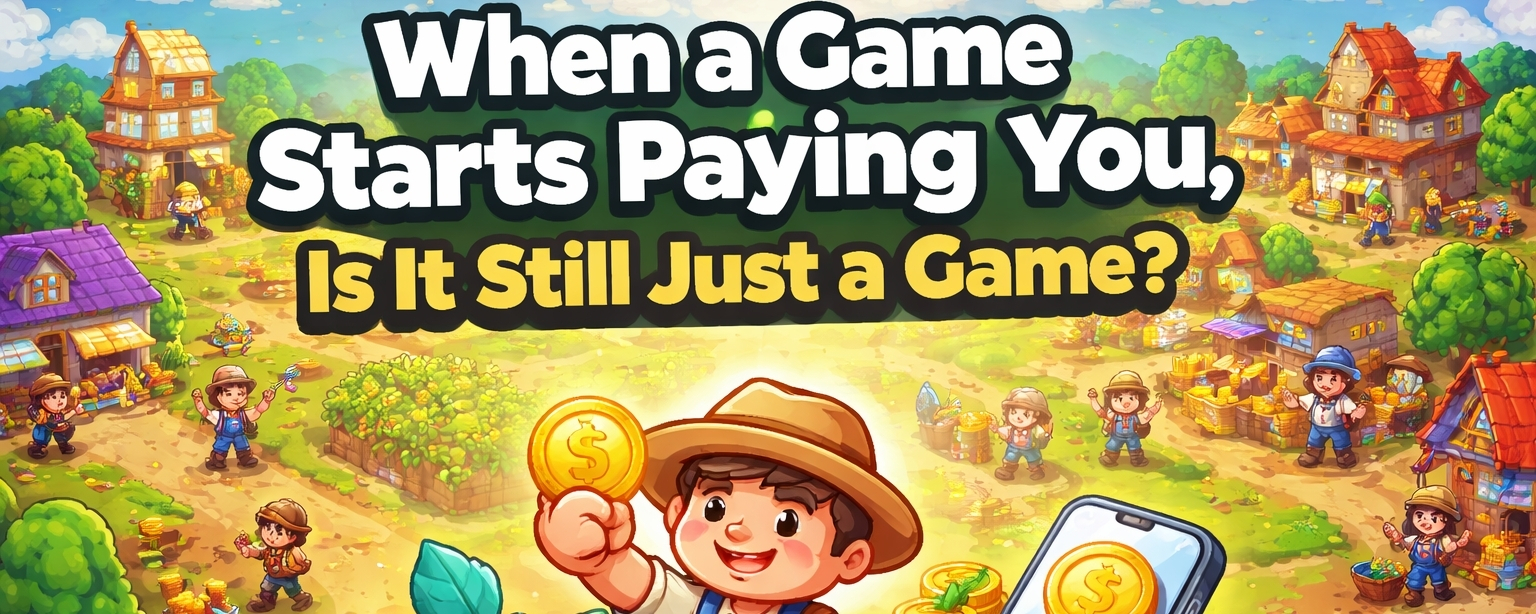
I keep Asking Myself a simple question whenever I look deeper into Web3 gaming: at what point does a game stop being a game and start becoming an economy?
Yeah.. At first, it sounds like an Abstract idea. But when I started studying Projects like Pixels, I realized this question is no longer theoretical. It’s already Happening.
The gaming industry Has always had economies, but they were mostly Closed systems. You earned coins, bought items, and progressed. The value stayed inside the game. Now, with play-to-earn models, that value starts to move outside. Tokens can be traded, assets can be owned, and time spent in-game begins to Feel like economic activity.
This is where the Real problem begins.
The biggest Challenge in Web3 gaming today is not Technology. It is Sustainability. I have seen many projects reward users heavily at the beginning, attracting large Numbers of players. But over time, those same Systems collapse because they rely too much on constant reward distribution. In simple terms, they create more value than they remove.
This is often Described as a “faucet problem.” Rewards keep flowing into the system, but there are not enough Bechanisms to take value out. When that happens, inflation increases, Token prices drop, and users slowly lose interest. What looked like a thriving game turns into a short-term incentive loop.
From my Research, I think many people underestimate how difficult it is to balance this. A game is supposed to be fun, unpredictable, and engaging. But an economy needs structure, control, and balance. When you try to combine both, tension naturally appears.
If rewards are Too strong, players focus only on earning. If Rewards are too weak, players leave. If systems become too predictable, the sense of discovery disappears. This is not just a design challenge. It is a psychological one.
When I looked Deeper into Pixels, I did not see it simply as a game. I saw it as an attempt to build something closer to an ecosystem.
Instead of Focusing Only on Gameplay, they are building layers around it. The reward system is the first layer. Players earn tokens by participating, not just by winning. This shifts the idea of value. Time spent becomes measurable, and engagement becomes part of the economy.
But what caught My Attention more was the data layer behind it. The system tracks how players behave, what they Spend, and how long they stay. On the surface, this looks like normal analytics. But in reality, it acts more like a learning system. It helps developers understand patterns and adjust the economy Over time.
I find this both powerful and slightly concerning.
On one hand, it Allows better balancing. Developers can reduce inflation, Adjust rewards, and improve retention. On the other hand, when a system starts predicting behavior, It can reduce the natural randomness that makes games enjoyable. A perfectly optimized system is not always the most fun one.
Another interesting part is the infrastructure approach. Pixels is not just building a single game. It is Creating a framework where other developers can integrate and build within the same ecosystem. In simple Terms, it feels less like a standalone product and More like a network.
I often compare this to Digital platforms rather than traditional games. In platforms, Users are not just players. They are participants in a system where data, behavior, and value are all connected.
If this model works, it could change how we think about gaming.
Imagine a future where your progress, identity, and assets are not limited to one game. Where your activity contributes to a larger network. Where value flows directly between participants without traditional intermediaries.
But this idea also raises an important question: trust.
When economic value is tied directly to user behavior, people become more sensitive to changes. Token volatility, Reward adjustments, and system updates can all affect user confidence. If players feel that rewards are unstable or unfair, they will leave quickly.
I have seen this happen in Multiple projects. Strong early growth followed by rapid decline. Not because the idea was bad, but because the balance was not maintained.
From what I observe, Pixels seems aware of this challenge. The presence of both “faucets” and “sinks” shows an understanding of economic design. Tokens enter the system through gameplay, but they also leave through upgrades, Crafting, and other in-game activities. This creates a loop that, if managed well, can remain stable over time.
Still, the key word here is “if.”
No system gets this right immediately. It requires constant adjustment, Real data, and a deep understanding of user Behavior. It also requires accepting that not every player is the same. Some come to earn. Some come to play. Balancing these motivations is one of the hardest problems in Web3 today.
Looking forward, I think the real impact of projects like Pixels is not just in gaming. It is in how they experiment with digital economies.
If Successful, they could show that value on the internet does not always need to flow through ads or centralized platforms. Instead, it could flow directly between participants based on activity and contribution.
That would be a meaningful shift.
But I also think we are still very early. What we are seeing now is more like a live experiment than a finished solution. The technology is evolving, but the human side is still uncertain.
Will players continue to engage if rewards decrease?
Will developers maintain balance as the system grows?
Will users trust a system where gameplay and economics are deeply connected?
These are not easy questions.
From my perspective, Pixels is not just trying to build a game. It is trying to test whether a new kind of digital economy can exist inside interactive environments.
And honestly, I think the outcome depends less on the code and more on the people using it.
So I leave you with this:
What do you think happens when games become economies?
Is this the future of gaming, or just another experimental phase?
And most importantly, would you still play if the rewards disappeared?