
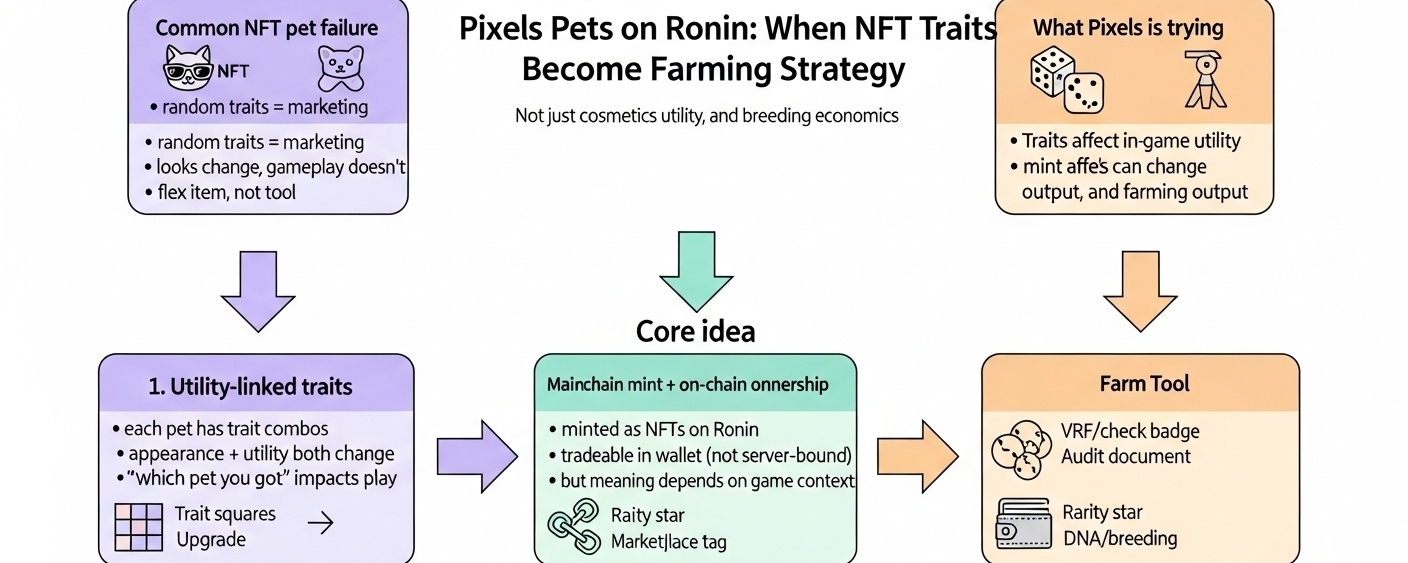


i’ll be real, i didn’t go digging into Pixels pets thinking i’d find anything deep. i assumed it’s the usual NFT recipe: random traits, mint, “unique,” marketing post, done. most games stop there. the pet looks different, but it doesn’t change how you play, so it ends up being a flex item more than a tool.
but Pixels pets are minted as NFTs on the Ronin network, and the part that caught my eye is traits aren’t only cosmetic. each pet has a combo of traits that changes both appearance and in-game utility. that matters because it means the mint result can actually affect your farming operation, not just your profile pic. that’s a design choice with real economic consequences, because now “which pet you got” can impact your output, not only resale price.
the minting itself uses on-chain randomness to decide trait combos. and this is where i start getting cautious. randomness on a blockchain is tricky. blockchain is deterministic, so “true random” is hard. most systems use stuff like verifiable random functions or commit-reveal to get close to fair. so the big question isn’t “did they say random,” it’s: is it genuinely unpredictable, or can it be gamed in subtle ways? i haven’t seen a public audit specifically for the pet mint contracts, and honestly i’d want to see audited code before trusting it fully.
rarity is tiered, which is normal. common traits show up a lot, rare traits show up less. those percentages decide scarcity, and scarcity is what drives secondary market prices. nothing new there. the more interesting part is: do rare traits matter inside gameplay, or are they only “rare for resale”? because a lot of NFT collections pretend rarity equals value, but in practice it’s just hype.
from what i can tell, Pixels is trying to make utility track rarity. meaning a pet with rare traits should be better at certain farming tasks, not just look cooler. if that holds up as more pets exist and the meta develops, it could connect the NFT market with real gameplay in a way most pet systems fail to do. because players and collectors often want different things. getting both groups to care about the same asset for reasons that don’t fight each other is hard.
another big point: ownership is on-chain, so pets are tradeable outside the game server. your pet sits in your wallet, not trapped in some company database. if Pixels shut down tomorrow, you’d still own the NFT. but would it keep value without the game context? that’s a different question, and people should be honest with themselves before spending real money. an NFT can survive as a token, but the “meaning” can die if the game dies.
then there’s breeding. two pets can produce offspring with inherited traits and mutated traits. inheritance rules are encoded in contracts, and mutation adds extra randomness. this is where it gets more interesting, because it creates a genetic economy. not just a market for single pets, but a market for combinations that might produce valuable offspring. that’s more like strategy than simple collecting.
still, i’m watching it cautiously. the concept is strong, but execution is everything. you only really know if it works when the pet population grows, the meta forms, and the system gets tested by people trying to optimize it. until then, it’s a promising design with some real questions sitting underneath.
