
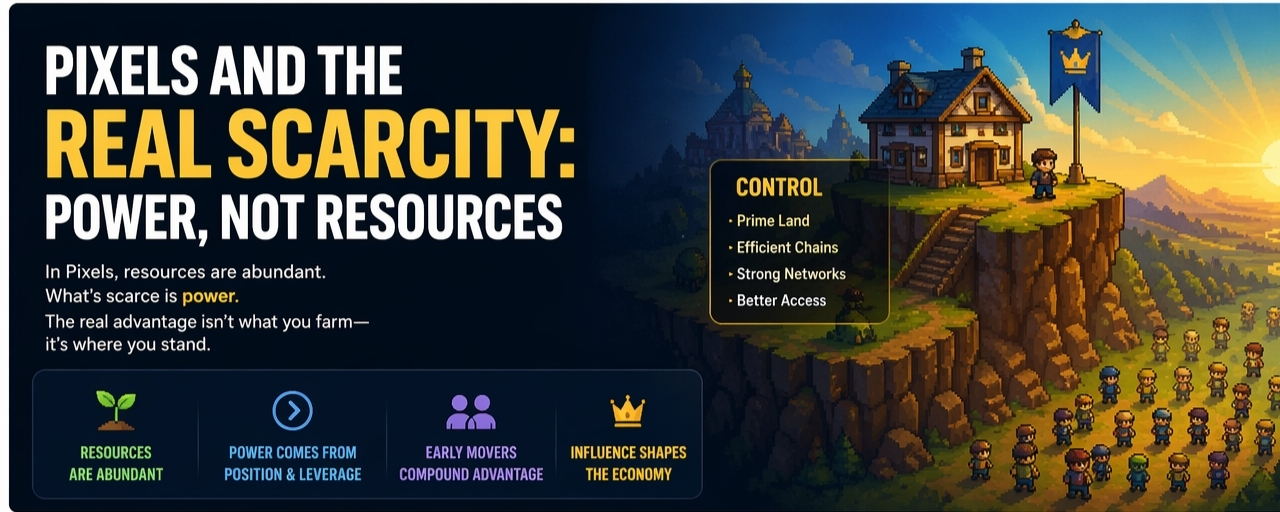
Most Conversations Around Pixels Usually Revolve Around Farming Loops, Token Rewards, And The Constant Flow Of Resources Inside The System. You Plant Seeds. You Harvest Crops. You Craft Materials. On The Surface, It Feels Like An Open Economy Where Anyone Willing To Invest Time Can Participate And Grow.
But The Deeper Issue Isn’t Really About Resources.
It’s About Power.
Scarcity In Pixels Hasn’t Disappeared — It Has Simply Changed Form. The Real Limitation Isn’t How Many Items Exist In The Game. It’s Who Occupies The Most Efficient Positions Within The System.
Some Players Entered Early. Some Understood Processing Chains Before Others Did. Some Built Strong Networks While The Ecosystem Was Still Forming. Over Time, Those Decisions Didn’t Just Give Them Assets — They Gave Them Leverage.
Land Location Affects Productivity. Optimized Crafting Routes Increase Margins. Strong Relationships Create Access To Better Trades And Faster Information. And When These Advantages Stack Over Time, They Compound.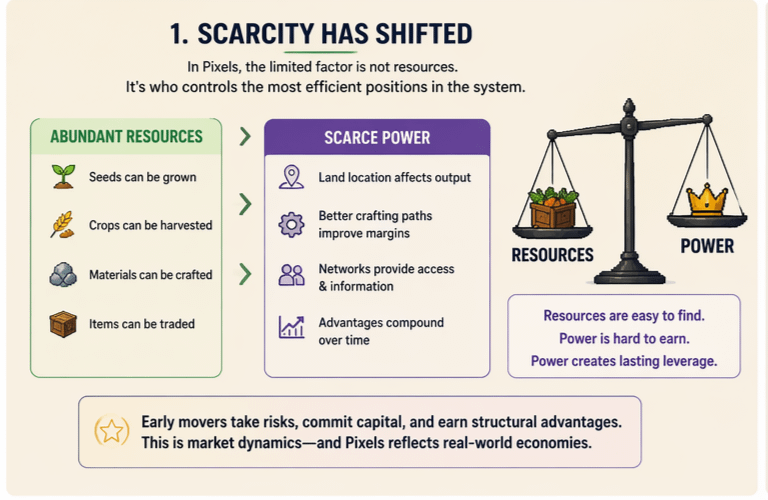
To Be Clear, This Isn’t Automatically Unfair. Real-World Markets Operate In A Similar Way. Early Movers Take Risks, Commit Capital, And Often Gain Structural Advantages As A Result. In Many Ways, Pixels Reflects That Dynamic More Realistically Than Most Web3 Games, Which Rely Heavily On Token Inflation Or Artificial Scarcity.
The Real Concern Appears When Structural Advantage Grows Faster Than Opportunity Itself.
If Someone Joins Today, Can They Realistically Compete With A Player Who Already Controls Optimized Land, Refined Supply Chains, And Coordinated Networks? Or Will They Always Operate On Thinner Margins Inside A Framework Shaped By Early Adopters?
That’s Where The Conversation Becomes Serious.
An Economy Built Around Skill And Coordination Can Be Powerful. It Rewards Understanding, Timing, And Effort Instead Of Passive Holding. That’s A Strength. But If Influence Begins Clustering Too Tightly, The System Can Slowly Tilt — Not Through Rules, But Through Positioning.
Over Time, A Relatively Small Group Could Start Shaping Pricing, Access, And Opportunity Simply Because Of Where They Stand In The Structure.
So The Long-Term Health Of Pixels May Depend Less On Token Supply Charts And More On Economic Mobility. Can Newcomers Move Up? Are There Mechanics That Introduce Fresh Competition? Do New Zones Or Updates Redistribute Opportunity In Meaningful Ways?
From My Perspective, This Isn’t Criticism. It’s A Design Question.
Pixels Feels Closer To A Functioning Economy Than A Speculative Playground. That Realism Is Part Of Its Appeal. But Functioning Economies Survive When They Balance Efficiency With Accessibility.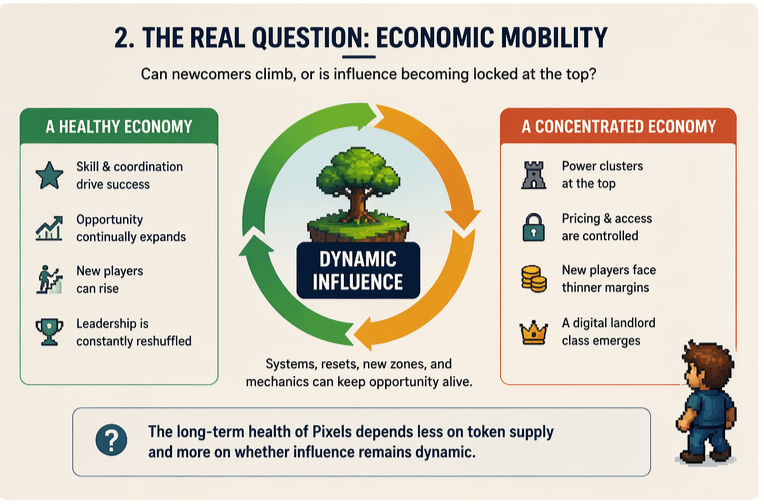
So The Real Issue Isn’t Resource Abundance.
It’s Whether Influence Remains Dynamic.
Will Leadership Constantly Reshuffle Based On Skill And Coordination?
Or Will A Quiet Digital Landlord Class Gradually Solidify Over Time?
That Question May Ultimately Matter More Than Any Short-Term Price Movement.@Pixels $PIXEL
