
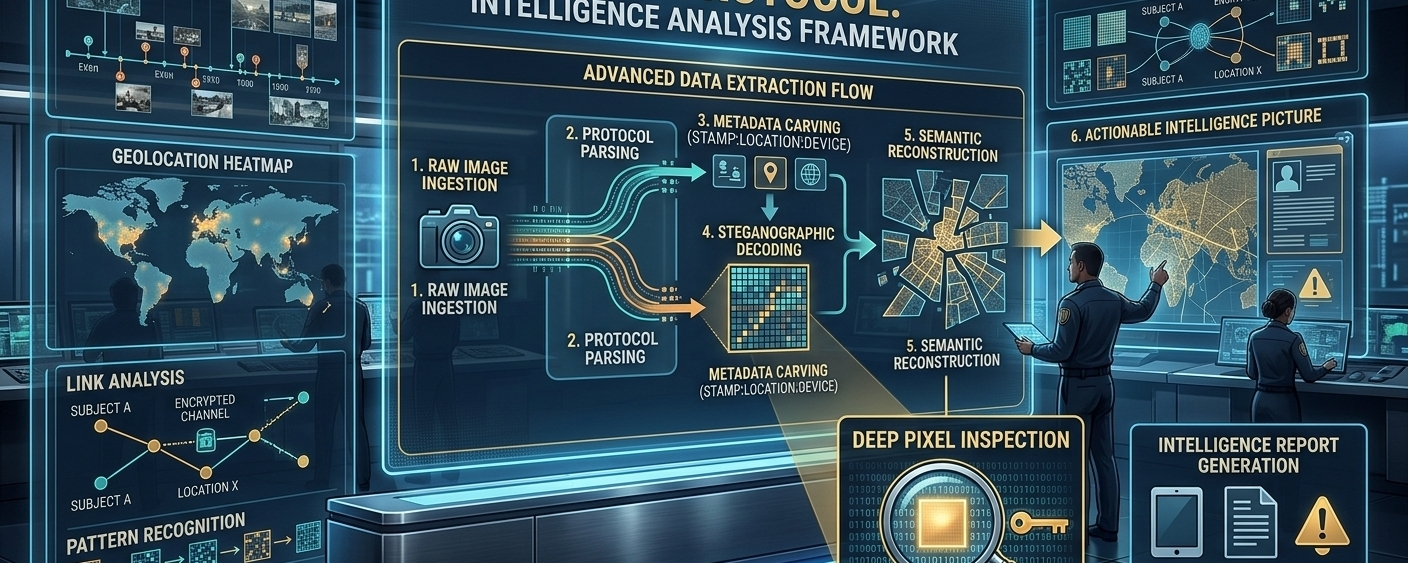
In the rapidly evolving landscape of digital communication, data transmission, and virtual environments, the Pixel Protocol has emerged as a cornerstone technology. Often misunderstood as merely a method for image rendering, the Pixel Protocol is, in fact, a sophisticated framework for orchestrating how data is packaged, transmitted, and interpreted across high-bandwidth networks. By decoupling the raw data layer from the visual representation, it allows for unprecedented efficiency in real-time streaming, augmented reality (AR), and cloud computing.
## 1. Defining the Pixel Protocol
At its core, the Pixel Protocol is a set of standardized rules—a communication syntax—designed to manage the "last mile" of data visualization. Traditional protocols (like TCP/IP) focus on packet integrity and ordering. The Pixel Protocol, conversely, focuses on perceptual relevance.
Instead of sending every bit of information in a high-resolution frame, the protocol analyzes the data stream and prioritizes pixels that are critical to the observer's focus, while compressing or deferring the transmission of background or low-priority visual data.
### Key Pillars:
*Perceptual Latency Management:** Adjusting data flow based on the human eye’s foveal vision.
*Dynamic Compression:** Real-time adaptation to bandwidth fluctuations.
*Frame-Sync Intelligence:** Synchronizing state changes between local and remote environments.
## 2. Technical Mechanisms: How It Works
The efficiency of the Pixel Protocol stems from its use of Semantic Pixel Mapping (SPM). Unlike legacy video codecs that look at blocks of pixels, the Pixel Protocol identifies objects. If a user is navigating a virtual environment, the protocol treats a chair as a distinct entity rather than a collection of colors.
### The Lifecycle of a Packet
1. Ingestion: The raw digital state is captured.
2. Semantic Decomposition: The protocol identifies dynamic entities vs. static environments.
3. Prioritization Matrix: Using machine learning, the protocol ranks pixels by importance (e.g., a moving avatar takes priority over a static wall).
4. Packet Transmission: Data is dispatched using a specialized transport layer that minimizes jitter.
5. Reconstruction: The receiving node reconstructs the scene, filling in non-critical gaps using predictive temporal aliasing.
## 3. The Impact on Industry
The implementation of this protocol is fundamentally changing several key sectors:
### Cloud Gaming and Meta-Environments
By offloading the rendering process to the cloud and utilizing the Pixel Protocol to stream only what the user sees, companies can eliminate the need for high-end local hardware. This makes ultra-realistic gaming accessible on mobile devices and low-power browsers.
### Remote Collaboration and AR
In fields like remote surgery or precision engineering, the margin for error is zero. The Pixel Protocol ensures that critical visual information—such as a data overlay on a physical object—is rendered with sub-millisecond latency, preventing the "drift" that often plagues AR systems.
## 4. Challenges and Future Evolution
Despite its power, the Pixel Protocol faces hurdles. Because it requires significant computational overhead on the server-side to perform "semantic understanding," the initial setup costs are high. Furthermore, as we move toward 6G integration, the protocol must become more decentralized to avoid becoming a bottleneck.
### The Path Forward: AI Integration
The future of the Pixel Protocol lies in Generative Upscaling. Rather than transmitting the entire image, the protocol may soon transmit "contextual seeds"—compact data markers that tell the client device what the scene should look like. The client-side AI then "paints" the frame locally. This approach could reduce bandwidth requirements by up to 90%, effectively making high-fidelity virtual reality indistinguishable from physical reality.
## 5. Conclusion
The Pixel Protocol is more than a technical specification; it is the bridge to the next generation of human-computer interaction. By shifting the paradigm from "sending everything" to "sending what matters," it solves the fundamental problem of the modern internet: how to deliver infinite visual data over finite bandwidth. As this technology matures, it will undoubtedly remain the invisible engine powering the immersive, instantaneous, and intelligent digital worlds of tomorrow.
