
I have been noticing something shift lately in Web3 gaming, and @Pixels is right in the middle of it. Not because it’s the most complex project out there, or the most hypedd, but because it’s doing something a lot of others failed to do it actually feels like a game first. That sounds basic, but in this space, it reallly isn’t.
For a while, most Web3 games felt like financial tools disguised as gameplay. You clicked, you earned, you exited. That lop got tired fast. What’s different now is that people are starting to care again about experience, not just extraction. That’s exactly why Pixels caught my attention. It dosn’t try too hard to impress you at the start. It just pulls you in slowly.
When I first jumpe in, it felt almost too simple. Farming, walking around, interacting, collecting resources. No pressure, no overload. Just a soft entry into the wold. But the longer I stayed, the more I realized that simplicity is doing a lot of heavy lifting. It lowers resistance. It makes people stay longer than they planned to. And in Web3, time spent inside a system is everything.
That’s really the problem Pixels is trying to solve, whether people realize it or not. Most Web3 ecosystems struggle to retan users without constantly pushing financial incentives. Once rewards drop, users disappear. Pixels flips that a bit. It builds a loop where people stay because it feels easy and social, and only later start thinking about optimization, assets, and returns.
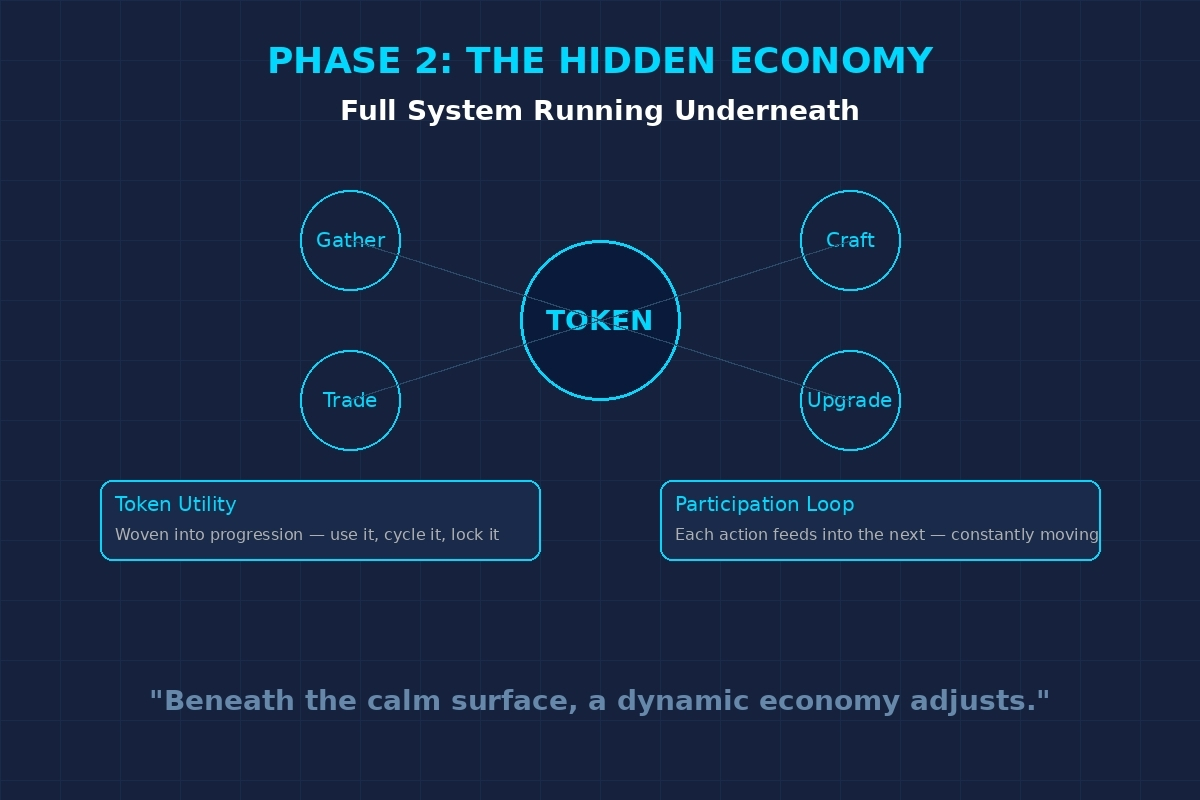
Under the surface, though, there’s a full economy running.

From what I have seen, everything connects back to participation. You gather, you craft, you trade, you improve your setup. Each action feeds into the next. The token isn’t just sitting there as a reward mechanism, it’s woven into how you progress. You use it, you cycle it, you lock it, sometimes without even thinking too much about it at the beginning.
That’s where things start getting more interesting.
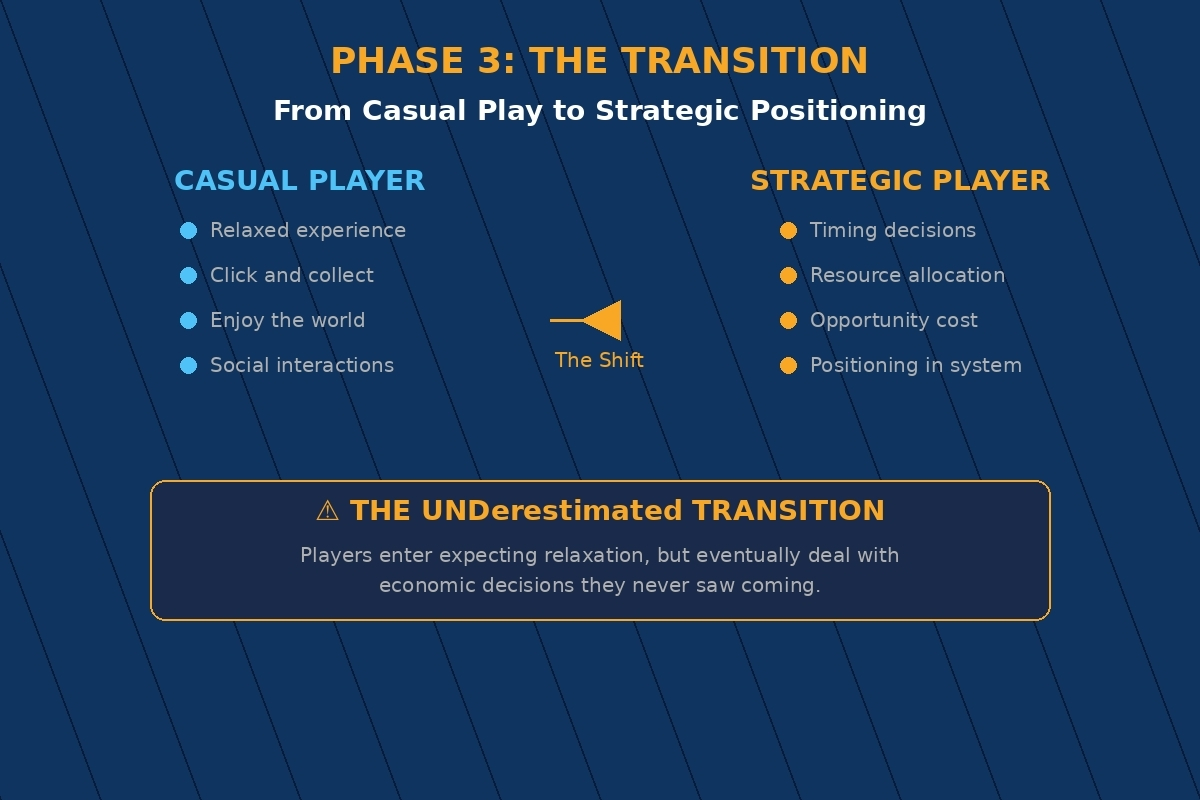
Because once you move past the early phase, you realize you’re no longer just playing casually. You’re making decisions. Small ones at first. Where to spend, what to upgrade, whether to reinvest or hold back. It becomes less about clicking and more about positioning yourself inside the system.
I have noticed that a lot of players underestimate that transition.
They enter expecting a relaxed experience, but eventually they’re dealing with timing, resource allocation, and opportunity cost. It’s subtle. It doesn’t hit all at once. But it’s there.
The open-world aspect plays a big role too. It’s not just about mechanics, it’s about presence. You see other players, you interact, you observe behaviors. That social layer adds something most Web3 games lack it creats a sense of activity that doesn’t feel forced. And that’s powerful. People stay where things feel alive.
At the same time, I can’t ignore how much the system depends on that continued activity. From what I’m seeing, the ecosystem works best when there’s a steady flow of new and returning players. More participaton means more interaction, more trading, more movement. It keeps everything circulating.
But that also raises a question I keep coming back to.
What happens when that flow slows down?
I’m not saying it will, but it’s something I think about whenever I look at systems like this. Because beneath the calm surface of farming and exploration, there’s a dynamic economy that adjusts based on participation. If more players enter, things expand. If engagement drops, the pressure shows up somewhere else.
That’s not unique to Pixels, but the way it’s integrated here makes it less obvious at first glance.
Compared to other Web3 games I have explored, Pixels feels more accessible, no doubt. It doesn’t overwhelm you with complexity or gatekeep you behind heavy mechanics. That’s a strength. But at the same time, I think it leans more toward economic engagement than deep gameplay mastery.
And that’s where I start separating two types of users in my head. People wh are there to enjoy the world, and people who are there to optimize their position. Both can exist in the same system, but they don’t experience it the same way.
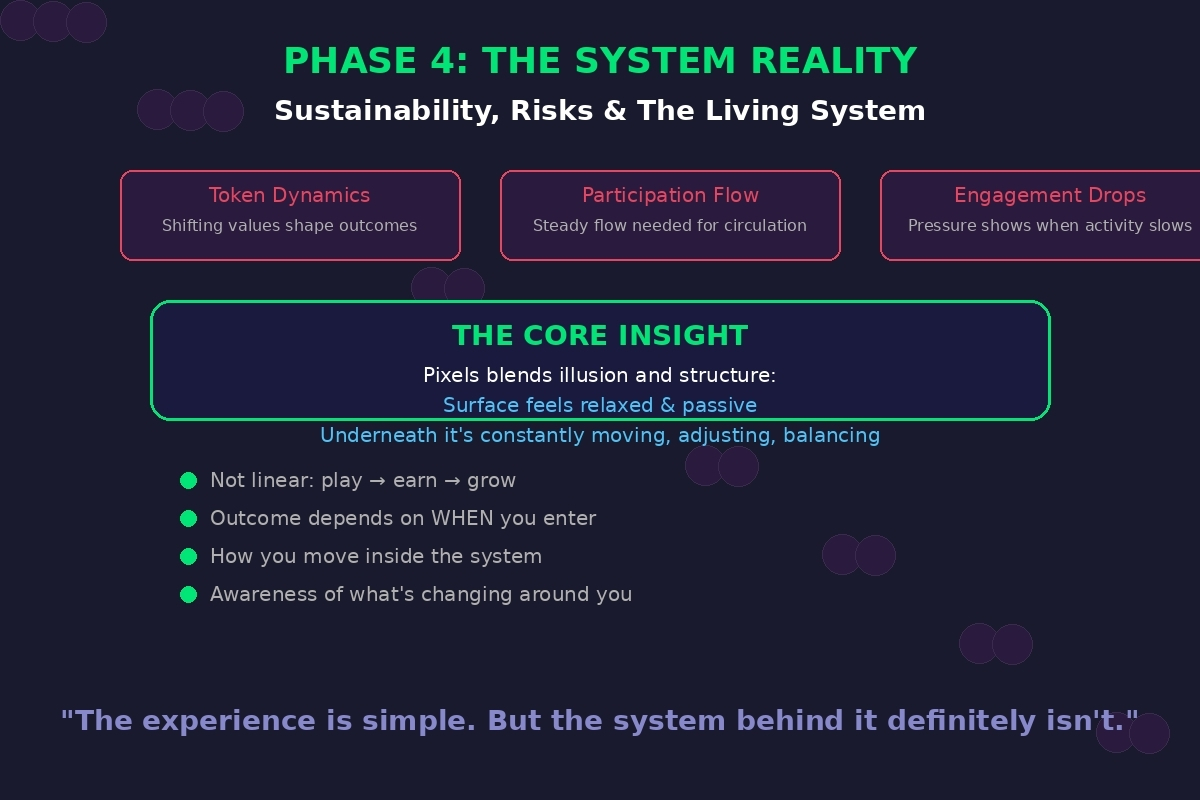
There are also risks that aren’t immediately visible when you’re just casually playing. The token dynamics, shifting participation levels, evolving incentives, all of that sits in the background shaping outcomes. It doesn’t hit you unless you start paying attention, but once you do, you can’t really unsee it.
And you know What stands out to me the most, though, is how well Pixels blends illusion and structure. On the surface, it feels relaxed, almost passive. Underneath, it’s constantly moving, adjusting, balancing itself through player behavior.
That balance is fragile. All systems like this are.
I think a lot of people approach it expecting a clear path play, earn, grow. But from what I have seen, it’s not that linear. It’s more fluid. Your outcome depends on when you enter, how you move inside the system, and how aware you are of what’s changing around you.
That’s the part I don’t see discussed enough.
For me, Pixels isn’t something I’d describe as just a game or just an opportunity. It sits somewhere in between. It’s a living system where gameplay and economics are tightly connected, whether you engage with that consciously or not.
If I had to leave one thought for anyone looking at PIXEL right now, it would be this don’t just look at what you can do inside the game, look at how the system behaves around you while you’re doing it. That’s where the real understanding comes from.
Because the experience is simple.
But the system behind it definitely isn’t.