There’s something strange about systems that feel “open.” At first, nothing feels restricted. You can move freely, participate normally, everything looks fair. But over time, you notice something subtle — not blockage, but delay. Not restriction, but friction. Like you’re always slightly behind a pace that was never clearly defined.
I’ve seen this before in markets. Not in charts, but in execution. Two traders see the same setup. Same logic. But one gets filled instantly while the other watches it move away. Nothing is technically unfair in that moment — but the outcome is already decided before action happens. That difference usually isn’t skill. It’s positioning. Or how close you are to system speed.
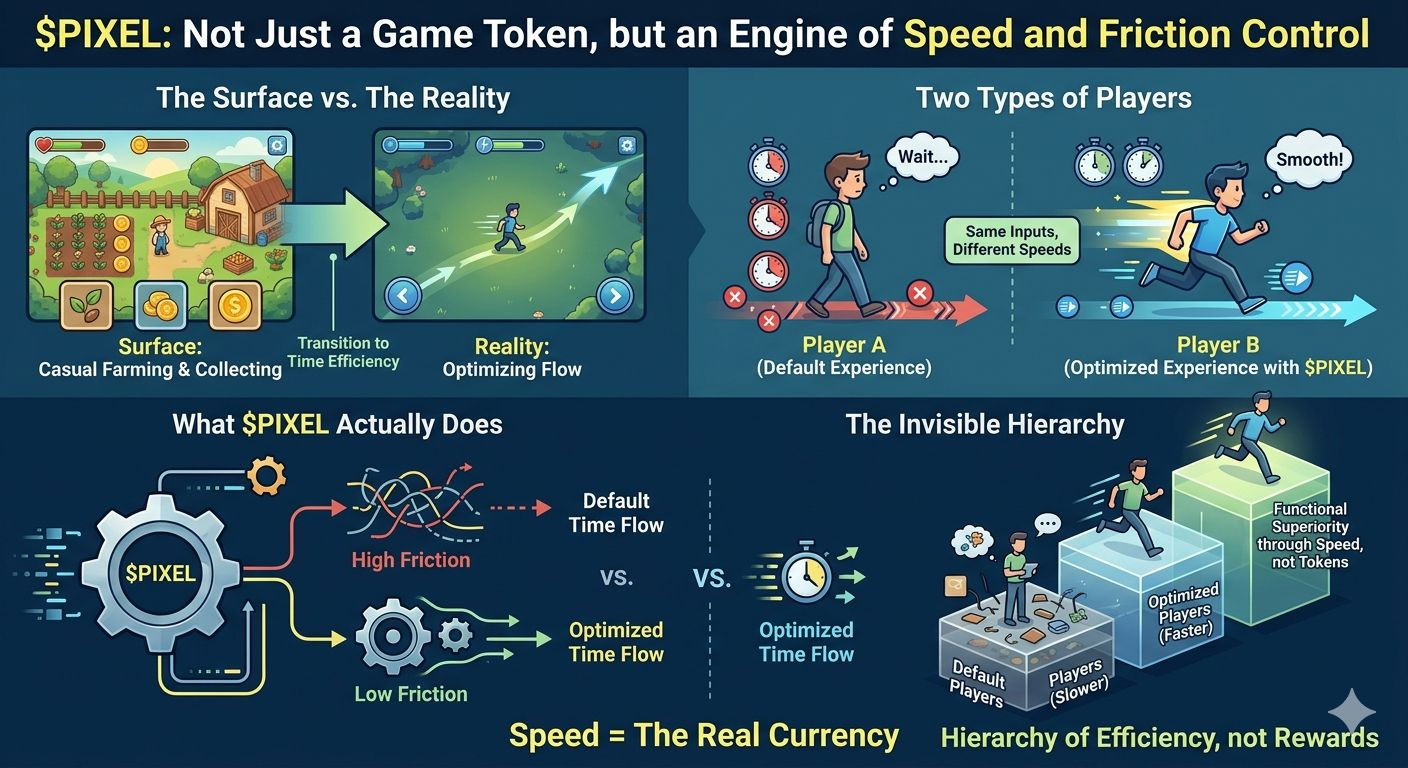
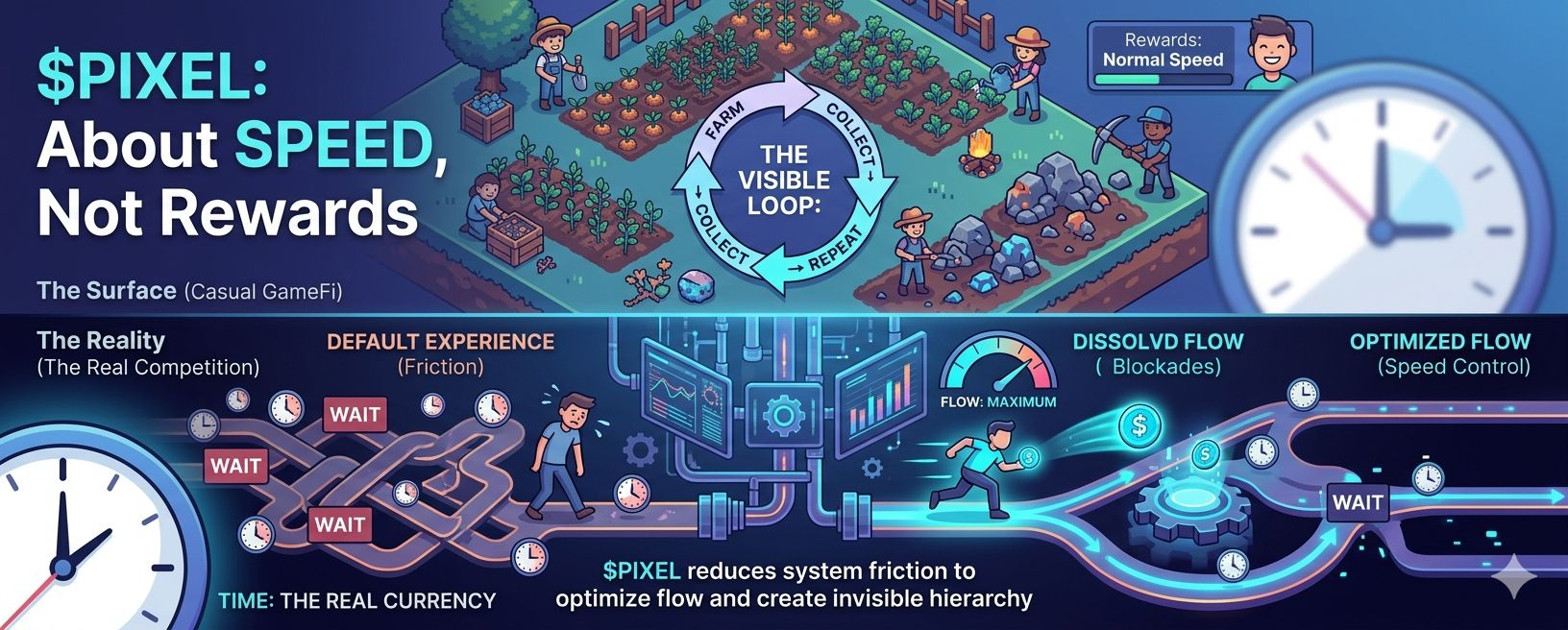
Pixels doesn’t feel like a high-pressure game at first. Farm. Collect. Repeat. Wait. No urgency, no pressure loop. It feels casual — almost too relaxed. But that’s just surface level.
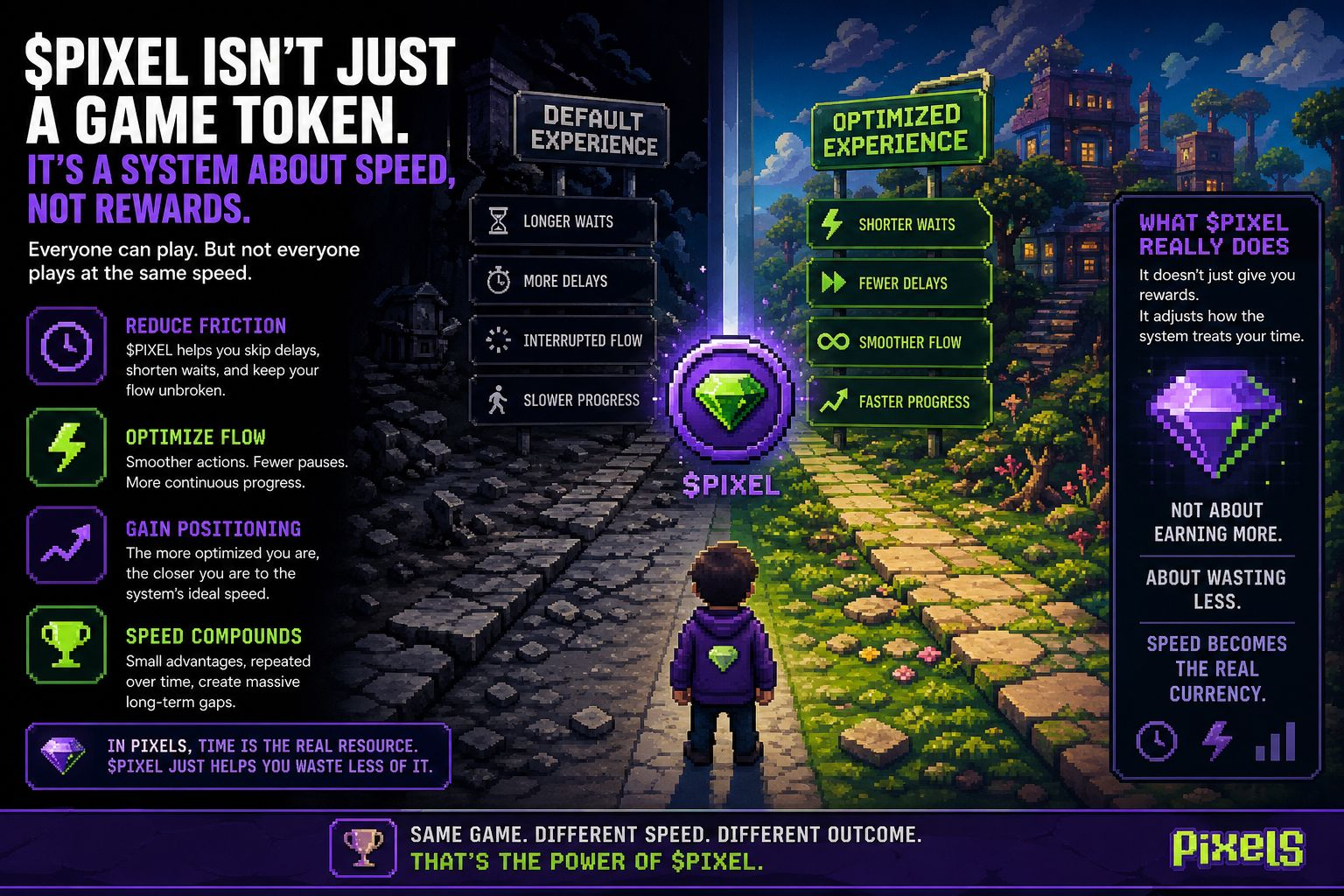
Because once you stay long enough, something shifts. Players aren’t optimizing for rewards anymore. They’re optimizing for flow. Less interruption. Less waiting. Fewer pauses between actions. The goal slowly changes from earning more to wasting less time inside the loop.
And that changes everything.
$PIXEL doesn’t behave like a typical reward token. It doesn’t scream utility. It sits in the background as a subtle adjustment layer — shaping how smooth or slow interactions feel depending on how optimized you are in the system. You can ignore it. But ignoring it keeps you in default experience. And default is never optimal — just acceptable.
The real product here isn’t rewards. It’s friction control. Most people think GameFi is ab$PIXEL Feels Like a Game Token… But It Might Actually Be About Speed, Not Rewards
There’s something strange about systems that feel “open.” At first, nothing feels restricted. You can move freely, participate normally, everything looks fair. But over time, you notice something subtle — not blockage, but delay. Not restriction, but friction. Like you’re always slightly behind a pace that was never clearly defined.
I’ve seen this before in markets. Not in charts, but in execution. Two traders see the same setup. Same logic. But one gets filled instantly while the other watches it move away. Nothing is technically unfair in that moment — but the outcome is already decided before action happens. That difference usually isn’t skill. It’s positioning. Or how close you are to system speed.
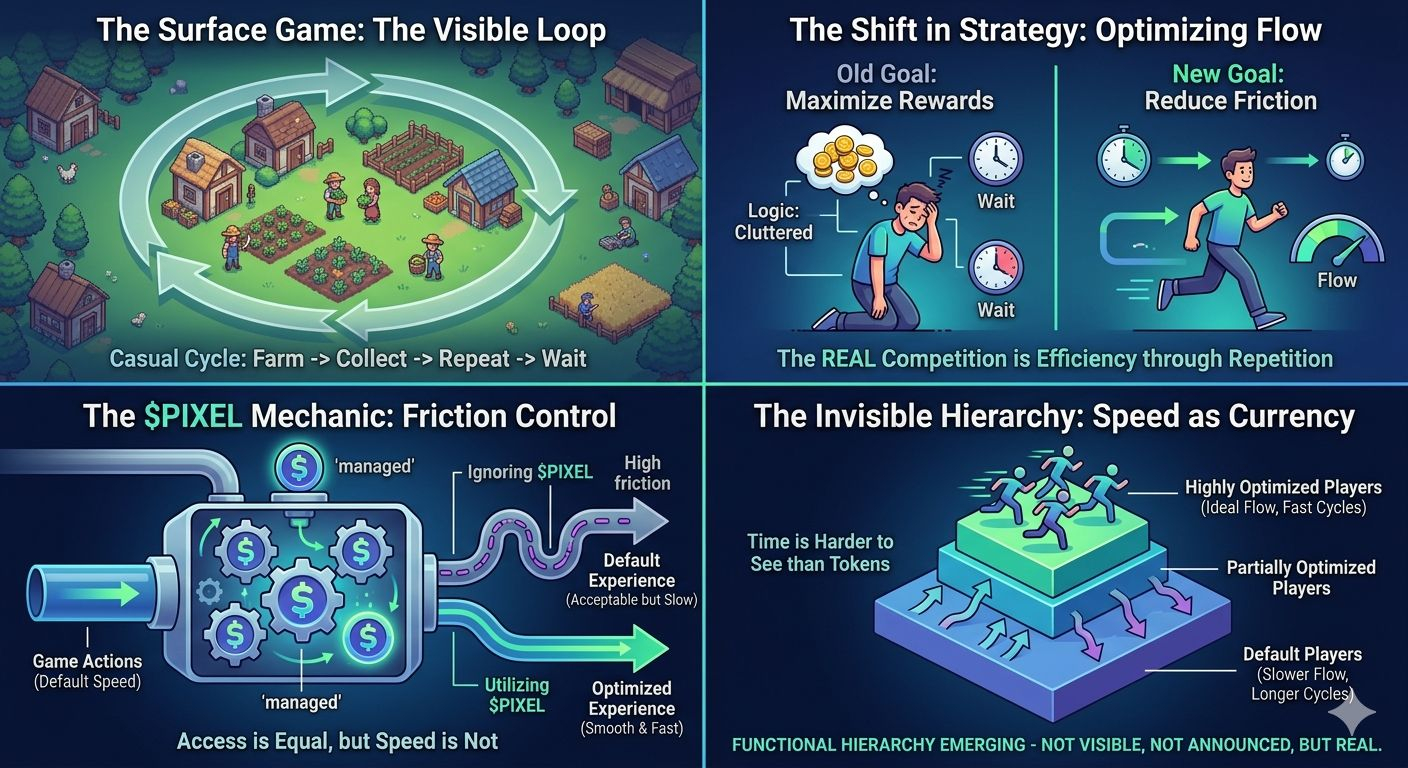
Pixels doesn’t feel like a high-pressure game at first. Farm. Collect. Repeat. Wait. No urgency, no pressure loop. It feels casual — almost too relaxed. But that’s just surface level.
Because once you stay long enough, something shifts. Players aren’t optimizing for rewards anymore. They’re optimizing for flow. Less interruption. Less waiting. Fewer pauses between actions. The goal slowly changes from earning more to wasting less time inside the loop.
And that changes everything.
$PIXEL doesn’t behave like a typical reward token. It doesn’t scream utility. It sits in the background as a subtle adjustment layer — shaping how smooth or slow interactions feel depending on how optimized you are in the system. You can ignore it. But ignoring it keeps you in default experience. And default is never optimal — just acceptable.
The real product here isn’t rewards. It’s friction control. Most people think GameFi is about earning. But inside systems like this, the real competition is efficiency of movement through repetition. Two players can produce similar output, but one does it with fewer pauses, less downtime, cleaner cycles. Over time, that difference compounds.
We already see this in infrastructure systems. Blockchains don’t block users — they prioritize them. During congestion, some transactions move faster than others. Same network, different experience. Not unfair. Just structured.
$PIXEL feels like that logic inside a game. Access is equal, but efficiency is not.
And that’s the uncomfortable part. Nothing feels broken. Anyone can play. Anyone can progress. But not everyone progresses at the same speed. And most people won’t notice it immediately because it doesn’t show up in rewards — it shows up in time.
And time is harder to see than tokens.
The real insight is simple:PIXEL might not be about earning more. It might be about reducing friction until certain players operate closer to ideal flow. And once that happens, a new hierarchy emerges — not visible, not announced, but functional.
Everyone is playing the same game. But not everyone is playing at the same speed. And in systems like this, speed slowly becomes the real currency — not because it’s rewarded directly, but because everything else starts depending on it. not visible, not announced, but functional.
Everyone is playing the same game. But not everyone is playing at the same speed. And in systems like this, speed slowly becomes the real currency — not because it’s rewarded directly, but because everything else starts depending on it.