
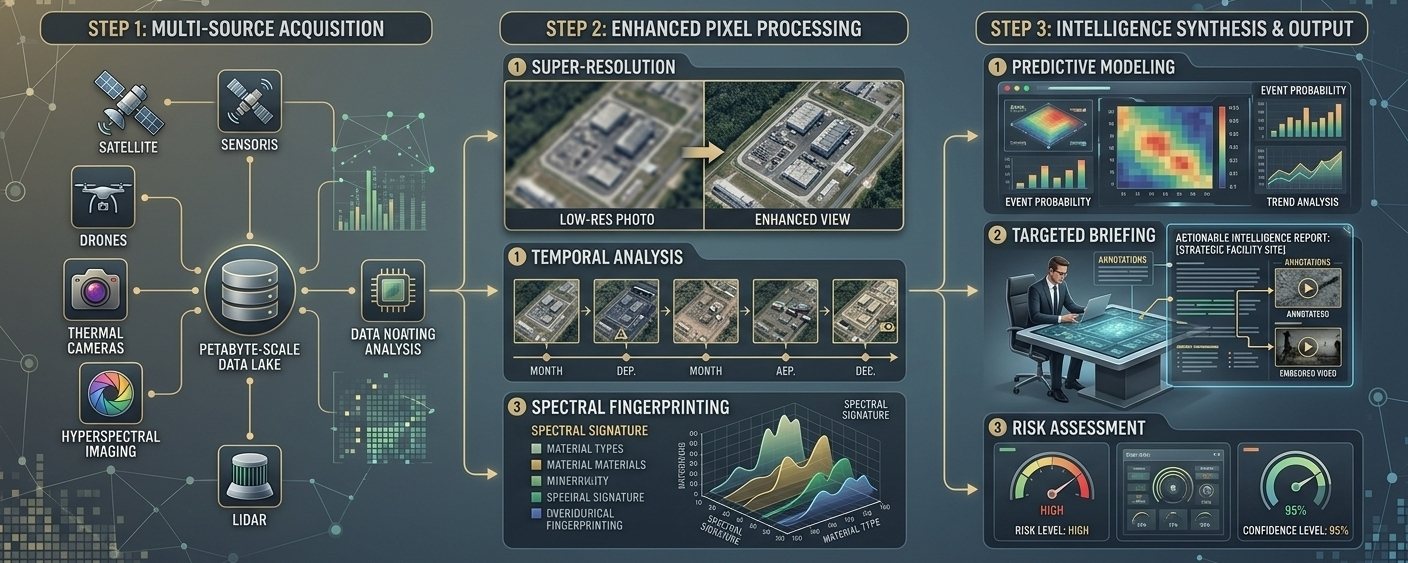
In the context of digital intelligence and cybersecurity, the "Pixel Protocol" refers to the operational use of **tracking pixels** (also known as web beacons, clear GIFs, or spy pixels). These are not independent network protocols (like TCP or UDP), but rather a functional application of HTTP/S requests designed for data exfiltration and user behavior monitoring.
### 1.The Mechanism of Action
A tracking pixel is a transparent 1x1 GIF embedded in HTML emails or web pages. When a user interacts with the host content, the client (browser or email app) automatically executes a GET request to a remote server.
This exchange transmits high-value metadata without user interaction:
* **Source Attribution:** IP address (indicating geographic location).
* **Environmental Fingerprinting:** Device type (mobile/desktop), operating system, and browser version.
* **Behavioral Timing:** The exact timestamp of the engagement.
* **User Validity:** Confirms that an email address is active, which is a primary target for phishing reconnaissance.
### Strategic Intelligence Implications
From an intelligence perspective, pixels serve as **"Canary Tokens"** for threat actors. If a target opens a spear-phishing email containing a pixel, the attacker receives a "read receipt" confirming the target's environment. This allows the attacker to tailor subsequent payloads specifically to the target's discovered operating system or browser vulnerabilities.
## 2. Business Intelligence: The "Pixel-Perfect" Standard
In the sphere of Business Intelligence (BI) and data analytics, the term "pixel-perfect" is a standard of quality. It describes reporting tools (like SAP Crystal Reports or TIBCO Jaspersoft) that allow designers to control every element of a document down to the individual pixel.
### Why It Matters
Unlike modern, "responsive" web dashboards (which reformat themselves based on screen size), "pixel-perfect" reports are designed for static, high-stakes documentation:
* **Regulatory Compliance:** Financial statements, tax documents, and legal invoices that must maintain a specific visual integrity regardless of the printer or PDF viewer.
* **Data Integrity:** Ensuring that charts, tables, and branding elements do not shift or break across different viewing devices.
* **Intelligence Output:** It turns raw data into a fixed-format narrative, essential for decision-makers who require consistent visual benchmarks in their briefings.
## 3. Comparative Intelligence Analysis
To understand these "protocols" effectively, one must distinguish between **observational intelligence** (tracking) and **presentational intelligence** (reporting).
| Feature | Tracking Pixel Protocol | Pixel-Perfect Reporting |
|---|---|---|
| **Primary Goal** | Data collection & surveillance | Data visualization & presentation |
| **Operational State** | Silent/Background (Passive) | Explicit/Active (User-driven) |
| **Technical Focus** | HTTP GET metadata capture | Layout rendering & design precision |
| **Key Risk** | Privacy breach, phishing vector | Design-to-data mismatch errors |
## 4. Operational Countermeasures
If your objective is to mitigate the intelligence risks posed by tracking pixels, standard operational security (OPSEC) is essential:
1. **Block Remote Content:** Most modern email clients allow you to disable the automatic loading of remote images. This effectively neutralizes the "pixel protocol" in email campaigns.
2. **Privacy-Preserving Browsers:** Use browsers or extensions (like uBlock Origin or Brave) that actively block known tracking domains. These tools interrupt the GET request before it reaches the third-party server.
3. **VPN/Proxy Utilization:** While this does not stop the "load" event, it obscures your true IP address, making the geographic attribution of the intelligence gathered by the pixel inaccurate.
4. **JavaScript Disabling:** For high-security environments, disabling JavaScript prevents more advanced, non-image-based "pixels" (which use <img> or <script> tags to execute more complex tracking code) from firing.
## 5. Intelligence Synthesis
The intersection of these two concepts highlights a modern paradox: we are moving toward a world of **"pixel-perfect" intelligence delivery**, while simultaneously trying to protect ourselves from **"pixel-level" surveillance**.
As data analysts and security professionals, the key is to ensure that the data you collect (using tracking mechanisms) is handled with the same integrity and precision found in your "pixel-perfect" reporting. Failure to bridge this gap leads to intelligence silos where data is collected efficiently but cannot be presented or understood effectively by leadership.
