
There was a moment when I was going through a Web3 game session and something very ordinary happened, but it stayed in my mind longer than expected. I completed a simple action, saw the animation, but the final confirmation took a bit longer to reflect than usual. Nothing failed. Nothing broke. Still, I remember waiting and wondering if the system was just busy or if something had actually stalled.
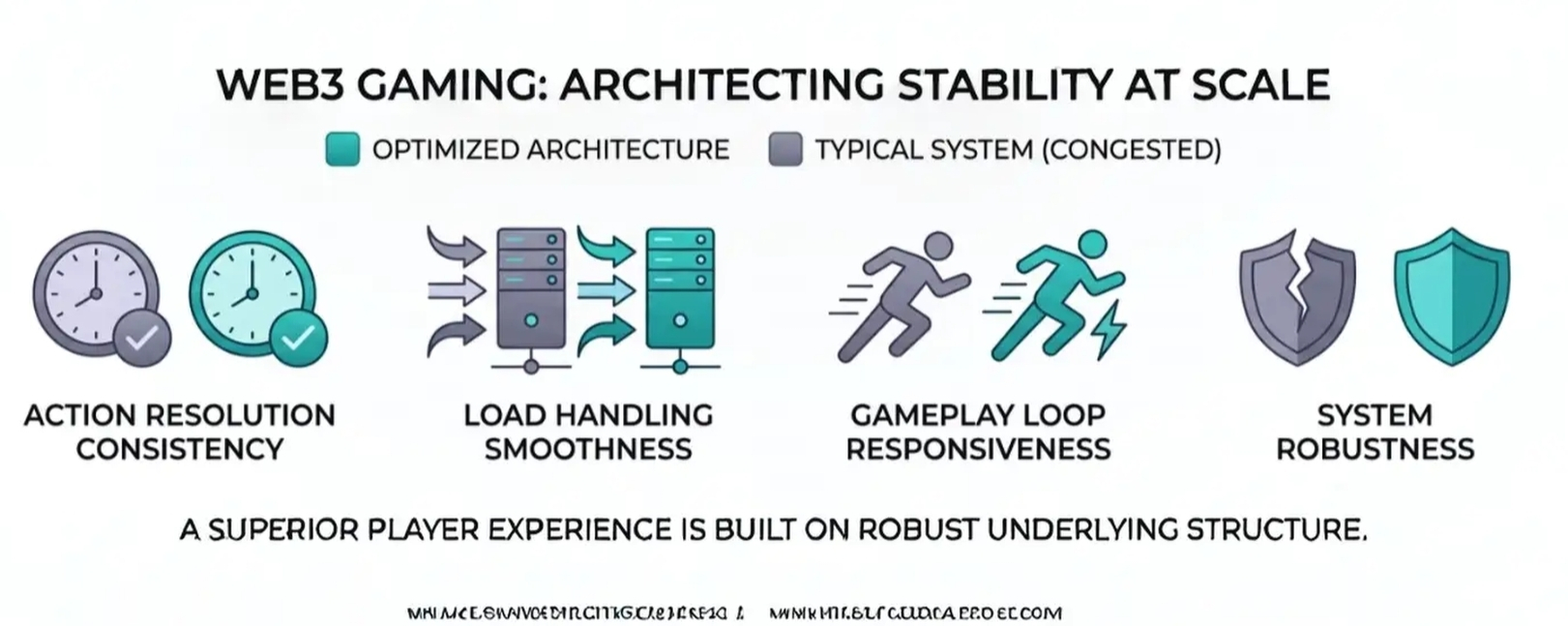
After seeing this happen a few times across different Web3 games, what I noticed is that most of them don’t struggle in obvious ways. The gameplay still works, the interface still responds, but the timing becomes less consistent when activity increases. Some actions feel instant, others feel slightly delayed, and that uneven rhythm usually points to what is happening underneath rather than what is visible on the surface.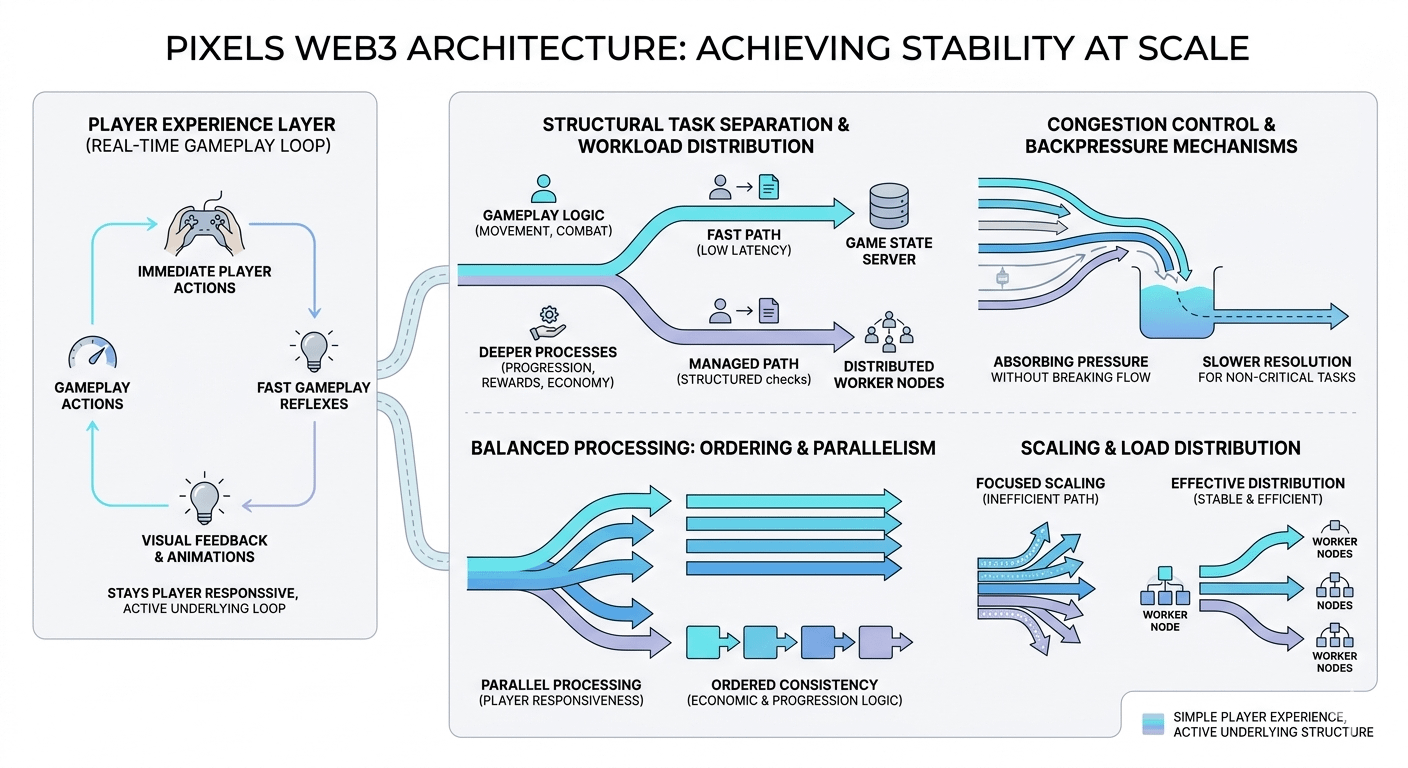
From a system perspective, this is rarely about the game itself. It’s about how different layers of work are coordinated when demand rises. Gameplay logic, reward calculation, verification, and state updates often end up competing for the same processing space. When traffic is low, everything feels smooth. When traffic grows, coordination becomes the real challenge.
I often think about it like a small airport with a single runway. When flights are few, everything feels efficient and predictable. But when traffic increases, delays don’t come from the planes themselves they come from how the runway is shared, scheduled, and prioritized. The system is still working, but timing starts to shift.
When I look at how @Pixels approaches this, what caught my attention is that it feels less like a single layered game system and more like something where different parts of activity are structurally separated. The experience still feels simple when you’re playing, but underneath, there seems to be more intentional organization in how things are processed.
What interests me more is how that structure shows up when the system is under activity.
Scheduling doesn’t feel completely uniform. Some actions resolve quickly, while others are slightly paced. It gives the impression that the system is not just reacting, but distributing load over time instead of letting everything hit at once.
Task separation is another detail that stands out. The core gameplay loop stays responsive even when more users are active. Meanwhile, deeper processes like progression, rewards, or system updates appear to operate in a different layer. From experience, this separation often reduces the chance of everything slowing down together.
Verification flow also seems more layered than flat. Some actions are processed lightly and immediately, while others go through more structured checks. This kind of variation usually helps systems avoid bottlenecks when demand increases.
Then there is congestion control. What matters in practice is not preventing pressure, but absorbing it without breaking flow. Backpressure becomes part of that behavior slightly slowing certain parts of the system so that everything else can continue moving without collapse.
Worker scaling and workload distribution matter too, but only when the system actually spreads tasks properly. If everything still funnels through a narrow path, scaling alone doesn’t solve the real issue. Distribution is what makes systems feel stable when activity changes.
And then there is the balance between ordering and parallelism. Parallel actions keep gameplay feeling responsive, but ordered processing is still needed for consistency in economic and progression logic. The system has to support both without letting one interfere with the other.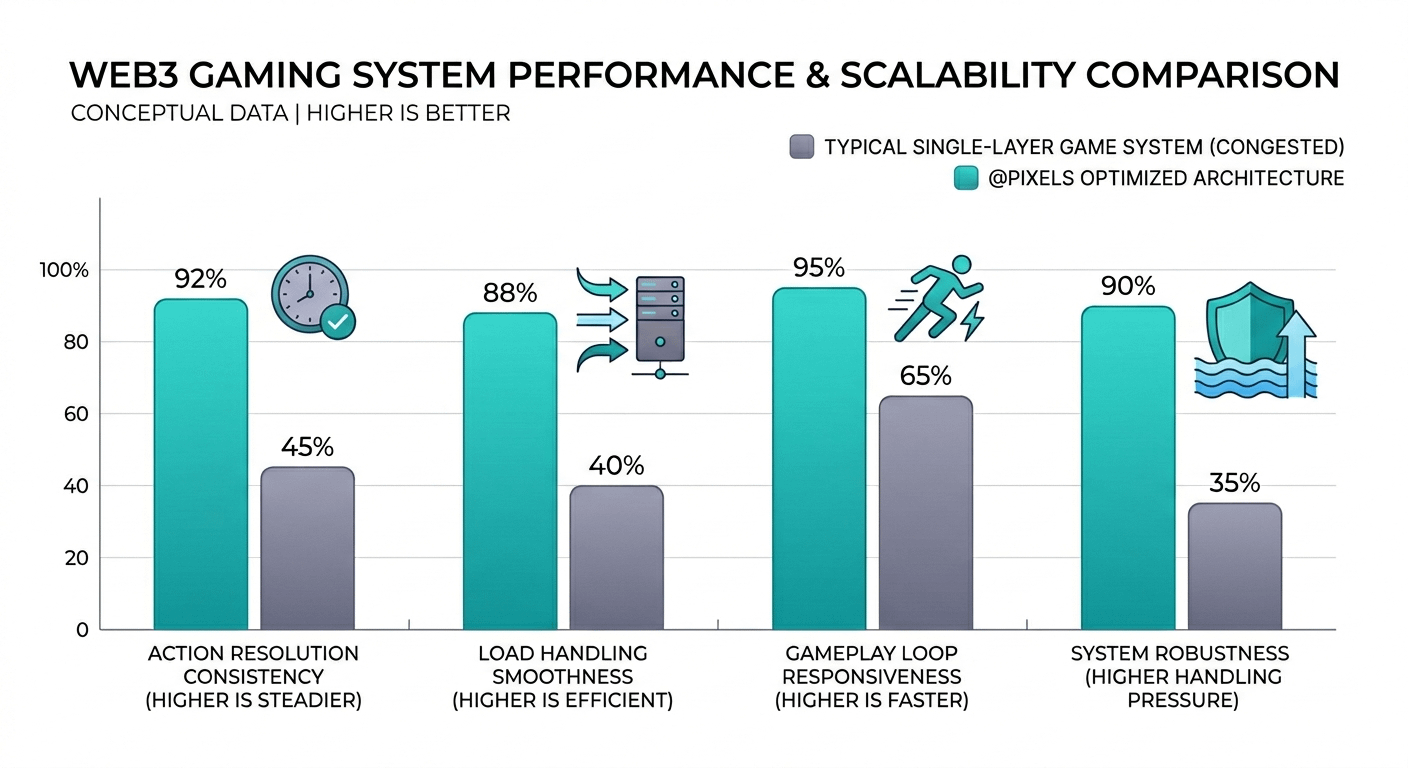
What stands out to me is that Pixel doesn’t feel like it’s only focused on what players do in the moment. It feels more like it’s organizing how those actions move through different layers depending on system conditions. The experience stays simple, but the structure underneath feels active.
And that’s where the difference becomes noticeable not in normal moments, but when activity increases and systems usually start showing stress.
A reliable system is not the one that feels perfect when nothing is happening, but the one that stays steady when everything starts moving at once. Good infrastructure doesn’t try to draw attention to itself. It simply keeps everything aligned, even when timing, load, and participation keep changing.