


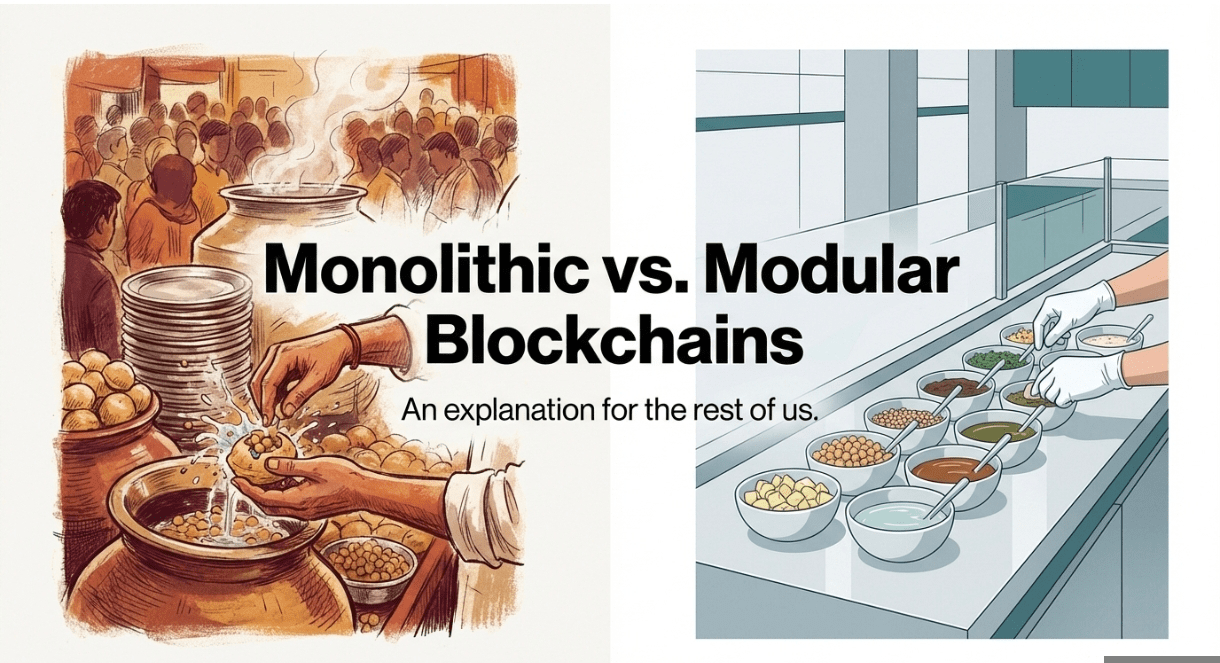
"Hey Bro, I saw some modul or something Blockchain. What's the difference between Modular and Monolithic Blockchains?"
Yes, bro these are two primary types of Blockchain. Monolithic Blockchains are classic Blockchains like Bitcoin and Modular Blockchains are like Celestia or the new Ethereum setups.
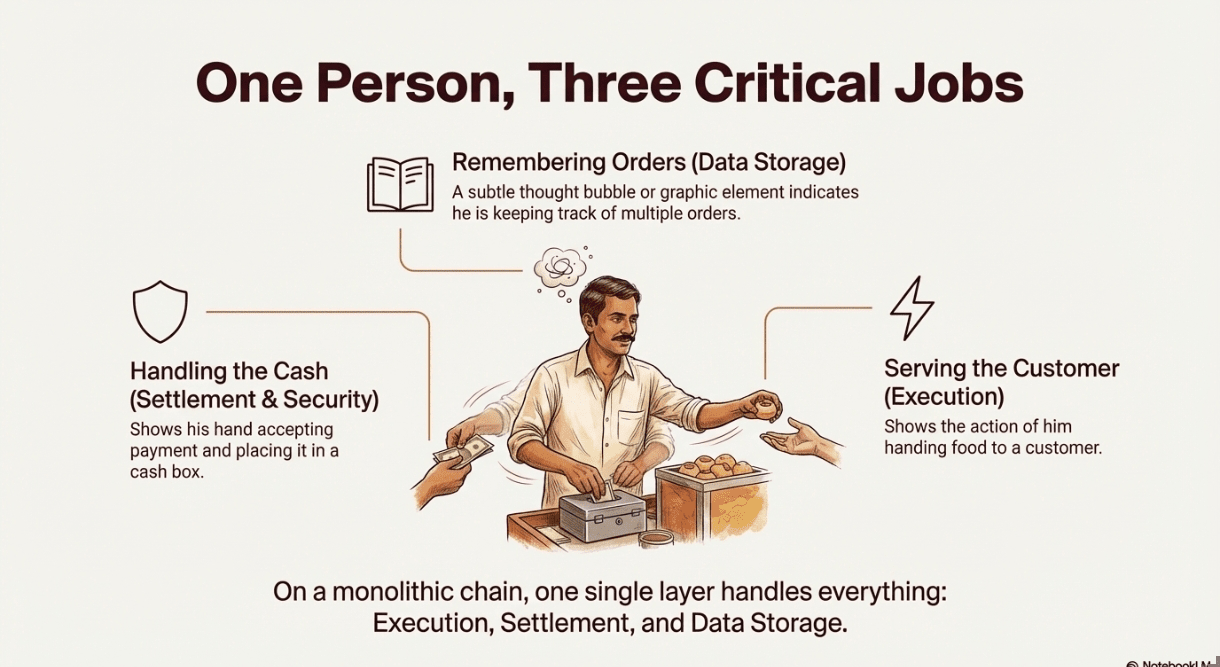
Have you seen a Pani puri seller on the market? It's always crowded. One guy literally manages 10-12 customers at the same time, remembering the counts, each person's choice, and everything. It's a messed up process and somehow it slows down the process. This is our Monolithic Blockchain, where the one layer does everything, execution, settlement, and data storage, so we get high fees and slow speeds when it gets busy.
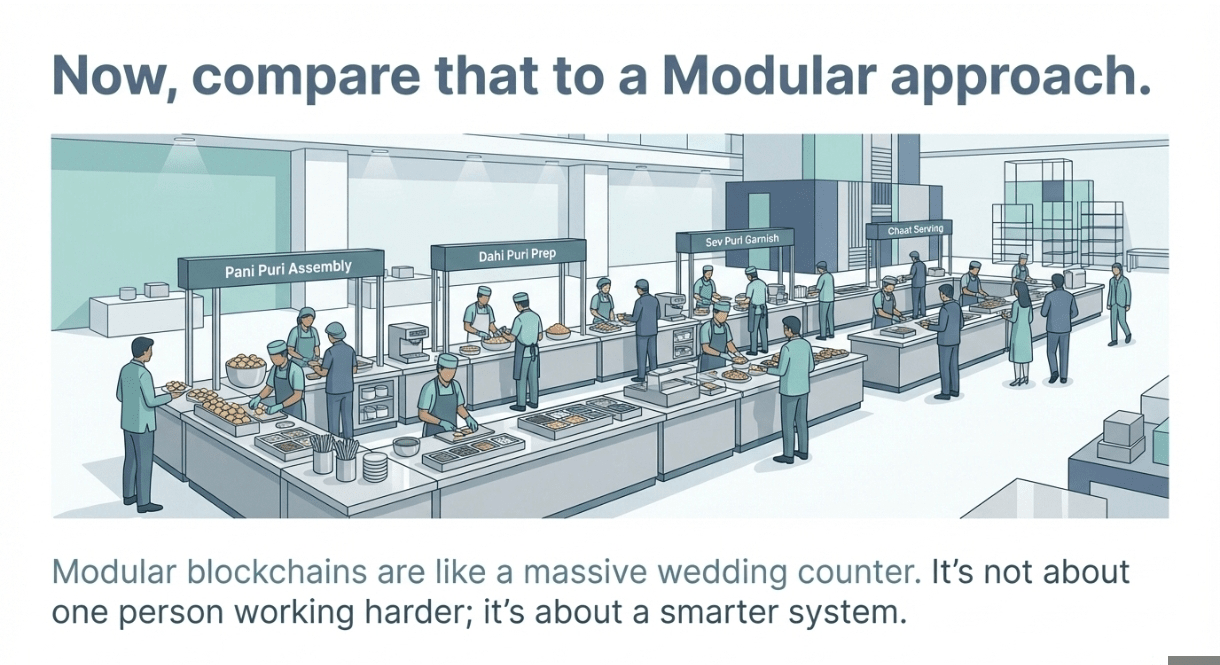
Now, compare that to a massive Wedding Chaat Counter. You don't see one guy struggling there. You see an assembly line: one guy punches the puri, another stuffs the masala, a third dips the pani and serves, and a totally separate guy handles the coupons and cash. That is a Modular Blockchain.
"But wait, does splitting it up actually make it faster?"
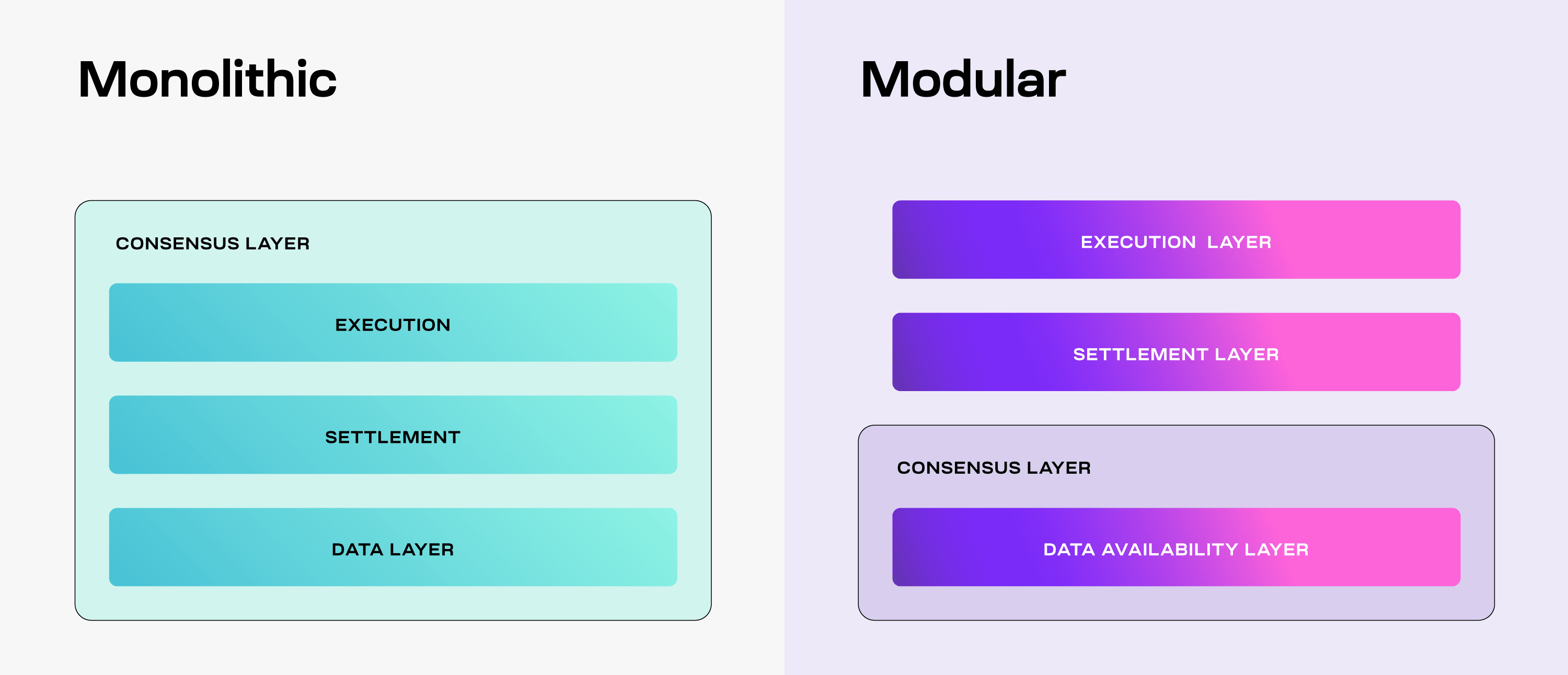
100%. Think about it, the guy serving the pani doesn't have to wash his hands and count dirty cash after every plate. He just serves. In crypto, this means we split the Execution (making the transaction happen fast on Layer 2) from the Settlement (finalizing the security on Layer 1). The server serves, the cashier counts.
"Okay, but is it safe? What if the server messes up?"
That’s the beauty of it. The wedding server doesn't need to be a security guard. He just hands over the slip to the main cashier (Layer 1) at the end of the shift. If the Main Cashier (like Ethereum) is secure, the whole system is secure. The fast layers "inherit" the security of the slow, heavy layer.
"So is the Wedding Counter perfect? What's the catch?"
The catch is the "gap." At the roadside stall, you pay and eat instantly. It's seamless. At the wedding counter, you have to get a coupon, walk over, wait for the server... there are extra steps. In crypto, moving money between these different modular layers requires "Bridges," and bridges can be annoying or risky. It feels less "all-in-one" than the old school way.
"Why do we need this then?"
Because the roadside stall collapses if a thousand people show up. The Wedding Counter is designed specifically for crowds. It’s the only way to get crypto ready for a billion users without fees jumping to $50 per transaction.


