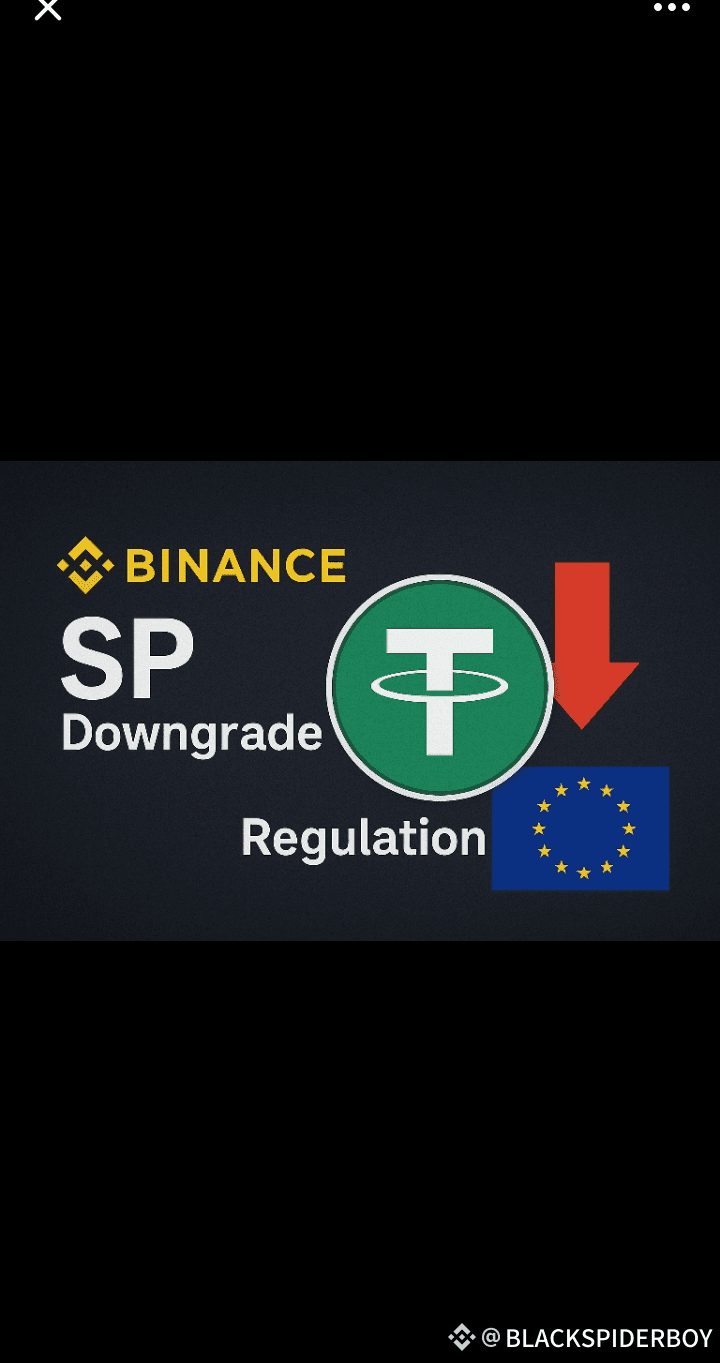
December 2, 2025 - While Tether ($USDT ) maintains its $1.00 peg and dominant market position, recent developments have brought both regulatory scrutiny and new market dynamics to the forefront. These changes include a downgrade from S&P Global Ratings and a broader shift towards regulatory compliance within the European Union.
S&P Downgrade Cites Reserve Concerns
In late November, S&P Global Ratings downgraded its assessment of USDT's stability to its lowest rating, citing weaker reserve quality and increased exposure to secured loans, Bitcoin, and gold. This followed a report by Reuters noting that Tether's gold holdings had surpassed those of many central banks during the middle of the year, a practice now at odds with certain U.S. stablecoin regulations.
Tether's leadership pushes back
Tether's CEO, Paolo Ardoino, publicly disagreed with S&P's assessment, calling it politically motivated and based on an outdated model. Ardoino highlighted Tether's track record of maintaining its peg through market volatility and its role in emerging markets. He also noted the company's significant excess reserves. In a statement, a Tether spokesperson asserted that S&P's framework failed to appreciate the nature of digitally native money and overlooked data demonstrating $USDT 's transparency and resilience.
EU regulations spark stablecoin shift
Meanwhile, stablecoin regulations in Europe, particularly the Markets in Crypto-Assets (MiCA) framework, have prompted major exchanges to delist non-compliant stablecoins. As early as January 2025, Crypto.com announced it would stop supporting USDT for EU users by the end of March 2025, following a similar move by Coinbase. In March 2025, Binance announced plans to delist all non-MiCA compliant stablecoins for European users by March 31, directing them toward compliant alternatives like USDC. This move forces exchanges to meet stricter transparency and reserve requirements, and it has prompted Tether to invest in euro-based, MiCA-compliant stablecoins.
USDT's future: Growth and challenges
Despite the regulatory challenges, USDT remains the dominant stablecoin, with a circulating supply of 184.66 billion $USDT and a market cap of $184.66 billion. Its uses continue to expand, from facilitating crypto trading to enabling cross-border payments, especially in regions with high inflation. However, the ongoing regulatory pressure, particularly in major economic zones like Europe, and market skepticism regarding its reserves will continue to shape its path forward.