At first glance Binance Futures Arena appears to be just another feature inside the world’s largest crypto exchange.
A sleek interface, countdown timers, and trading challenges labeled with simple names like “CYS Trading Challenge or US Trading Challenge.But beneath the surface this arena reflects a deeper shift in how crypto trading culture is evolving. It represents a structured attempt to turn trading from a solitary high risk activity into a transparent competitive and measurable skill based environment.
For years futures trading has been one of the most misunderstood corners of the crypto market. High leverage emotional decision-making and opaque performance metrics have often defined the experience for retail traders. Binance Futures Arena changes this dynamic by framing trading as a contest of discipline, consistency and risk management rather than raw speculation. It does not promise instant wealth or shortcuts. Instead it places traders inside a defined system where performance is visible comparable and time-bound.
The Arena operates through themed trading challenges that run for a fixed duration. Each challenge focuses on specific futures markets such as US-margined contracts or selected asset pairs. Traders opt in trade under real market conditions and compete based on predefined performance criteria. Participation numbers are publicly visible reinforcing a sense of scale and seriousness. When thousands of traders commit capital and strategy to the same challenge window it creates a controlled micro environment that reflects real market behavior without artificial simulation.
What makes this structure important is not the prize pool or ranking itself but the discipline it enforces. Traditional futures trading often lacks accountability. Traders win or lose in isolation rarely benchmarking their performance against peers operating under identical conditions. In the Futures Arena every participant trades within the same timeframe faces the same volatility and responds to the same macro and micro market signals. This removes many of the excuses that typically surround trading losses and replaces them with clarity. Results become data not emotion.
The design of the Arena subtly shifts trader psychology. Instead of chasing oversized leverage or impulsive entries participants are incentivized to focus on consistency. A single reckless position can eliminate days of disciplined performance. Over time this reinforces habits that are essential for long-term survival in futures markets: controlled position sizing patience and strategic exits. The Arena does not teach these lessons directly but its structure makes the consequences of ignoring them immediately visible.
Another important dimension is transparency.
The Arena integrates ranking systems that allow traders to see where they stand relative to others. This is not about public shaming or unrealistic comparison.
It is about context. Knowing that hundreds or thousands of traders are operating under the same market conditions creates a clearer benchmark for evaluating skill. A trader who consistently places in the upper range gains confirmation that their 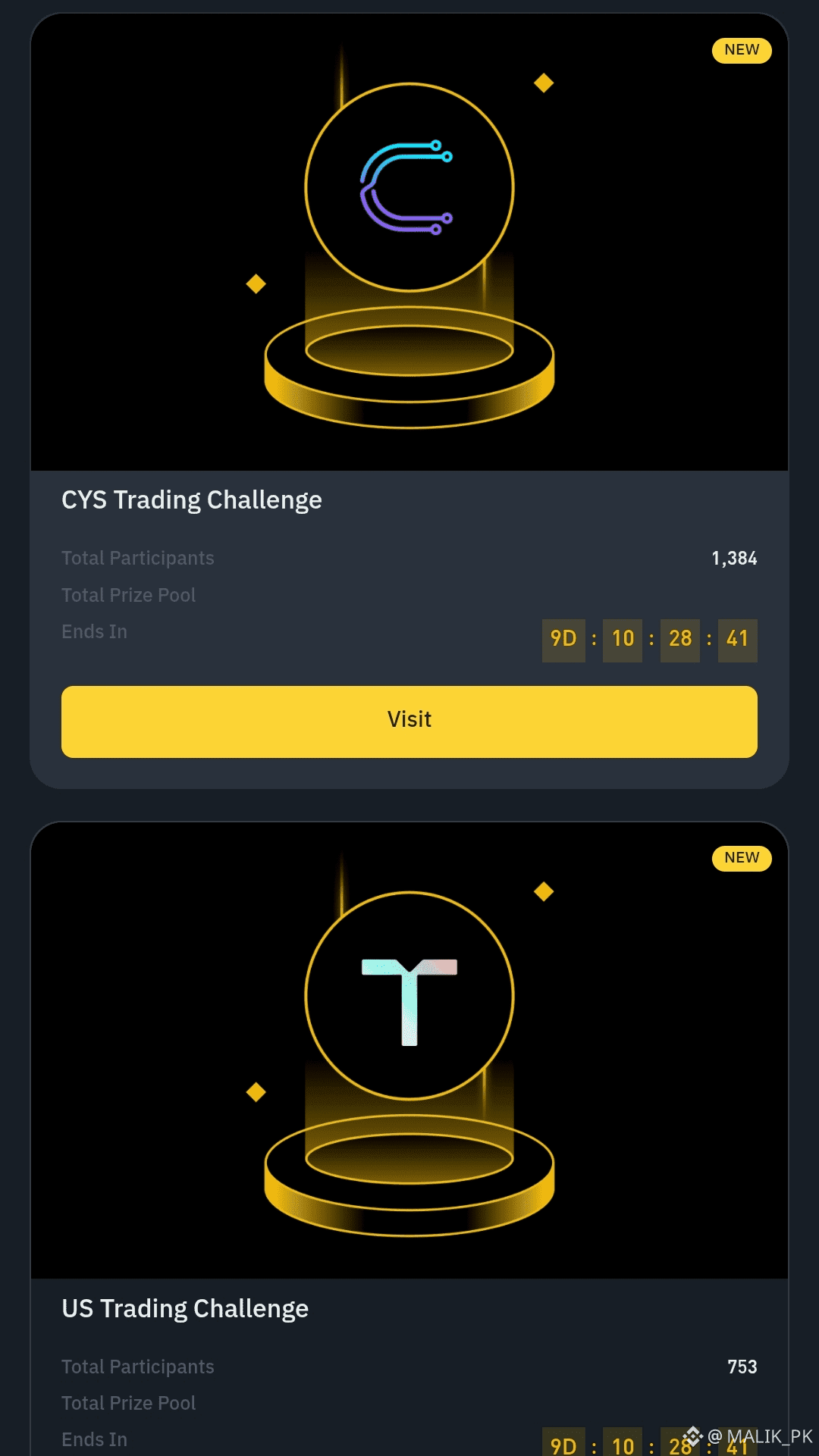 strategy works beyond luck. A trader who underperforms gains a rare opportunity to reflect objectively on weaknesses.
From Binance’s perspective Futures Arena also represents a maturing approach to user engagement. Instead of relying solely on volume incentives or fee-based promotions, the platform encourages skill development. This aligns with a broader industry trend where exchanges are moving away from pure transaction extraction toward ecosystem building. By fostering structured competition Binance strengthens user loyalty while elevating the overall quality of futures participation on its platform.
The naming and visual design of the Arena challenges also deserve attention. They are intentionally minimalistic avoiding exaggerated claims or aggressive marketing language. This subtlety matters. It positions futures trading as a professional activity rather than a casino-style gamble. The countdown timers emphasize preparation and timing reminding participants that strategy matters before the challenge even begins. Trading becomes an event, not a reaction.
The presence of multiple simultaneous challenges further reflects market diversity. Different traders specialize in different instruments and volatility profiles. By offering parallel challenges the Arena accommodates varying risk appetites and trading styles without forcing uniform behavior. This flexibility mirrors real financial markets where no single strategy dominates across all conditions. It also allows traders to choose environments that align with their strengths rather than chasing trends.
Importantly Futures Arena does not eliminate risk nor does it pretend to. Losses remain real and capital is always at stake. What it does eliminate is ambiguity. Traders know the rules the timeframe and the evaluation criteria from the outset. This clarity is rare in retail futures trading and contributes to healthier participation. When expectations are clearly defined, emotional overtrading tends to decrease.
The broader implication of Binance Futures Arena extends beyond the platform itself. It signals a shift in how crypto trading communities are being structured. Instead of fragmented social media screenshots and unverifiable performance claims, competition becomes verifiable and time-bound. This has the potential to raise the credibility of skilled retail traders while filtering out noise. Over time such systems could form the foundation for decentralized reputation models where trading performance not marketing, defines credibility.
For newer traders the Arena also serves as a reality check. Participating alongside thousands of others quickly exposes the difference between theory and execution. Strategies that appear flawless in isolation are stress-tested in live markets. This experience while sometimes uncomfortable accelerates learning far more effectively than passive observation or demo trading. It brings structure to what is often an unstructured and emotionally draining journey.
In a market that has matured significantly since its early speculative days tools like Binance Futures Arena reflect an industry trying to grow responsibly. They acknowledge that futures trading is not for everyone but for those who choose to participate structure and accountability matter. By turning trading into a transparent competitive discipline the Arena quietly redefines what it means to be a futures trader in crypto.
Ultimately the Futures Arena is not about winning a challenge or climbing a leaderboard. It is about creating an environment where skill can be measured mistakes can be learned from and performance can be contextualized. In a market often driven by noise this kind of structure is not loud or flashy. It is deliberate controlled and quietly transformative. And in the long run that may be exactly what the crypto trading ecosystem needs.