
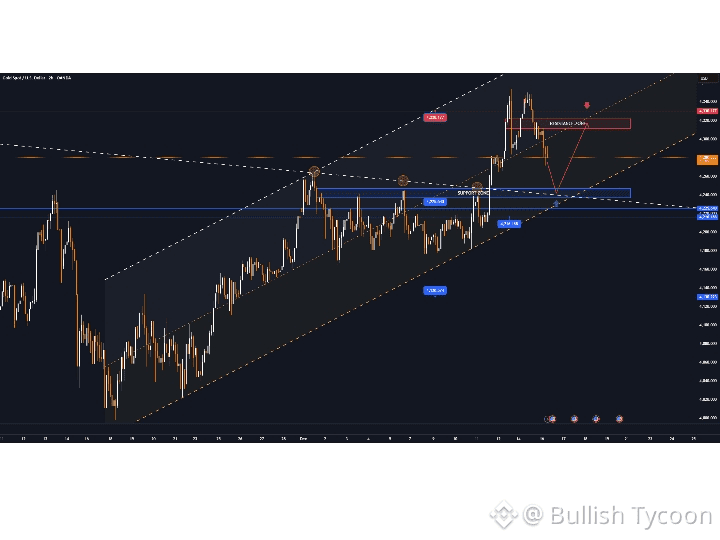
 Right now the crypto market feels tense, and that’s understandable. Traders are asking the same question: Can upcoming news from USDT and the Bank of Japan really crash Bitcoin? Let’s break it down calmly and honestly — without hype, layered context, and real implications for BTC price action.
---
1. What’s Happening on Dec 18–19?
Bank of Japan Interest Rate Decision — Dec 19
Markets are nearly certain the Bank of Japan (BoJ) will raise interest rates by 0.25% to 0.75% during its policy meeting slated around December 18-19. A Reuters poll shows that about 90-98% of economists expect this step toward higher rates.
Why does this matter?
For decades, Japan has kept ultra-low rates, which made borrowing yen cheap. Traders borrowed yen and used it to invest in higher-yield assets around the world — including crypto. When rates rise, that carry trade unwinds, forcing leveraged positions to close.
---
2. Historical Context: What Happens to BTC When BoJ Tightens?
There’s increasing chatter among analysts and markets about how Bitcoin has behaved when the BoJ tightened policy:
March 2024 BoJ hike → BTC fell ~25–30%
July 2024 hike → BTC dropped ~25–30% again
January 2025 hike → BTC dropped ~30%+
These are past observed correlations; not guarantees.
Some traders are using these historical drops to warn of further risk ahead of the Dec 19 decision. That’s why narratives about a possible plunge — perhaps toward $70,000 or lower — have circulated.
Important nuance: Past reaction patterns can inform expectations, but markets evolve. Bitcoin is a global asset affected by dollar strength, liquidity, derivatives flows, and risk sentiment — not just one country’s policy.
---
3. USDT (Tether) — Stablecoin Context, Not Crash News
There are conversations in the market about USDT (Tether), but not because of a specific official crisis scheduled for Dec 18. Instead, people talk about USDT because:
Tether is the largest stablecoin with over $140 billion in circulation.
Stablecoins act as liquidity buffers — inflows to USDT often reflect caution.
Issues with reserves or liquidity can affect market confidence, but there’s no official scheduled news from Tether on Dec 18 that signals insolvency or crash risk.
In other words, USDT news discussions are speculative, not confirmed crash signals. There’s no official announcement from regulators or Tether itself triggering a guaranteed selloff.
---
4. Why BTC Has Been Weak Heading Into These Dates
Bitcoin’s price has already shown caution — sliding from the $90,000 range to below $87,000–$88,000 in recent sessions.
This makes sense because:
Traders often reduce exposure before major macro events.
High volatility events attract profit-taking.
Markets are sensitive to interest rate expectations and liquidity flows.
This is not panic — it’s precautionary positioning.
---
5. So What Will Likely Happen on Dec 18–19?
Here’s the realistic, scenario-based expectation:
Bearish Pressure Is Possible
Because: ✔ BoJ tightening raises borrowing costs
✔ Yen strength may unwind carry trades
✔ Risk assets like BTC can be sold into strength
✔ Market already shows caution
This could lead to a temporary pullback in BTC — perhaps deeper losses in the short term around the announcement.
Bearish Does Not Mean Crash
A crash implies:
collapsing price
collapse of confidence
liquidity crisis
Right now:
There’s no official shock from USDT
No banking stress
No systemic failure
So we’re looking at volatility and possible pullback, not guaranteed collapse.
Potential Reaction Types
If BoJ raises rates and global liquidity tightens:
→ BTC could dip more, perhaps testing supports.
If markets interpret the hike as “priced-in” and liquidity stays ample:
→ BTC could recover quickly after initial volatility.
---
6. What Traders Should Actually Watch
Instead of panic news, focus on:
a) Official BoJ Announcement
Watch the press release and minutes.
b) Funding Rates & Leverage
Rising funding rates can squeeze longs
Falling funding can signal capitulation
c) Stablecoin Flows
Mass inflows to USDT on exchanges can reflect risk aversion.
d) Macro Data
U.S. jobs, inflation, and global liquidity signals post-Fed.
---
7. Simple Summary
📌 Dec 18–19 risks:
Higher probability of volatility around BoJ rate decision
Bitcoin could see short-term downward pressure
Does not automatically equal a crash
📌 USDT news:
No confirmed official event scheduled for Dec 18 that signals failure or crash
Speculation exists, but markets are watching macro and liquidity flows more closely
---
8. Bottom Line (Human Outlook)
Bitcoin’s near-term direction will be shaped by:
Interest rate expectations (especially BoJ on Dec 19)
Liquidity flows (stablecoins, derivatives)
Market psychology (risk aversion before macro events)
Expect increased volatility and possible lower highs / deeper corrections in the very short term — but not necessarily a full market collapse.$BTC
Always DYOR and investing is totally up-to you
A disciplined trader should wait for actual confirmed news and reaction before making major buys or sells — not rumors.#CryptoRally #USNonFarmPayrollReport #BTCVSGOLD #CPIWatch #WriteToEarnUpgrade


