---
$ASTER — The Real Deadlock Nobody Wants to Talk About
The core issue with $ASTER lies in its 8 billion token supply, with more than half already unlocked. Until this problem is fundamentally addressed, downward pressure will continue.
Official promotion alone cannot fix this.
Those already trapped are waiting to exit, and new inflows hesitate. Promotion in this state is almost like giving away money for free—buyers become sellers. But if promotion stops, complaints flood in. Either way, it’s a lose-lose situation.
Even if this were some kind of strategic “card,” or if unlocked tokens were destroyed at a future point, the damage has already been done. Early on, many people were actively building and supporting Aster. Now, confidence has weakened. Investors are cautious, and buying pressure is nearly nonexistent.
This is essentially a conversion problem.
In e-commerce, you invest in traffic first, then measure conversion and retention. Aster has had traffic—massive traffic. CZ, the official team, and countless KOLs have promoted this project continuously for over three months. But traffic without conversion is meaningless.
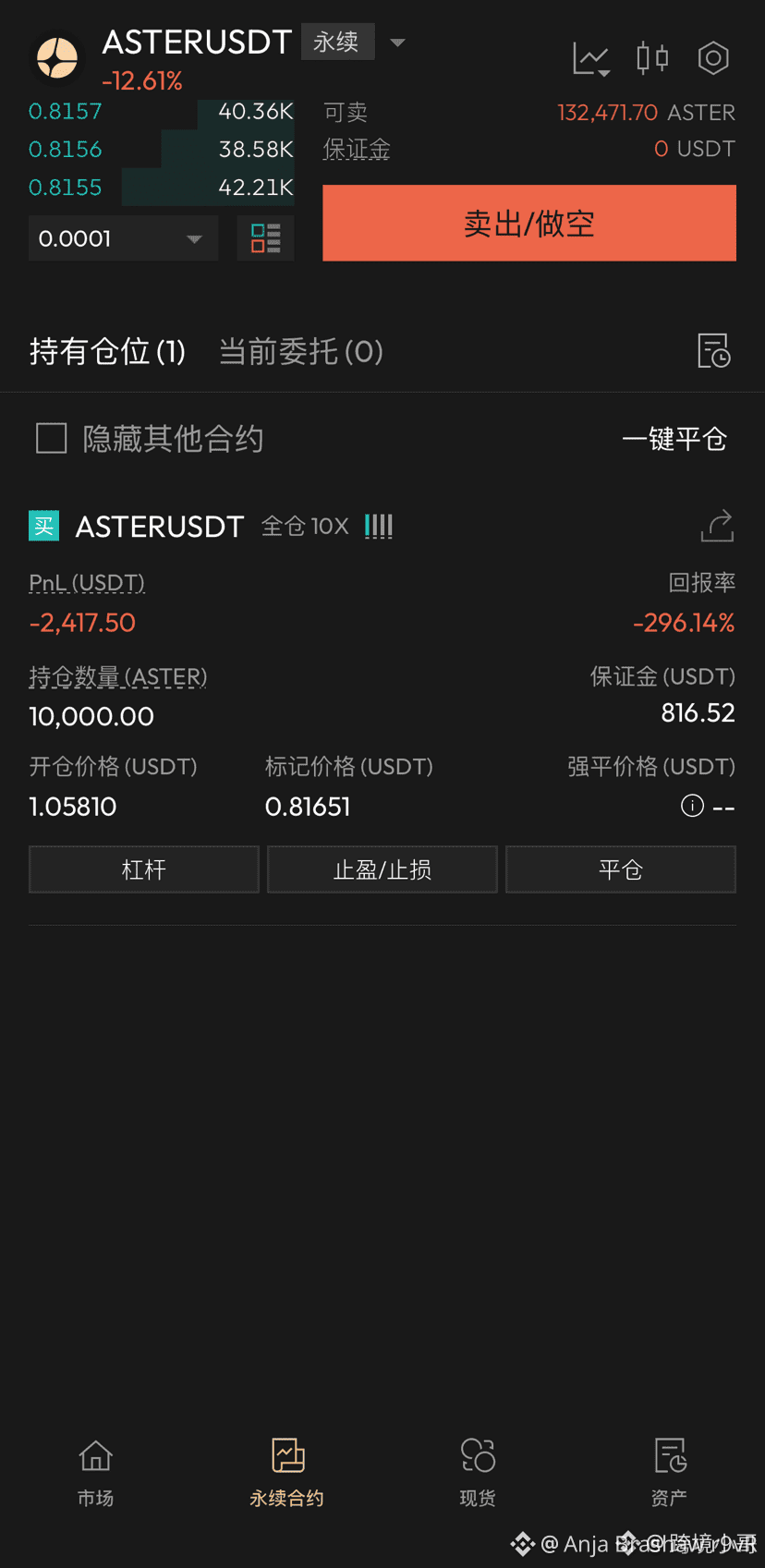
I was among the first group personally called by CZ in September. This was my first crypto investment, putting in $30,000 at $1.5. I learned to use Aster when even the Apple version wasn’t live yet. I followed every update—announcements, buybacks, burns, innovations. The effort from the team is visible and real.
Nobody expects instant profits. But everyone is here to make money—not to do charity. After three months of following closely, the deadlock is obvious.
The 8 billion token overhang kills confidence.
New users hesitate to buy. Old users wait to exit.
Even if someone buys just 10 tokens, they should be motivated to explore and believe in the product—but basic human investment logic is failing here.
Worse, the announced circulation delay until 2035 may sound clever, but it’s actually a bigger trap. Many users don’t even know this. Most people only look at exchange data. Even those who are aware worry: Will the rules change again? Will circulation be adjusted earlier?
Blockchain is supposed to solve trust by writing rules on-chain. But here, trust hasn’t been solved—it has become more complicated. The increasing need for self-certifications by the Aster team already highlights this problem.
Construction is necessary—but criticism is just as necessary.
If the strategy doesn’t change, confidence won’t return.
And without confidence, no amount of promotion can save the price.
$ASTER