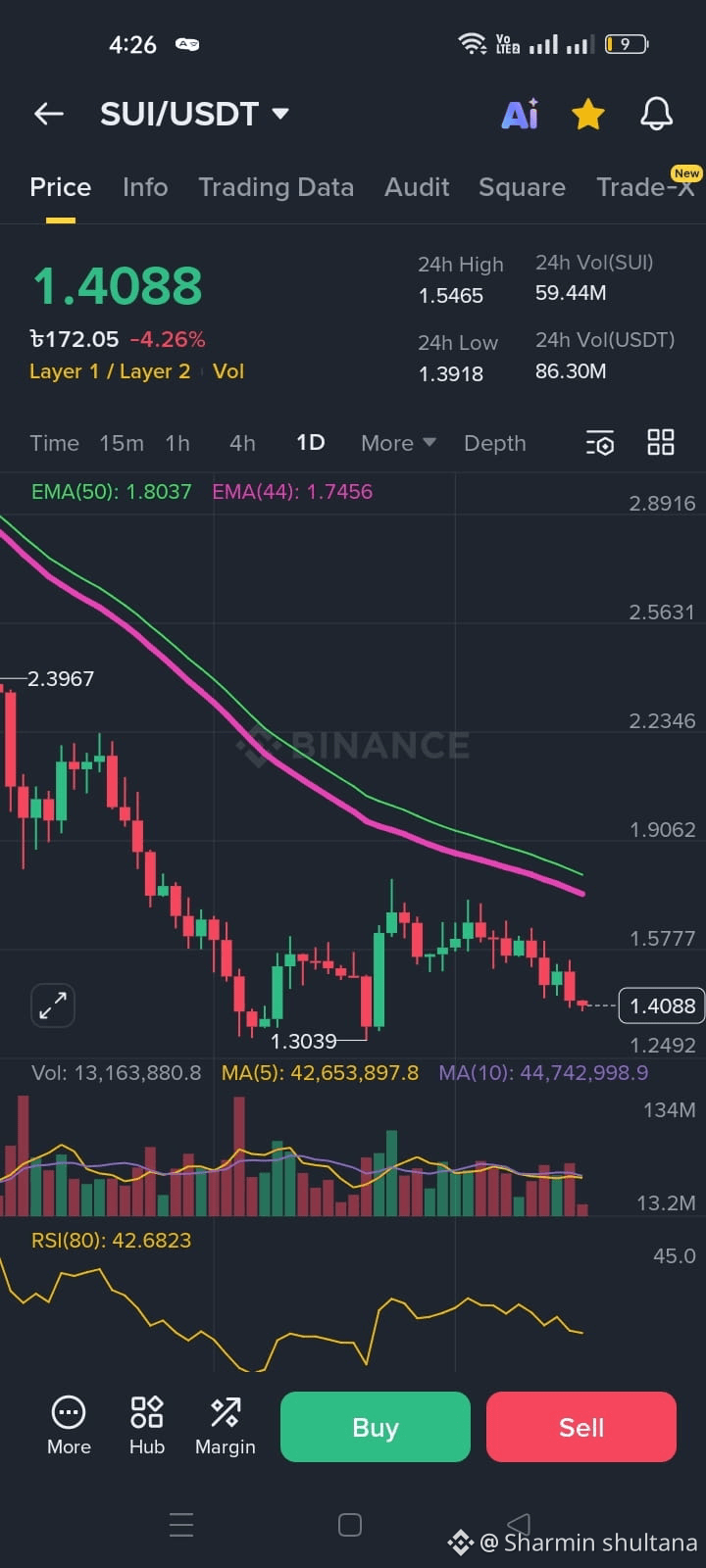
Here’s a long-term investment overview of SUI coin (the native token of the Sui blockchain) — including what it is, how it works, its potential upsides and risks, and what to consider before deciding to invest.
Note: prices in crypto are very volatile and move fast.
📌 What Is SUI Coin?
SUI is the native cryptocurrency of the Sui Network, a Layer-1 blockchain designed for high performance and low fees:
It uses a Delegated Proof-of-Stake (DPoS) consensus and innovative parallel transaction execution for speed and scalability.
Smart contracts on Sui are written in Move — a secure programming language originally developed for Meta’s Diem project.
The token is used for gas fees, staking, and governance on the network.
🚀 Technical Strengths
🌐 High performance
Sui’s architecture allows transactions to be processed in parallel (not sequentially), which can greatly increase throughput and reduce congestion.
🧠 Move programming language
Move is designed to be secure and efficient for digital assets and smart contracts, often cited as safer than older languages like Solidity.
🔐 Low fees & fast finality
Transactions tend to be very cheap and finalize quickly — a potential advantage for games, NFTs, and micro-transactions.
📈 Growing ecosystem
DeFi Total Value Locked (TVL) and transaction volume have grown significantly, indicating real usage beyond speculation.
📈 Tokenomics & Market Factors
📊 Supply dynamics
Max supply: 10 billion SUI tokens.
Only a portion is circulating, with most unlocking slowly through 2030 — which can impact price depending on demand.
🔥 Deflationary elements
Sui burns a portion of transaction fees through a Storage Fund, which puts some deflationary pressure on the supply.
📉 Price history
SUI reached an all-time high around ~$5+ in early 2025 and has seen significant volatility since.
📊 Potential Long-Term Upsides
✅ Innovative technology — Parallel execution and Move language could attract developers.
✅ Low fees & scalability — Useful for demanding applications like gaming and real-time apps.
✅ Growing ecosystem — Increasing DeFi activity and institutional products like SUI trusts and ETFs in progress.
✅ User-friendly features (zkLogin/social logins) could help bring more mainstream users onboard.
⚠️ Risks & Challenges
❗ High volatility — Like all cryptos, SUI prices can swing wildly.
❗ Strong competition — Ethereum, Solana, and others have larger ecosystems and developer bases.
❗ Token unlocks — Future unlocking of tokens could increase supply pressure.
❗ Regulatory uncertainty — Smart contract platforms face evolving global regulation.
❗ Centralization concerns — Critics note early influence from the founding team and validator distribution.
📅 Long-Term Investment Considerations
📌 Time horizon:
Long-term (3–5+ years) is typical for blockchain infrastructure bets, hoping adoption grows and network effects kick in.
📌 Diversification:
Don’t allocate a large portion of your portfolio to a single crypto — especially high-risk altcoins.
📌 Fundamental research:
Track ecosystem growth, developer activity, TVL, and real-world adoption metrics over time.
📌 Risk tolerance:
Cryptocurrency is speculative; only invest what you can afford to lose.
🧠 Summary
SUI has strong technical foundations and adoption signals, but also faces significant competition and price volatility.
As a long-term investment, it can be appealing to those who believe its ecosystem and performance advantages will attract developers and users — but there are real risks involved, and outcomes are uncertain.
If you want a simple breakdown of how token unlocks or staking rewards work for SUI specifically, let me know!