For centuries, gold has been the go-to asset for preserving wealth. From ancient coins to modern jewelry and bullion, gold has symbolized stability and security. Its scarcity, durability, and global acceptance make it a natural hedge against inflation and economic uncertainty. Central banks around the world still hold gold reserves as a critical part of their monetary strategy.
In contrast, Bitcoin, introduced in 2009 by the mysterious Satoshi Nakamoto, represents a new era of digital finance. Unlike gold, Bitcoin exists only digitally, with ownership recorded on a decentralized blockchain. Its supply is capped at 21 million coins, giving it a built-in scarcity that mimics gold’s rarity but in a purely digital form.
Volatility and Risk
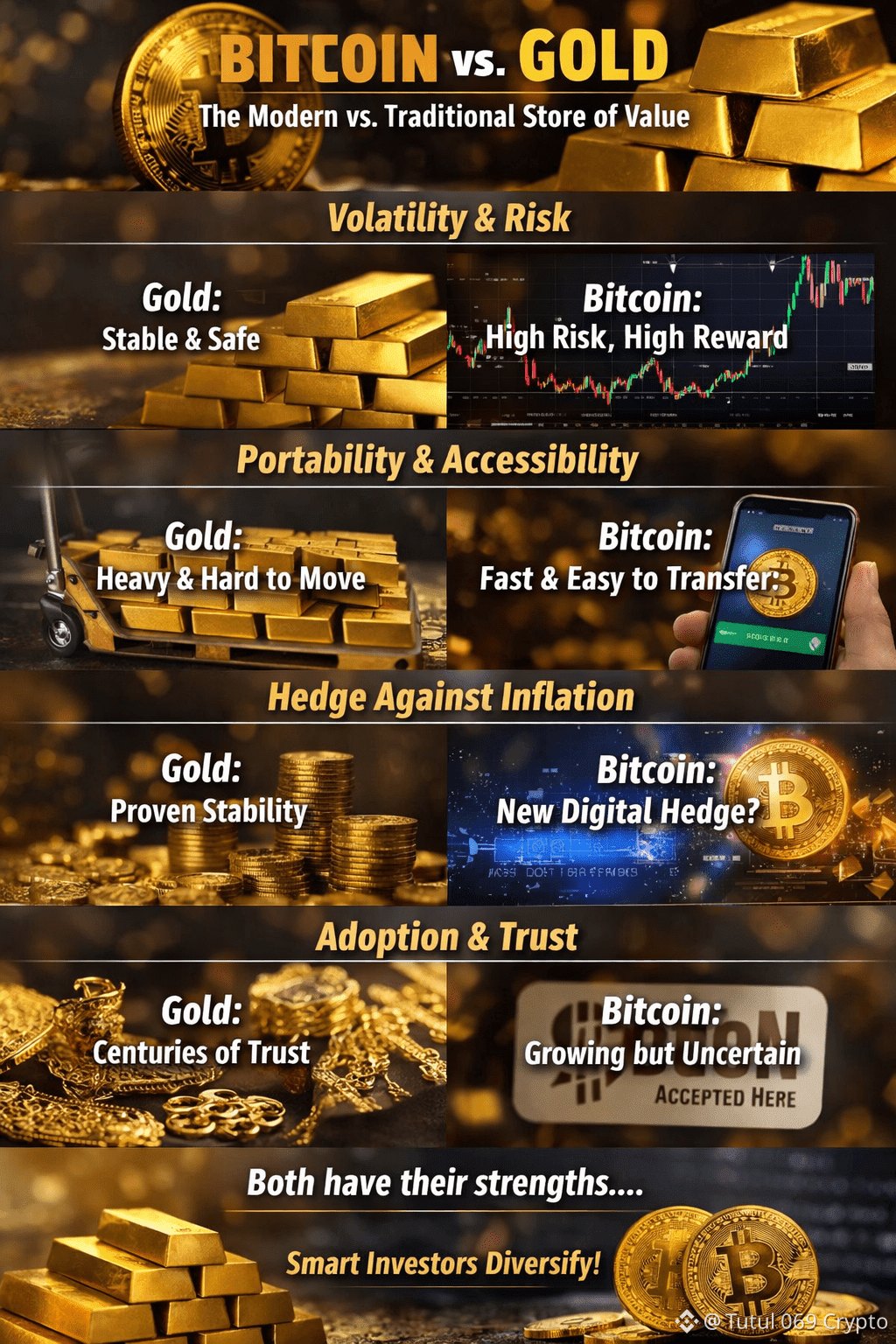
Gold prices tend to move slowly and steadily, making it a low-risk asset. Bitcoin, however, is notorious for its wild swings. In a single day, Bitcoin can gain or lose more than 10%, making it a high-risk, high-reward investment. This volatility has attracted speculative investors looking for outsized gains but also deters conservative savers.
Portability and Accessibility
One of Bitcoin’s major advantages over gold is portability. You can send millions of dollars worth of Bitcoin across the globe in minutes, with almost zero physical risk. Gold, on the other hand, is heavy, difficult to transport, and requires secure storage. Bitcoin also allows fractional ownership, enabling small investors to participate, whereas buying significant amounts of gold can be expensive.
Hedge Against Inflation
Both assets are often described as hedges against inflation. Gold has a long track record of retaining value during periods of economic turmoil. Bitcoin is newer, but proponents argue that its fixed supply makes it resistant to inflation caused by central bank money printing. Critics, however, point out that Bitcoin’s short history makes it untested in prolonged financial crises.
Adoption and Trust
Gold has centuries of trust and global recognition. Bitcoin is gaining traction, with institutions, corporations, and even countries exploring its potential as an alternative asset. However, regulatory uncertainty and technological risks continue to pose challenges for widespread adoption.
Conclusion
Gold and Bitcoin serve similar purposes as stores of value, but they appeal to different types of investors. Gold offers stability, a proven track record, and tangible security. Bitcoin offers digital convenience, scarcity, and potential for high returns, but comes with high volatility and risk. In today’s evolving financial landscape, many investors are choosing to diversify, holding both gold and Bitcoin to balance traditional security with modern opportunity.