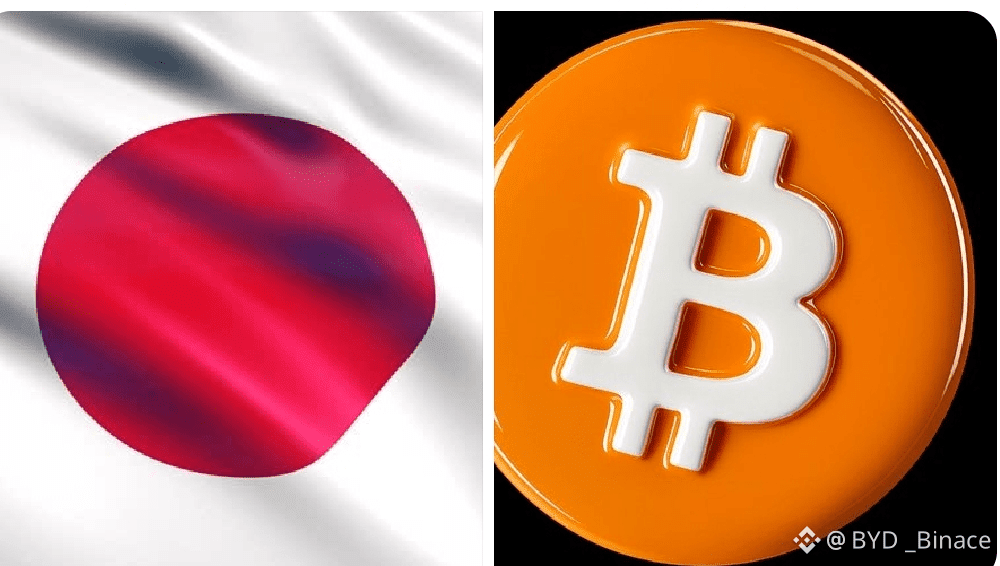
Japan just sent a signal most Bitcoin traders don’t understand.
The Bank of Japan is preparing to raise interest rates toward 0.75% — the highest level in nearly 30 years.
To most people, that sounds insignificant.
To anyone who understands global liquidity, it’s a shockwave.
For decades, Japan played a unique role in global markets:
the cheapest source of money on Earth.
Investors borrowed yen at near-zero rates and deployed that capital into:
Stocks
Real estate
Private equity
Crypto
This strategy is known as the yen carry trade.
It thrives when rates stay low.
It breaks when rates rise.
And history is clear:
When Japan tightens, the yen strengthens, borrowing costs rise — and risk assets reprice.
Not because Bitcoin is “bad.”
But because leverage starts unwinding.
That’s the part many traders miss.
This isn’t Japan “attacking Bitcoin.”
It’s cheap money disappearing.
When borrowing costs increase:
Leveraged positions get closed
Forced selling accelerates
Volatility spikes
We’ve seen this before.
Markets don’t collapse overnight — they adjust fast.
Here’s the deeper lesson most people overlook:
Central banks no longer move in isolation.
Global markets are tied together by leverage.
When one major source of cheap capital tightens, the effects ripple everywhere:
New York
London
Crypto markets
This doesn’t mean Bitcoin is dead.
It means Bitcoin is being traded like a leveraged risk asset, not held like a long-term store of value.
That distinction matters.
Speculators fear rate hikes.
Long-term investors study them.
Because real investors don’t ask: “Will price drop this week?”
They ask: “What happens when cheap leverage disappears?”
Rising rates reveal who truly owns assets —
and who was simply renting them with borrowed money.
That’s why moments like this shake markets.
Not because fundamentals change overnight,
but because discipline returns.
History doesn’t lie:
Easy money inflates bubbles
Tightening exposes weakness
Real assets survive
Leverage gets punished
The lesson isn’t panic.
The lesson is understanding where price comes from.
If an asset depends on cheap debt, it’s fragile.
If it’s owned without leverage, volatility becomes opportunity.
Japan raising rates isn’t about 0.75%.
It’s about the end of free money.
And every time free money ends, markets relearn a painful truth:
Wealth isn’t built on leverage.
It’s built on knowledge, cash flow, and staying power.
That’s what survives every cycle.