
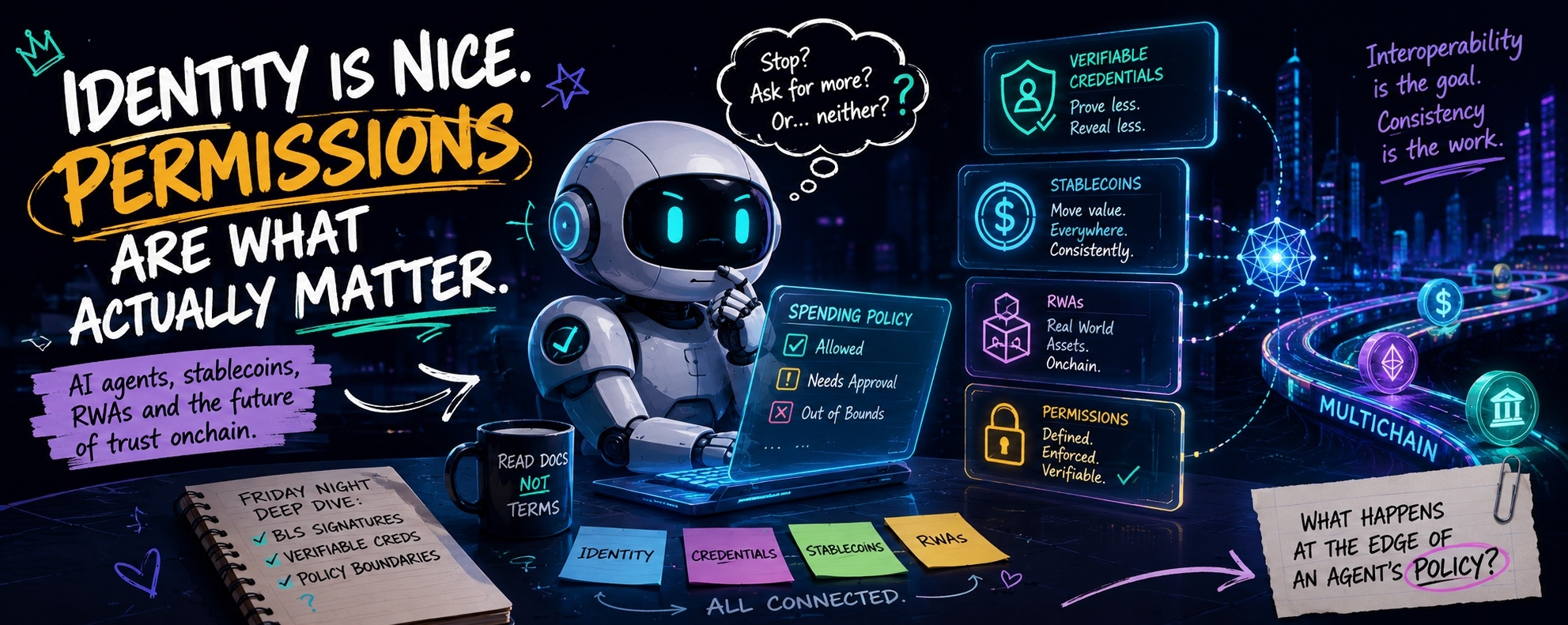
which is funny because I thought I was going to spend most of my time thinking about AI identities and somehow I kept circling back to permissions instead.
Maybe that’s less exciting but it feels more real. If an AI agent can move stablecoins around or interact with tokenized assets I don’t actually care that it has an identity badge. I care about what it’s allowed to do who decided that and whether those rules can be checked without everything turning into another endless compliance process.
@NewtonProtocol keeps tying identity, credentials, stablecoins and RWAs together instead of treating them like separate conversations. That part made sense to me. A wallet shouldn’t have to start from zero every time it crosses a different chain just because the infrastructure changes underneath. We already have enough of that.
I am still not completely convinced about how smoothly institutions and existing regulations fit into all this, though. Open standards sound great until everyone implements them slightly differently. That always seems to happen. Or maybe I am just overly skeptical because crypto has promised interoperability more times than I can count.
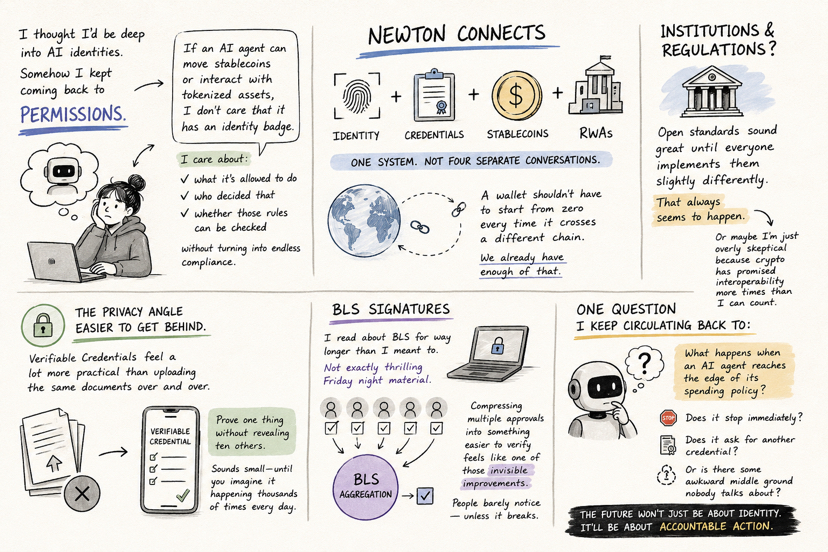
The privacy angle was easier to get behind. Verifiable Credentials feel a lot more practical than uploading the same documents over and over especially if you can prove one thing without revealing ten others. That seems like one of those ideas that sounds small until you imagine it happening thousands of times every day.
And then I disappeared into reading about BLS signatures for longer than I meant to. Not exactly thrilling Friday night material. Still compressing multiple approvals into something easier to verify feels like one of those invisible improvements people barely notice unless it breaks.
I guess I am left wondering what happens when an AI agent reaches the edge of its spending policy. Does it stop immediately, ask for another credential or is there some awkward middle ground nobody talks about?
