
A while back, I watched a close friend lose a five-figure sum in literal seconds. The culprit wasn’t a market crash or a bad trade—it was a single tampered contract address pasted in haste. That moment stuck with me.
We spend years championing decentralization and self-sovereignty, yet the instant you sign a transaction, you're naked. No safety net, no undo button. Just skin in the wind.
I’ve road-tested nearly every on-chain monitoring tool out there. Almost all of them share the same fatal flaw: they’re reactive. Alerts scream only after a transaction hits the chain. By the time you’ve grabbed a screenshot, your assets are gone. I’ve also run my own AI-driven arbitrage bot for months. Recently, it nearly detonated itself. The machine spotted a liquidity pool, calculated an edge, and prepared a sizeable entry automatically. Only a manual review of the logs revealed the problem: the AI had no way to check whether the target contract had been audited. It was blindly executing. Without a built-in, mandatory kill switch, that bot was less of a tool and more of an unshielded grenade.
Afraid of what an unprotected AI agent might do next, I migrated my live testing over to Newton Mainnet Beta. After three weeks of intermittent operation and more than a few frustrating moments, I finally grasped why Newton Protocol stands apart from the crowd of projects slapping an “AI” label onto a token.
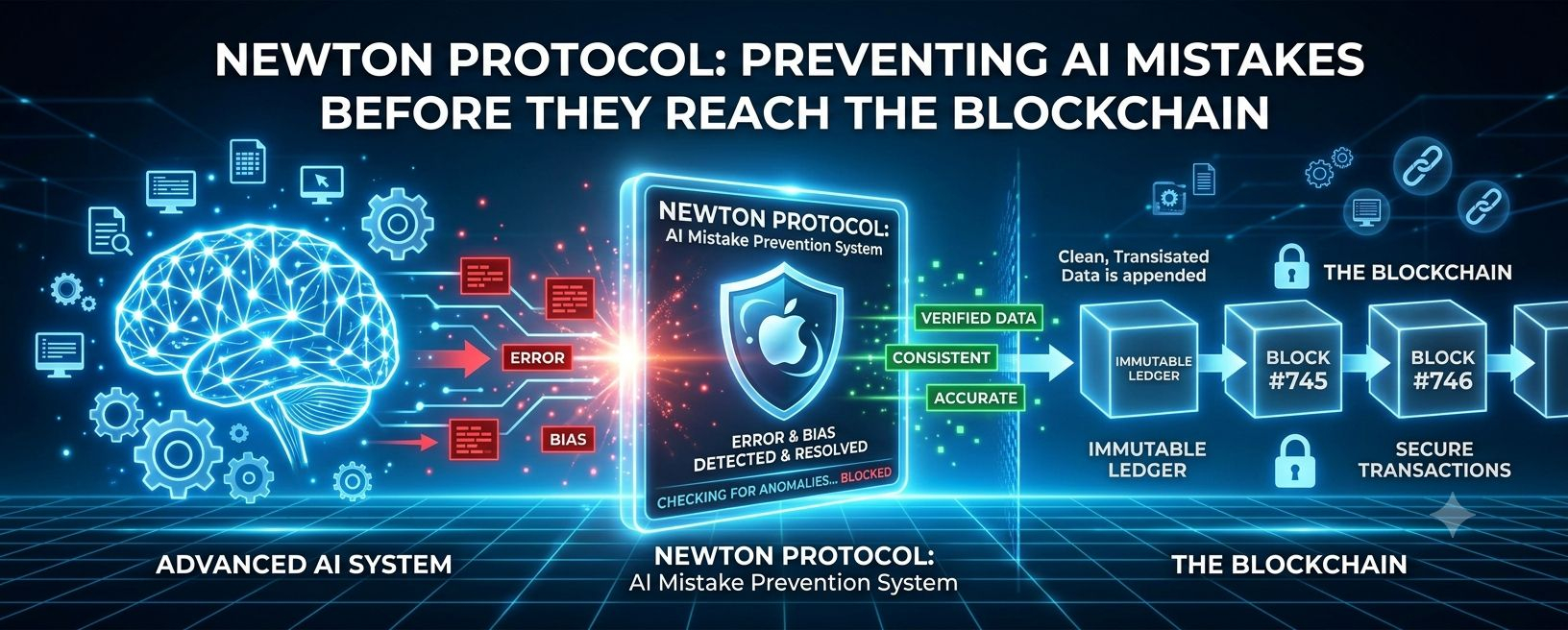
Newton isn't chasing massive language model compute. Instead, its entire design is stubbornly focused on pre-execution risk control. It inverts the old blockchain pattern of “act first, verify later” into something akin to offline card payments: validate thoroughly, then settle. Last week, I tried to catch a fleeting arbitrage between RWA treasury vaults. After hooking my wallet up with VaultKit, the transaction just sat in pending. I refreshed the Newton Explorer over a dozen times. The Operator nodes kept grinding through the custom strategy checks I had set, and by the time the cryptographic clearance was granted, the window was long gone. In sheer frustration, I nearly scrapped my whole node setup on the spot.
After cooling off, the tiered verification architecture clicked. Large transfers or interactions with unrecognized contracts require heavy, multi-node consensus; routine, low-value transactions get lightweight clearance. You simply cannot optimize for both absolute safety and lightning speed simultaneously. The economic guardrails are what really make the design solid: node operators must stake $NEWT as collateral. If they recklessly approve a high-risk transaction, that stake gets slashed. When financial consequences directly enforce honest behavior, it’s far more reliable than relying on smart contract audits alone.
I carved out some time to learn the Rego policy language and hand-wrote two basic risk rules: automatically block any interaction with unaudited contract addresses, and instantly freeze any single trade where slippage exceeds 5%. The tactile sense of control is immediate. The moment an AI agent hits a preset red line, the entire execution pipeline halts. Without the cryptographic authorization attestation distributed by the network, the transaction simply cannot be packaged on-chain. It nips AI hallucination-induced order chaos right at the root.
Still, I won't sugarcoat the Beta-stage limitations.
The custom risk-control thresholds are technically demanding. You need a working grasp of Solidity fundamentals and the ability to integrate off-chain risk data feeds. Most casual users can barely navigate basic wallet permissions, let alone configure multi-layered interception rules independently. Small transactions might also experience inconsistent delays, which is a non-starter for high-frequency scalpers. And there's an inherent dependency risk: verification relies on external data sources. If a legitimate address gets falsely flagged as malicious, everyday users will struggle to find straightforward appeal channels, and the distributed Operator nodes can’t promise absolute neutrality either.
It’s also a mistake to view the network token as just another governance coin. Building custom risk-control strategies, staking collateral for nodes, pulling historical verification attestations, wiring in AI agents—the entire Newton ecosystem workflow consumes the token from end to end. The circular economic demand is openly visible. Compared to “airy AI” projects pumped solely by market makers, the underlying structural support here is far more tangible.
At this stage, the tooling speaks to a very narrow audience. Quant teams, institutional allocators, and high-net-worth individuals managing multiple wallets will find it indispensable—it can block most phishing vectors and script vulnerability exploits. For the average retail participant, the learning curve is still a wall, and the UX simplification journey has a long road ahead.
The whole industry is currently obsessed with optimizing AI agent execution speed. But after everything I’ve seen, I’ve come to believe that when AI automatically manages your funds, being controllable matters infinitely more than being fast.
The large-scale takeover of on-chain assets by autonomous agents is inevitable. Newton Protocol is plugging an industry-wide gap by installing a hard emergency brake on AI systems that could otherwise spin out of control. The only real question is whether it can cement a foundational role in Agent Finance infrastructure—and that depends entirely on how rapidly the team can smooth out user interactions and build robust error-correction mechanisms for data sources.