

@Lorenzo Protocol Crypto keeps teaching the same quiet lesson: systems that assume perfect behavior don’t survive contact with real humans. Someone clicks the wrong network. Someone signs an approval they didn’t understand. Someone chases a number on a screen and only later realizes the “yield” was mostly incentives that could disappear overnight. None of this is a moral failure. It’s what happens when money, stress, and unfamiliar tools collide.
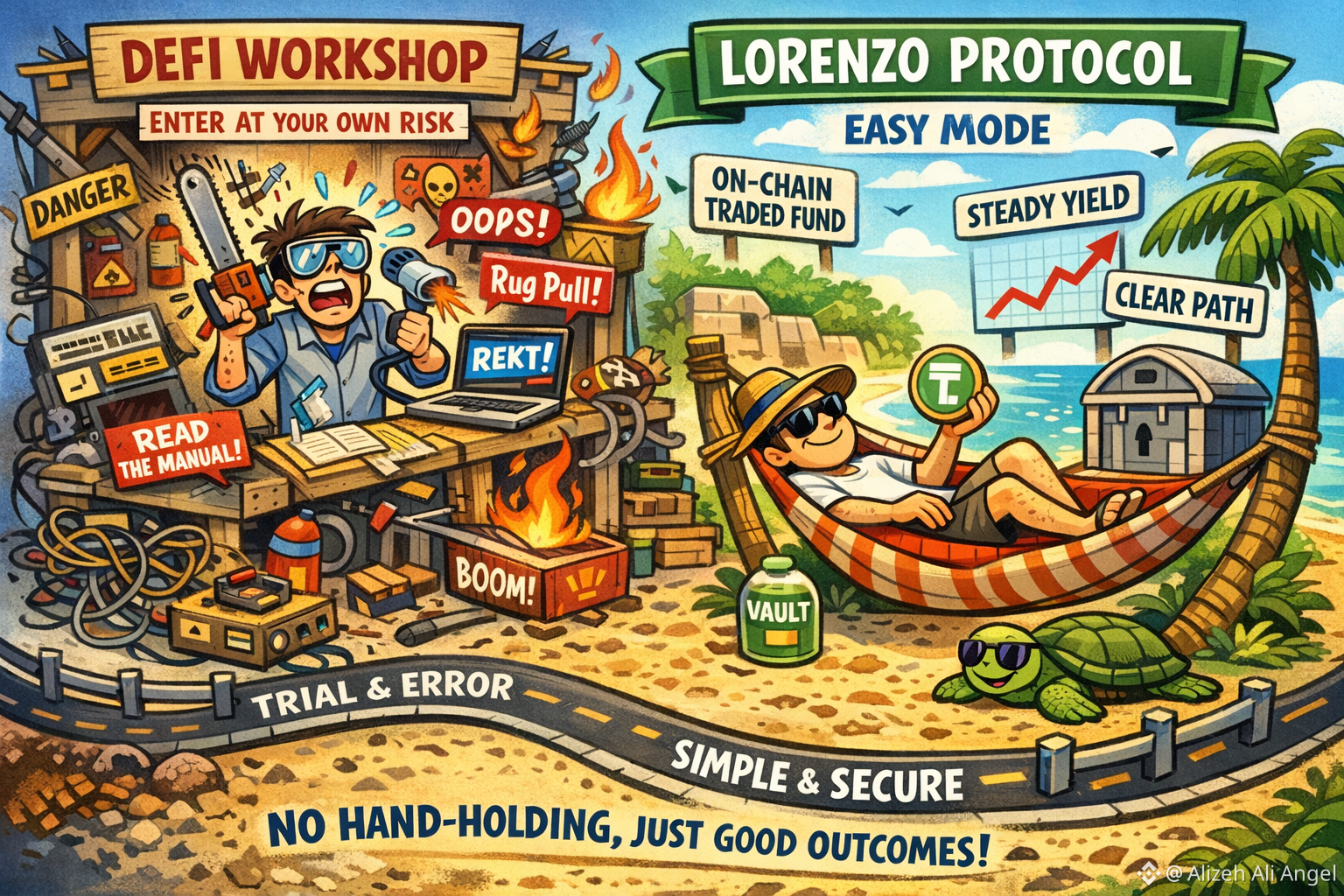
That’s why I pay attention when a protocol talks less about freedom and more about outcomes, in the plain sense of “what tends to happen to normal users over time.” For years, DeFi was built like a workshop full of power tools. You could build amazing things, but only if you read every warning label and kept both hands steady. As the space grew, the limitation became obvious: most people don’t want to live inside a workshop. They want something that behaves predictably when they’re tired, distracted, or new to the space. They want to know what they’re holding, without a manual.
Lorenzo Protocol is part of a newer wave that takes this seriously. It frames itself as on-chain asset management, where strategies are packaged into tokenized products rather than handed to users as a pile of parts. One of the structures it highlights is the On-Chain Traded Fund, essentially a token that represents exposure to a defined strategy portfolio. Whether the label sticks or not, the intention is easy to appreciate: reduce the number of choices a user has to make while markets are moving and emotions are loud.
When people say a protocol “doesn’t rely on users doing the right thing,” it can sound like scolding, as if users are the problem. I hear it more as a design philosophy. Good infrastructure expects drift. Roads have guardrails because even careful drivers wander. Payment apps add confirmation steps because a thumb slip is normal. Better design doesn’t eliminate responsibility; it makes the safe path easier than the risky one, and it tries to limit the damage when something goes sideways.
In Lorenzo’s case, that safe path is built around vaults. Users deposit into a vault and receive a token that represents their share. The vault holds assets, follows its rules, and tracks performance through on-chain updates like net asset value. For the user, the experience can stay simple: choose a product that matches their comfort level, deposit, and withdraw when they want. That simplicity isn’t just cosmetic. Fewer moving parts at the surface means fewer chances to make a mistake that’s expensive to reverse.
This philosophy lands at a particular moment in crypto culture. Five years ago, “learning DeFi” was almost a rite of passage. Today, a lot of people are tired. They’ve lived through enough blowups, hacks, and incentive mirages that they’re less impressed by cleverness and more drawn to boring reliability. At the same time, stablecoins and tokenized assets have become everyday plumbing for more users, which quietly raises expectations. If something still feels like an early beta product, many people simply won’t keep using it, no matter how smart the underlying idea is.
Lorenzo’s approach also lines up with a broader move toward abstraction. In its own materials, it describes a “Financial Abstraction Layer” that coordinates capital allocation and strategy routing so apps can offer yield features without every user needing to understand the machinery. Abstraction has a bad reputation in crypto because it can sound like a hiding risk. But the healthier version is closer to separation of roles. Specialists build and operate strategies; users choose exposure and decide how closely they want to watch.
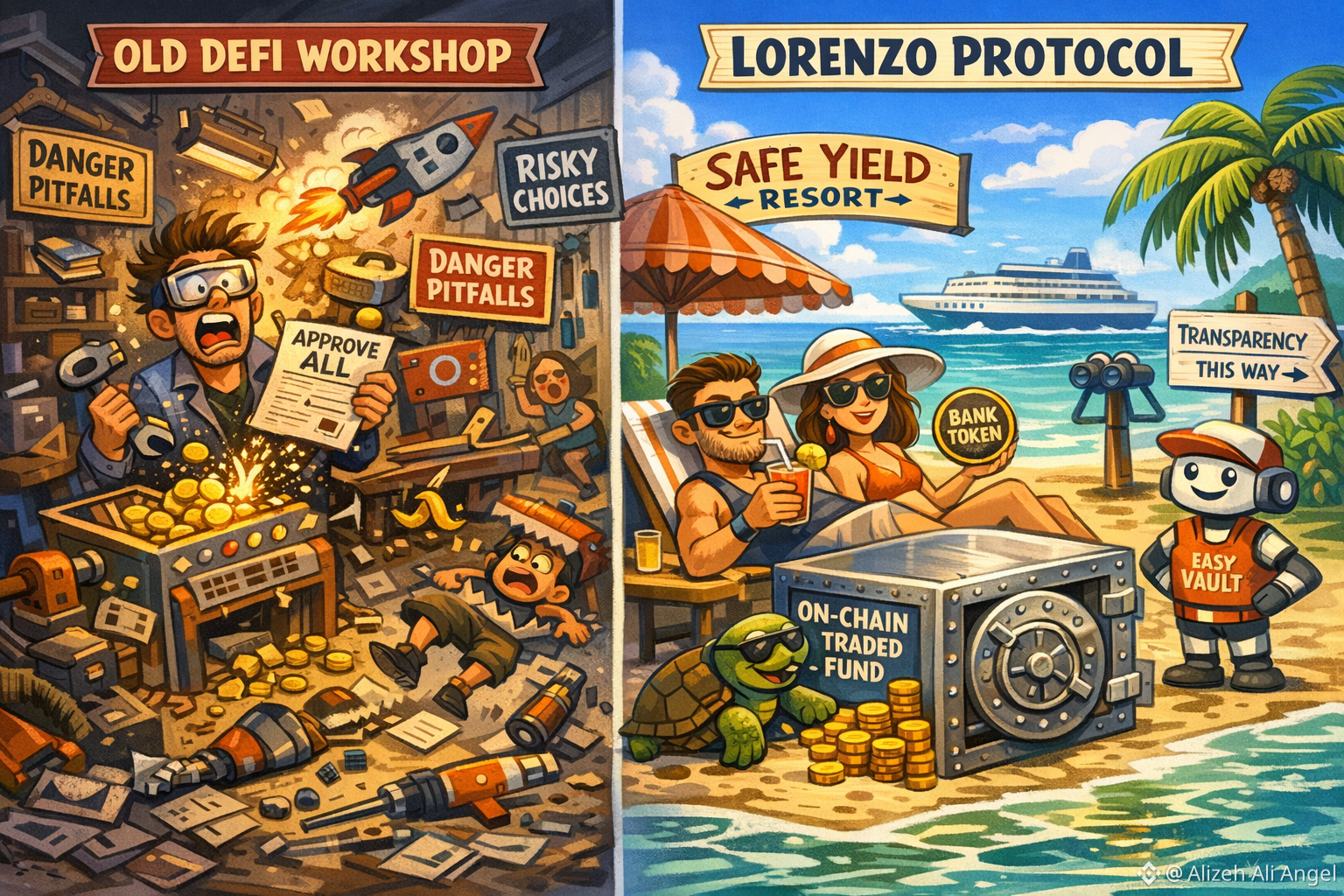
The uncomfortable truth: convenience can numb judgment. The less effort it takes, the less people notice what they’re actually exposed to. That’s why transparency matters even more when the interface feels calm. If a vault is meant to be held like a single position, it should still be easy to see what it is, how it earns, and what the withdrawal path looks like, especially when some strategies involve off-chain execution that later reports results back on-chain. A calmer interface should come with clearer explanations, not fewer.
What makes this feel timely is that 2025 has been full of “grown-up finance” signals. More fund-like structures are showing up on-chain. Exchange listings bring new eyes and, with them, more demand for legible products and clearer risk framing. Lorenzo’s BANK token was listed on Binance in November 2025 with a seed tag, which is the kind of milestone that forces a project to speak to a wider audience. When the crowd widens, the cost of confusing UX rises fast.
So the point isn’t that Lorenzo removes the need for judgment. It’s that it tries to stop placing the entire burden of safety on the user’s moment-to-moment attention. This is one of those ‘finally’ moments.” For too long, complexity was treated like virtue. If DeFi is going to matter to normal people, systems need to be built for humans: rushed, anxious, occasionally wrong, and still entitled to a decent outcome.

