
🔑 It’s Not "In" Your App
One of the biggest misconceptions for beginners is thinking their crypto is stored inside their phone or their exchange app.
In reality, your crypto lives on the Blockchain. Your "Wallet" is actually just a tool that holds your Private Keys the digital "secret codes" that allow you to move your funds. If you lose your keys, you lose your access to the coins forever.
To stay safe, you need to understand the two main ways to store these keys: Hot Wallets and Cold Wallets.
1. Hot Wallets (Connected to the Internet)
Think of a Hot Wallet like the physical wallet in your pocket. It’s easy to reach and great for daily use, but you wouldn't keep your entire life savings in it.
Examples: Mobile apps (Trust Wallet), browser extensions (MetaMask), or keeping funds on an exchange (Binance).
Best For: Small amounts, frequent trading, or interacting with DeFi.
The Risk: Since they are connected to the internet, they are more vulnerable to hacks, phishing, or malware.
2. Cold Wallets (Offline Storage)
A Cold Wallet is like a high-security bank vault. It is a physical device that keeps your keys completely offline.
Examples: Hardware devices (Ledger, Trezor).
Best For: Large amounts and long-term storage ("HODLing").
The Risk: You have to pay for the device, and it is less convenient for quick trades.
⚠️ The Golden Rule: The Seed Phrase
When you set up a wallet, you are given a Seed Phrase (usually 12 or 24 random words).
This is your master key. Anyone who has these words can steal your money.
Never take a photo of it.
Never type it into a website.
Always write it on paper/metal and hide it in a safe place offline.
Hot Wallet vs. Cold Wallet Comparison
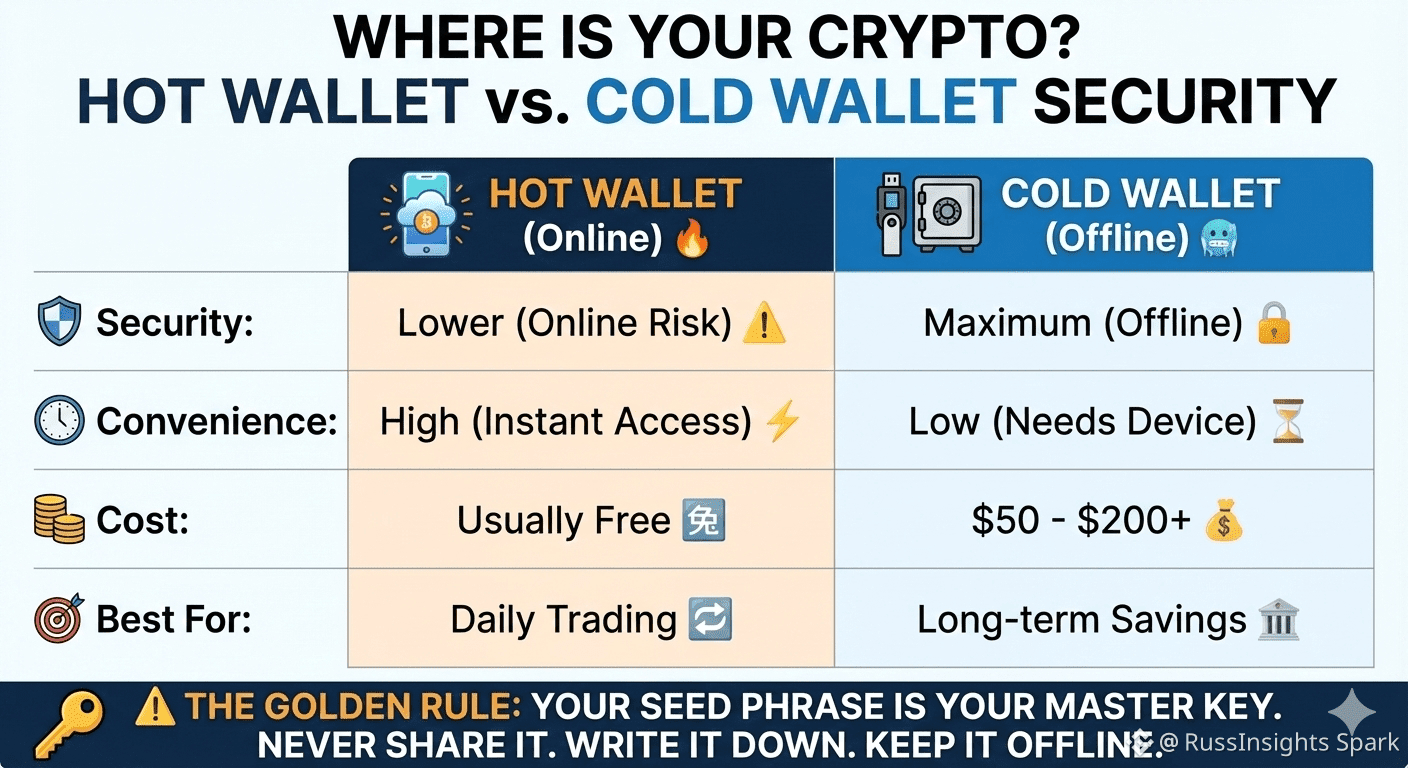
🔥 Are you keeping your keys offline yet, or are you still using a hot wallet? Let's talk security below! 👇


#BinanceBlockchainWeek #WriteToEarnUpgrade #CryptoSecurity #Write2Earn #safeWallet