
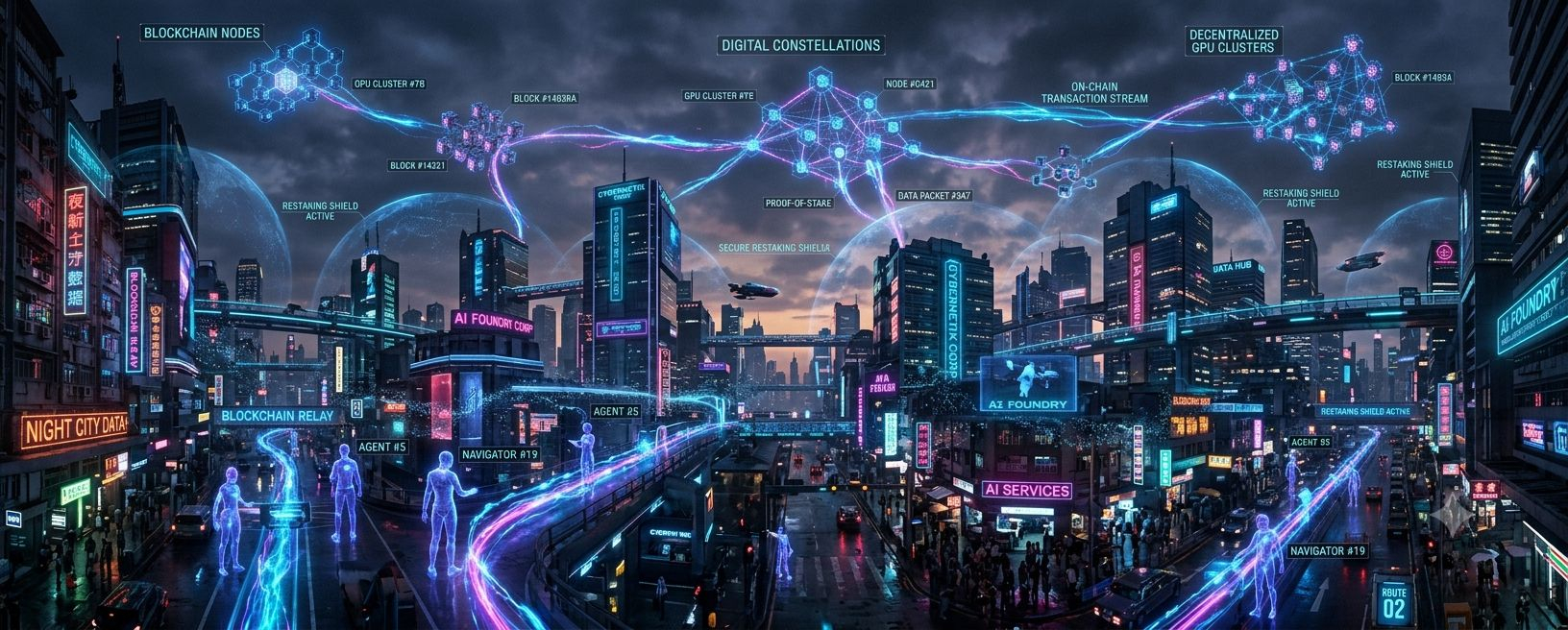
You've likely noticed the market grinding through another cautious phase. Speculative assets continue to bleed, but beneath the surface, a more structural shift is gaining quiet momentum the convergence of AI Agents and DePIN (Decentralized Physical Infrastructure Networks). In mid-2026, as centralized GPU constraints tighten, distributed compute networks are onboarding nodes and delivering verifiable resources at scale.
This isn't another fleeting narrative. It's foundational infrastructure quietly enabling the next wave of on-chain utility.
Why Now
The Fear & Greed Index remains stuck in extreme fear territory (around 16-25), with downward pressure on major assets. Yet selective capital is rotating toward AI-DePIN intersections. Billions in VC funding have poured into this space, highlighted by vehicles like Entrée Capital’s $300M fund targeting exactly these themes.
On L2s such as Base, agent-driven transaction volumes are rising steadily. Node participation across key DePIN projects continues to climb, meeting surging demand for AI workloads. Centralized providers are hitting clear limits on cost and availability, while DePIN offers elastic, crowdsourced supply.
What stands out to me is the timing. As pure speculation fades, sectors with genuine utility are drawing attention. Mid-cap AI and DePIN tokens are showing RSI divergences and deepening liquidity pools signs of measured accumulation amid broader weakness.
On-Chain and Technical Perspective
DePIN networks are recording higher TVL and growing node counts. Several projects are already generating verifiable on-chain revenue from real workloads, with estimates pointing toward $100M+ sector-wide by year-end.
Agent activity on Base and other L2s is expanding, powering autonomous transactions and executions. Platforms tokenizing AI workers are seeing tangible usage.
Technically, certain mid-cap names have displayed resilience. They’re forming higher lows despite the broader correction, with smart money positioning ahead of potential catalysts. On-chain metrics including active agent wallets and resource utilization are diverging positively from headline price action.
Fundamentals and Tokenomics View
The DePIN sector’s total market capitalization has moved beyond the $9-10B range earlier this year, with estimates reaching toward $50B+ as AI demand accelerates.
At the center is the emerging agent economy. Projects like Virtuals Protocol stand out by turning AI agents into tokenized, co-owned digital workers capable of owning assets, executing trades, and generating revenue. Integration with restaking mechanisms further strengthens verifiable compute security.
Tokenomics are maturing beyond simple emissions toward usage-based incentives and revenue sharing. This creates a powerful flywheel: more nodes bring cheaper compute, which supports more agents, driving further demand for decentralized infrastructure.
Centralized vs Decentralized Compute Comparison
Aspect
Centralized Cloud
DePIN + AI Agents
Scalability
Limited & expensive
Elastic & crowdsourced
Trust & Security
Single point of failure
Restaking + on-chain verification
Agent Autonomy
Restricted
Native on-chain execution
Revenue Model
Rent-seeking
Usage-based incentives
Risks, Opportunities & Practical Takeaways
Risks remain real. Token incentives must prove sustainable, or selling pressure could mount. Enterprise adoption still faces challenges around SLAs, reliability, and procurement. Whale flows into mid-caps are encouraging but volatile, and broader market outflows persist.
However, the opportunity set looks compelling for patient capital. Institutional interest in non-custodial agent rails and intent-based execution is growing. Real revenue from distributed infrastructure provides a valuation floor that pure speculation lacks.
For long-term investors, focus on projects demonstrating strong node growth, measurable usage, and clear revenue paths. Practically, monitor on-chain agent volumes, node dashboards, and TVL trends. Avoid rushing in utility takes time to compound.
Conclusion
The meeting of AI agents and DePIN represents a critical building block for the next phase of on-chain economies. In a 2026 market seeking substance over hype, these decentralized compute layers are positioning themselves as essential infrastructure.
This isn’t about overnight gains but durable, long-term development. For those playing the long game, it’s worth watching node growth, revenue figures, and agent adoption closely. The infrastructure boom may be quiet, but its impact could prove lasting.
Hashtags: