
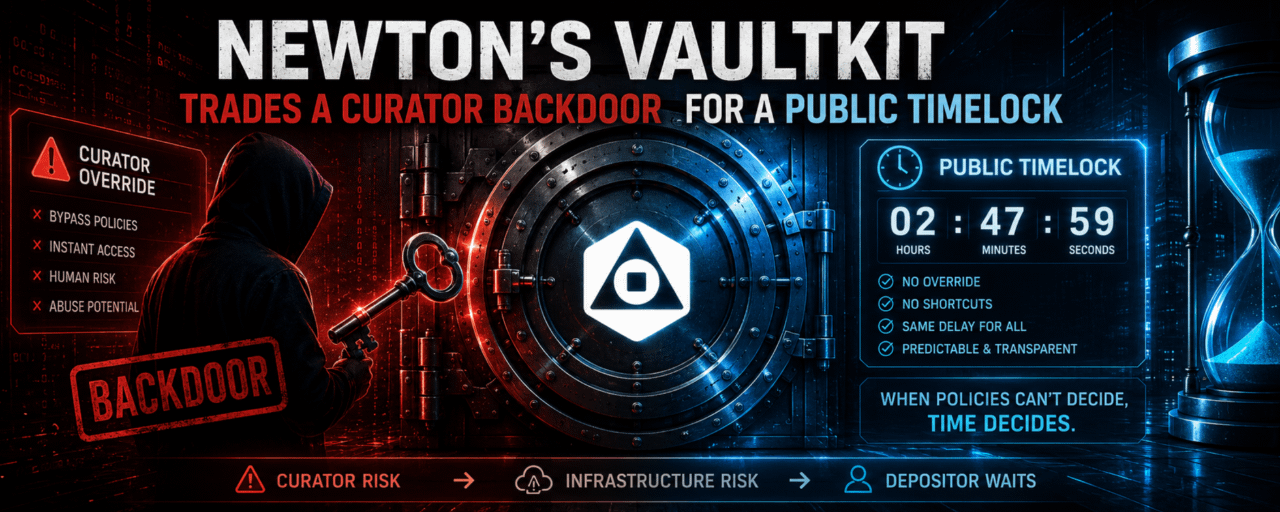
spent the morning in newton protocol's docs trying to find the one part every fail closed pitch conveniently skips: what happens the moment the policy engine itself is the thing that breaks.
quick context first. vaultkit is the piece of the stack a vault curator uses to turn a vault's rules into something newton's operator network actually checks onchain, transaction by transaction. nothing moves until a policy evaluation comes back, and that result arrives as a signed attestation rather than a green light from a dashboard somewhere.
at first i was just looking at how narrow the approval actually is. the more interesting question turned out to be what happens when no approval can be produced at all.
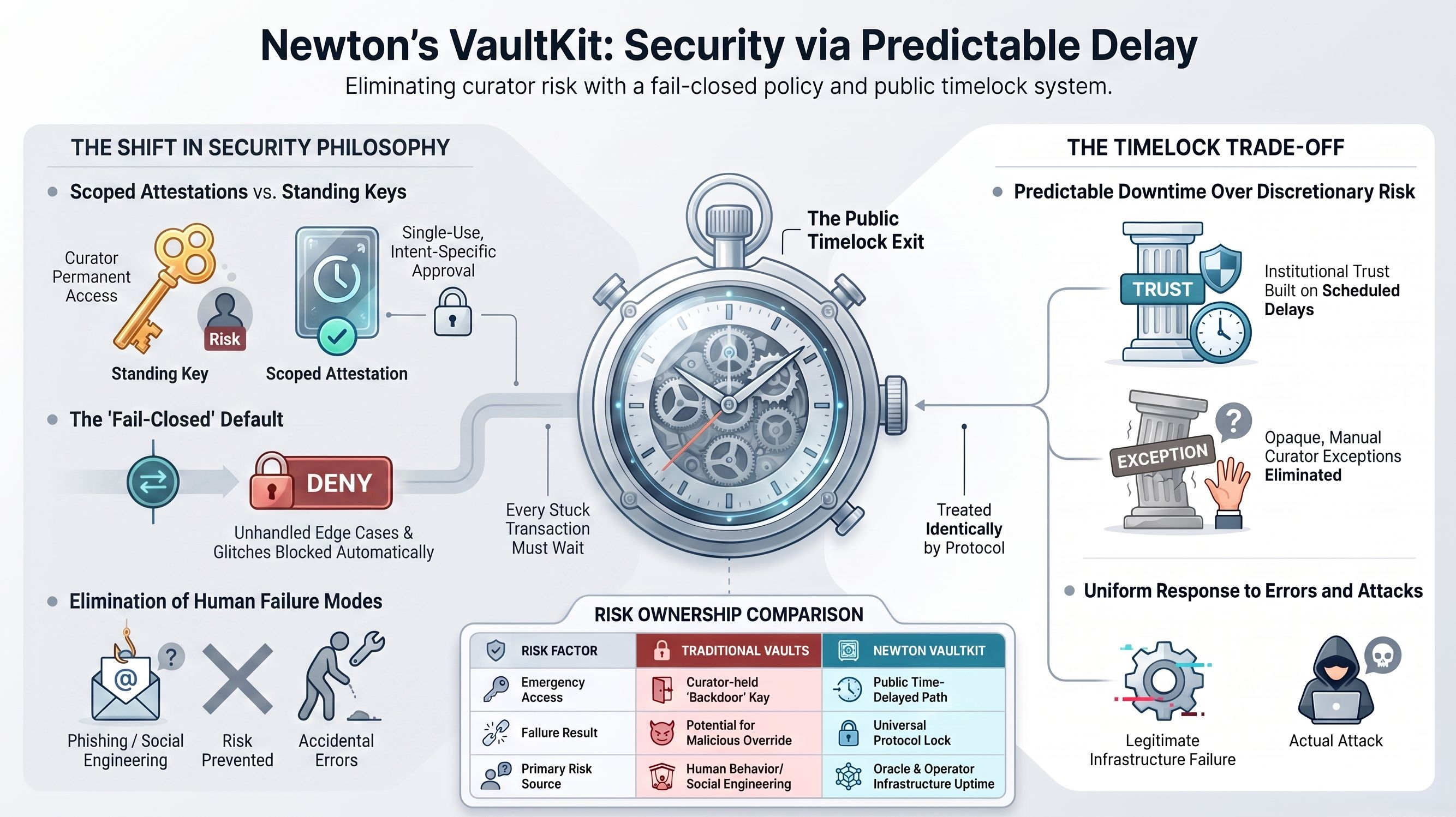
newtons policies are written in rego, and like most security sensitive rego setups, they default to deny. thats not a bespoke newton feature, its the standard pattern for this kind of policy language. an unhandled edge case doesnt quietly let a transaction slip through. it just gets blocked.
that part tracks.
what actually caught my attention was how scoped each approval is. an attestation isnt a green light for a curator to act all day. its tied to one specific intent, meaning one instruction, one vault, one amount. change any of those and the old approval is worthless. you need a fresh evaluation.
so the trust isnt in a person.
its in a single checked transaction.
that design closes a real hole. a curator holding a standing override key is a curator who can eventually be phished, pressured, or just fat finger something at 3am. take the standing key away and that whole failure mode goes with it.
but something kept nagging at me the more i sat with it.
fail closed only sounds strictly safer if you assume the policy layer itself is the reliable part and the transaction is the risky part.
flip that assumption and it gets messier fast.
an oracle feed stalls, a data oracle times out, operators cant reach quorum for whatever reason. under a fail closed default none of that produces a bad approval. it produces no approval. a legitimate withdrawal a real depositor actually needs gets stuck behind the exact same wall as an actual attack would be.
the route vaultkit takes instead of an on demand fix is a public, time delayed path, not a curator holding an emergency override button.
that closes the abuse loophole completely.
it also means theres no fast lane. every stuck transaction, malicious or just unlucky, waits out the same clock.
so the bet newton is making is that predictable downtime beats a discretionary override, even a well meaning one. thats a defensible bet. institutional depositors generally forgive a delay faster than they forgive a curator quietly pushing an exception through.
the part i havent fully settled is that from the depositors seat, "policy correctly caught a bad transaction" and "policy infrastructure broke and caught a good one" look identical. same wait, same lack of explanation, same clock. vaultkit doesnt appear to differentiate the response between the two.
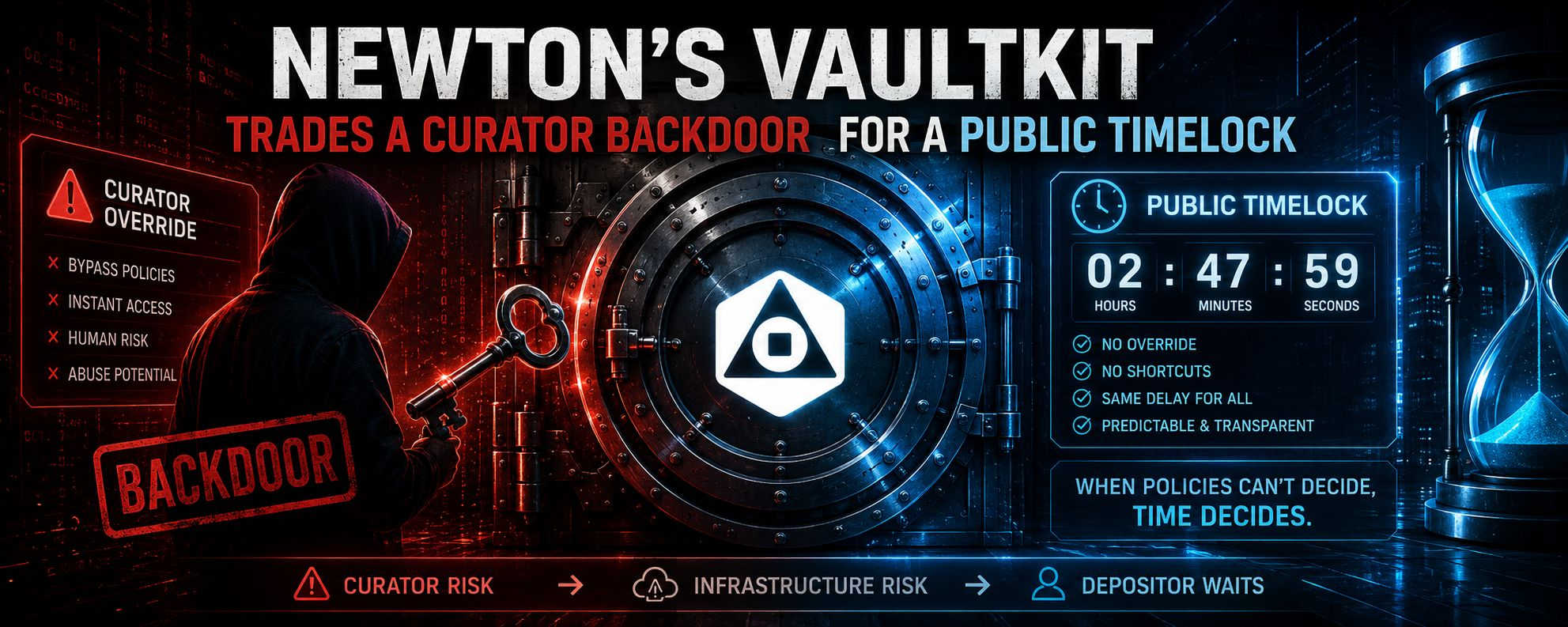
does removing the on demand override actually shrink newton's risk surface, or does it just move curator risk into oracle and operator uptime, and quietly hand that risk to whoever happens to be waiting on the timelock?
@NewtonProtocol #Newt $NEWT $BIRB $M