


If you are watching your altcoin portfolio right now, the tape does not feel good. Red candles, broken supports, underperformance versus Bitcoin, and a general sense that “nothing wants to move.” For many traders, this looks like the start of another prolonged altcoin winter.
That conclusion is understandable. It is also incomplete.
Altcoins bleeding, on its own, is not a bearish signal. In many cycles, it has been a necessary condition before the next meaningful expansion phase begins.
Let’s unpack what is actually happening under the surface.
1) This Is Capital Rotation, Not Capital Exit
The first mistake traders make is assuming red altcoin charts mean money is leaving crypto. In reality, most of the capital is not exiting the ecosystem. It is rotating.
During periods of macro uncertainty or tightening liquidity expectations, capital tends to crowd into perceived “quality” and liquidity. In crypto, that usually means Bitcoin first, sometimes Ethereum next, and everything else later.
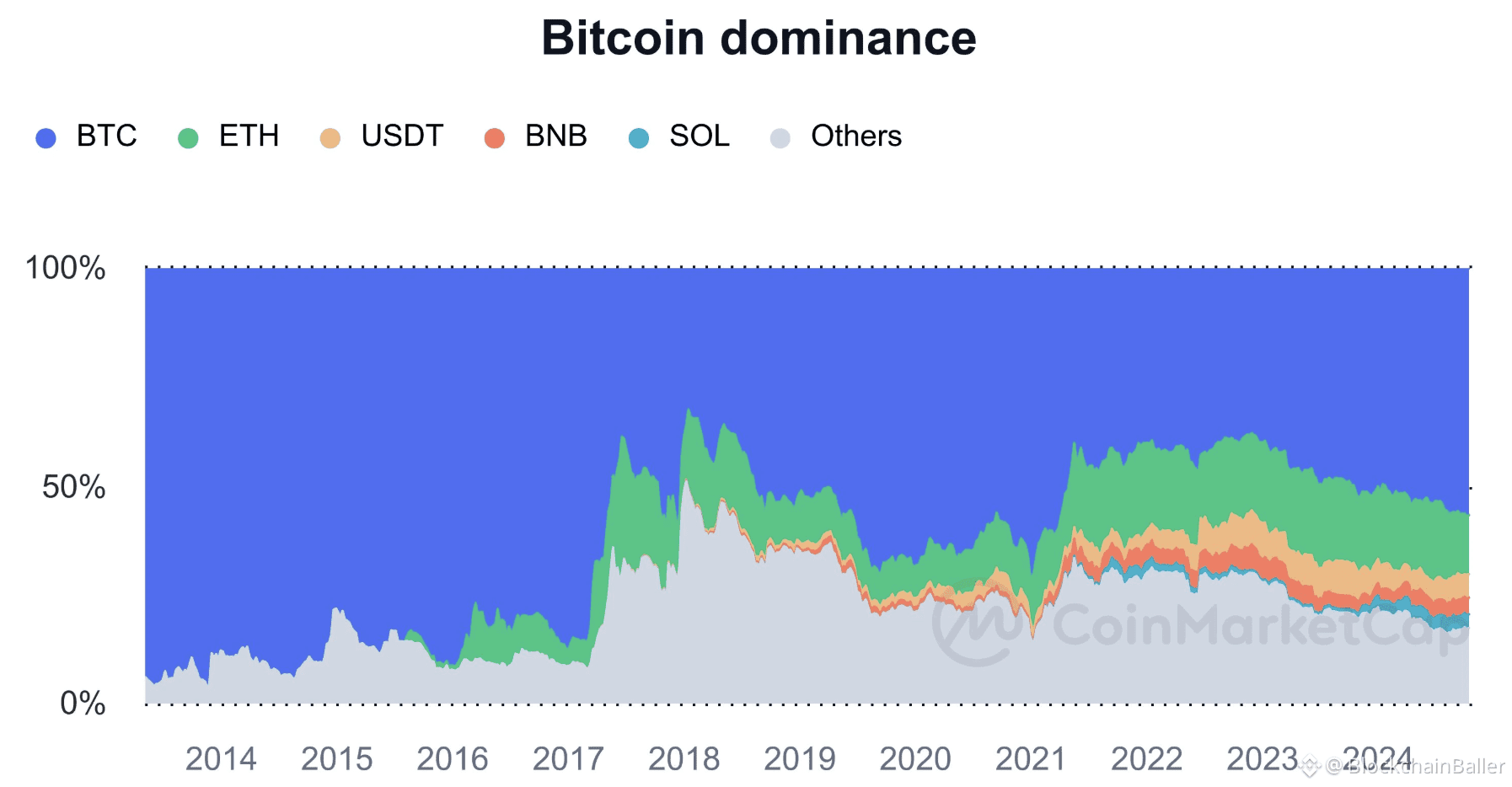
When Bitcoin dominance trends higher while total market capitalization holds relatively stable, that is rotation. Not panic. Not capitulation.
Historically, altcoins suffer the most during this phase because they are the risk-on end of the spectrum. That pain is part of the cycle, not the end of it.
2) Weak Alts Are Being Flushed, Strong Ones Are Being Prepared
Another uncomfortable truth: most altcoins deserve to bleed.
Late-cycle narratives, low-quality launches, excessive FDVs, and weak token economics tend to get exposed when liquidity tightens. What you are seeing now is selection pressure.
This is healthy.
Strong projects do not disappear in these conditions. They consolidate, base, and quietly build relative strength while speculative excess gets washed out. When liquidity eventually expands again, capital does not return evenly. It concentrates.
The goal as a trader is not to “catch every dip.” It is to survive this phase positioned in assets that institutions and informed capital will actually rotate into later.
3) Altcoin Pain Often Precedes Expansion, Not Collapse
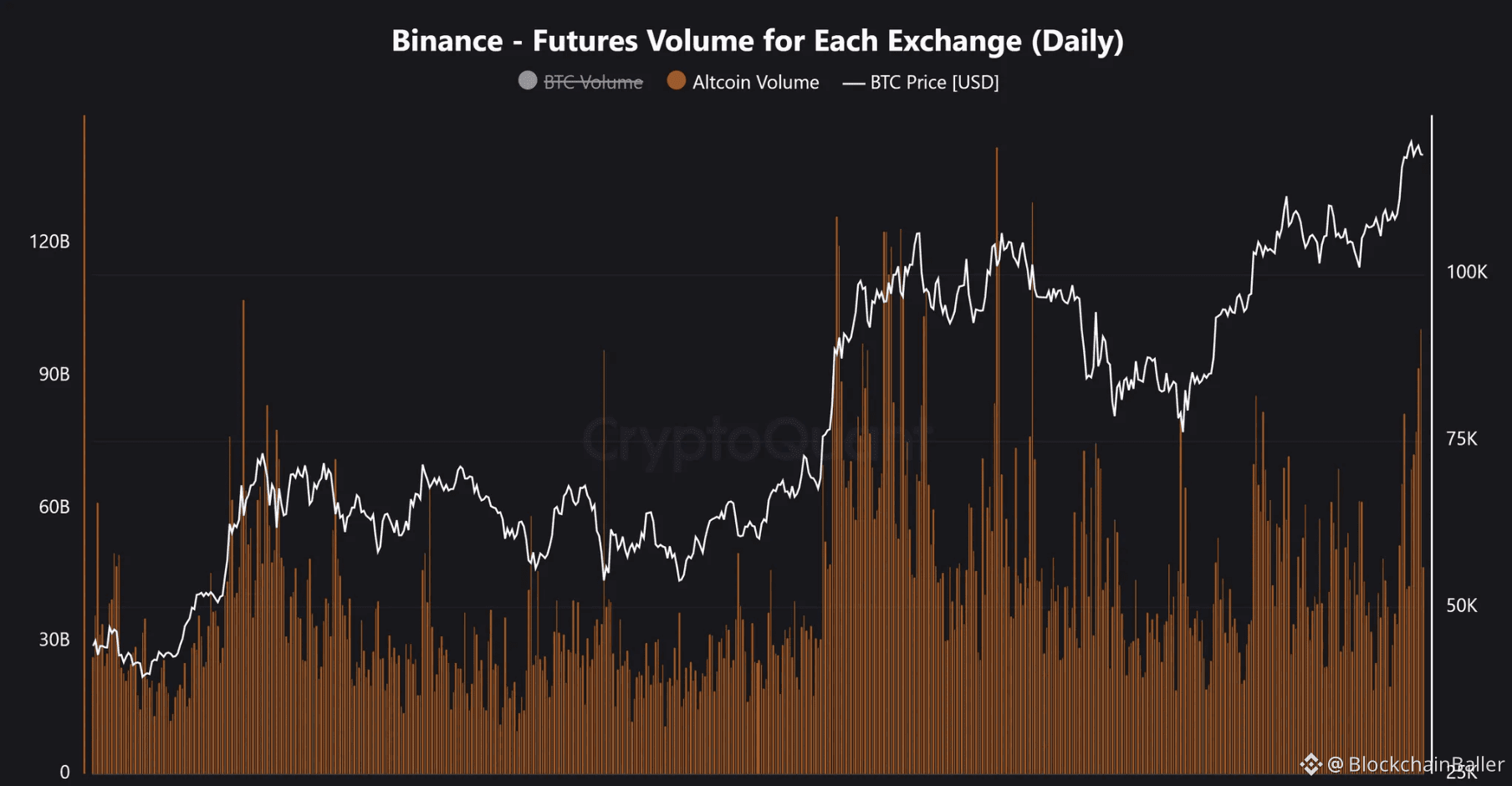
If you study previous market structures, some of the most aggressive altcoin rallies started after periods where sentiment was deeply negative and participation collapsed.
Why?
Because markets need asymmetry to move. When everyone is bullish on alts, there is no fuel left. When everyone is frustrated, sidelined, or underexposed, the conditions for expansion quietly form.
Bleeding phases compress volatility, reset leverage, and force patience. These are not bearish traits. They are preparatory ones.
4) Liquidity Timing Matters More Than Narratives Right Now
At this stage of the cycle, narratives alone are not enough. Liquidity timing dominates everything.
Altcoins will not sustainably recover just because a story sounds good. They move when liquidity loosens, risk appetite returns, and Bitcoin stabilizes after its own expansion phase.
Until then, chop and drawdowns are expected. That does not invalidate the next move. It simply means it is not time yet.
Professional traders respect timing. Retail chases anticipation.
5) What to Do Instead of Panicking
This is not the environment for emotional decisions. It is an environment for preparation.
Focus on relative strength rather than absolute price. Identify which assets are holding key zones despite market pressure. Pay attention to volume behavior during sell-offs. Watch how price reacts when Bitcoin pauses.
Most importantly, protect capital. Missing the bottom is far less damaging than being forced out before the expansion begins.
Altcoins bleeding feels bearish because it is uncomfortable. Markets are designed to be uncomfortable at the most important moments.
Right now, this looks less like structural breakdown and more like a redistribution phase. Capital is repositioning, excess is being flushed, and patience is being tested.
That is often what happens just before the market reminds people why they stayed in crypto in the first place.
Stay selective. Stay solvent. Let the cycle do the heavy lifting.


