Lorenzo Protocol has quietly been moving out of the noisy, experimental corner of DeFi and into something far more deliberate and structured. At its core, Lorenzo Protocol is not trying to reinvent speculation; it is trying to repackage familiar financial logic in a form that actually works on-chain. The recent attention it has received from Binance is not accidental or promotional fluff. It reflects a broader shift in how parts of the crypto market are maturing in 2025.
What stands out most in recent discussions is Lorenzo’s push around On-Chain Traded Funds. Binance Square content has explicitly framed Lorenzo’s OTFs as a practical evolution beyond traditional ETFs. That comparison matters. ETFs in traditional finance are powerful but gated by intermediaries, jurisdictions, and operational friction. Lorenzo’s OTFs aim to strip that complexity down to something users can access directly on-chain, without banks, brokers, or delayed settlement. This is not about copying TradFi aesthetics; it is about preserving the structure while removing the bottlenecks. When a platform like Binance amplifies this narrative, it signals that the idea is being taken seriously as infrastructure, not marketing.
Another important thread is compliance. DeFi projects often claim to be “institutional-ready” without showing how that translates into real systems. Lorenzo’s recent positioning is different. Binance commentary has placed Lorenzo and its native token BANK within a wider industry move toward regulatory alignment and audit-friendly frameworks. That does not mean Lorenzo is suddenly regulated like a bank, but it does mean the protocol is designing with oversight, traceability, and structured governance in mind. For institutions, that distinction is critical. Capital does not flow into systems it cannot explain to regulators or risk committees.
BANK itself is central to this strategy, and this is where many casual observers get it wrong. BANK is not being sold as a hype token or a short-term yield play. Recent analyses consistently frame it as the coordination layer of the ecosystem. Governance rights, incentive alignment, and long-term participation all route through BANK. In other words, if Lorenzo succeeds in onboarding serious capital into OTF products, BANK becomes the mechanism through which those participants influence direction and policy. That is a fundamentally different value proposition from meme-driven liquidity tokens, and the protocol has been explicit about reinforcing that distinction.
The Binance spot listing in November 2025 added another layer of validation, even if it came with volatility. The Seed Tag attached to BANK was a clear warning that this is still an early-stage asset, not a finished product. The sharp price reaction around the listing, including an intraday surge close to 100 percent, was predictable. What matters more is what happens after the initial excitement fades. A spot listing on a top-tier exchange dramatically increases liquidity, visibility, and analyst coverage. It also exposes the token to more disciplined traders who care about fundamentals, not just momentum.
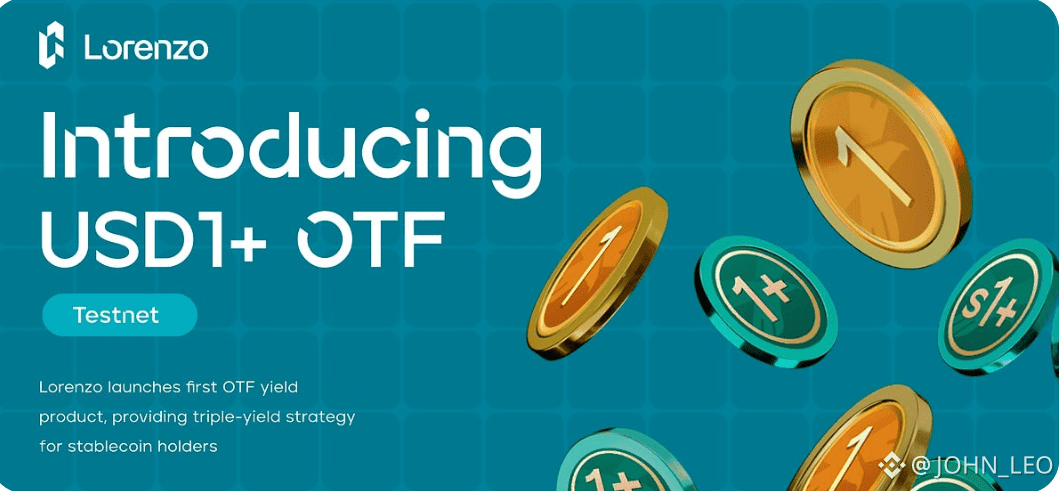
Beyond headlines, protocol development has continued in parallel. Governance mechanisms are being expanded, with more explicit treasury oversight and clearer frameworks for rolling out additional OTF products. This is slow, unglamorous work, but it is exactly what institutions look for. At the product level, social and on-chain signals suggest that the USD1+ OTF is gaining deeper support as liquidity venues and integrations broaden. That kind of incremental strengthening rarely trends on social media, but it is how durable financial products are built.
Market data adds another dimension. BANK has shown periods of short-term strength over recent 24-hour and 7-day windows, even as the wider DeFi market remains uneven. That does not guarantee sustainability, and anyone assuming a straight-line price trajectory is fooling themselves. What it does suggest is that there is active interest tied to narrative shifts and concrete developments, not just random speculation.
Stepping back, the larger story is strategic rather than technical. Lorenzo is deliberately reframing itself from a DeFi experiment into an on-chain asset management platform with institutional logic. Education around OTFs, emphasis on compliance-aware design, and a clear role for BANK as a governance anchor all point in the same direction. This approach will not appeal to everyone. Traders looking for fast yields and viral pumps will likely lose interest. Institutions and long-term participants, however, care about structure, accountability, and continuity, and that is the audience Lorenzo appears to be targeting.
The honest assessment is this: Lorenzo Protocol is not risk-free, and BANK is not a safe asset simply because Binance talks about it. The protocol is still early, governance systems are evolving, and regulatory narratives can change quickly. But the trajectory is coherent. Instead of chasing attention, Lorenzo is aligning product design, token utility, and external messaging around a single thesis: bringing structured, familiar financial strategies on-chain in a way that institutions can actually use. If that thesis holds, Lorenzo’s recent updates will look less like isolated news and more like early markers of a longer transition.
@Lorenzo Protocol #LorenzoProtocol $BANK